Shipwreck May Yield Secrets of Antiquity

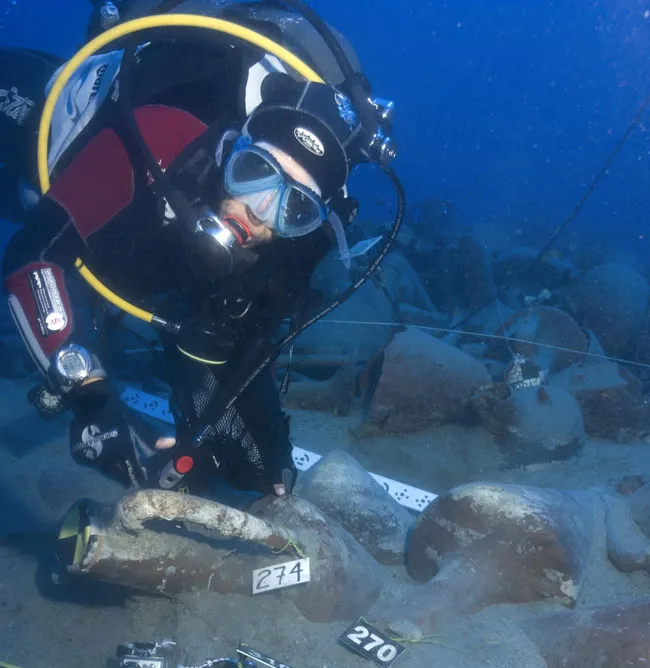
The examination of a Mediterranean shipwreck from the 4th century B.C. could shed light on ancient sea routes and trade, researchers say.
The remains of a merchant vessel, full of amphoras that probably had been filled with wine, were discovered in 2006 on the seafloor south of the island of Cyprus. A team has been excavating the site, diving and dredging up important pieces, since then.
The wreck was first discovered in 2006 by fishermen. One of the ship's anchors was also uncovered.
The particularly well-preserved remains, especially the amphoras, which were oval, narrow-necked vases, reveal many clues about the ship's story, the research team says in a new paper.
"We know by having studied a lot of these ceramic containers — we have created catalogs with different shapes — we know where they come from and where they date," said Stella Demesticha, a professor of maritime archaeology at the University of Cyprus, who is leading the shipwreck research team.
The amphoras found at this site, she said, are very typical of those made on the Greek island of Chios in the Aegean Sea.
"We know the red wine from Chios was praised," Demesticha told LiveScience. "It was very good quality, very expensive."
Get the world’s most fascinating discoveries delivered straight to your inbox.
A large collection of olive pits was also discovered at the shipwreck site. The scientists don't know whether the olives were packed as a source of food for sailors or were a commodity to be sold.
The archaeologists aren't sure what caused the vessel to sink, but said the fact that it was found pretty far offshore suggests it was probably downed by a storm or a fire.
"There's a lot to learn from this wreck," Demesticha said. "We know that wine commerce was flourishing in antiquity. But because we haven't excavated many shipwrecks, we don't know many details about how exactly this was happening."
For example, she said, researchers would like to know how cargo was stowed on ships, as well as how trade deals were brokered and how many transactions took place, particularly between people from the Aegean (between Greece and Turkey) and the rest of the Mediterranean, including Cyprus.
"By studying the cargo of the ship, we're going to find more details about contacts between the two areas in that period," Demesticha said.
The findings so far are detailed in a paper in the December 2010 issue of the International Journal of Nautical Archaeology.
