Scary Movie Scores Mimic Alarm Calls in Nature

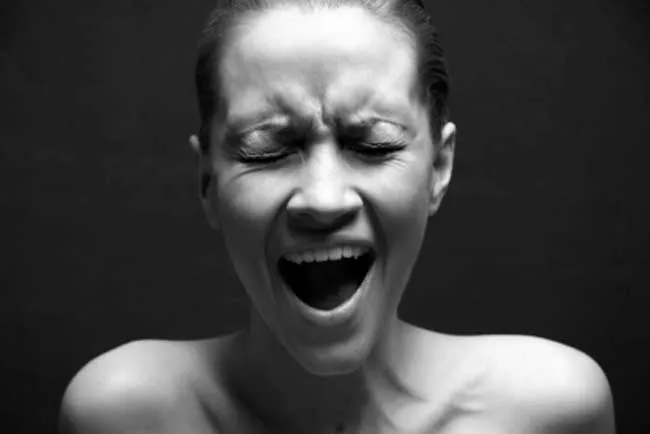
Jump-in-your-seat moments in movies can always get an extra kick from the screech of violins, and for good reason. Animal behavior researchers have found that the musical scores accompanying classic Hollywood horror and drama films tend to imitate sounds that naturally set people on edge.
Such music cues may resemble fuzzy static noise or even screams, according to Daniel Blumstein, chairman of the department of ecology and evolutionary biology at the University of California in Los Angeles. He teamed up with a film score composer to tease apart the musical backdrops for some of the most popular films.
Inner marmot
Blumstein had a hunch about nonlinear sounds, which can occur when a sound system pushes its limit and the sounds begin to break down – similar to when a stereo is turned up too loud or a singer pushes beyond his or her vocal range. Animals such as marmots (groundhogs) will use nonlinear sounds to grab attention, such as making fearful alarm calls that warn about possible predators.
"I don't think any composers were saying, 'Let's put nonlinearities in,'" Blumstein said. "But they were tapping into people's inner marmot."
Composers have a lot of musical instruments at their disposal to imitate nonlinear vocals, Blumstein and his colleagues pointed out. Besides the strained strings, there are also overblown brass or wind instruments and inharmonic, noisy sounds created by percussion such as gongs and cymbals.
Eerie sounds
Get the world’s most fascinating discoveries delivered straight to your inbox.
The researchers dug up nonlinear sounds in films by sifting through information on Internet film sites such as rottentomatoes.com and imdb.com, among others, which showcase lists of top films based on popular vote. Blumstein and his colleagues focused on 30-second iconographic scenes from 102 films that covered genres such as horror, drama, war and adventure.
They used computer programs to analyze the spectrograms of the film soundtracks showing frequencies of sounds over time and create a visual tapestry of the sounds. That allowed them to pick out the distinct patterns of nonlinear sounds whenever they appeared.
"For horror films, there were more screams and noise," Blumstein told LiveScience. "For sad, dramatic scenes in dramas, there were more above-frequency transitions such as violin notes changing very quickly."
One of Blumstein's favorite scary movie examples: the famous shower scene from Alfred Hitchcock's classic film, "Psycho," with its eerie violin accompaniment.
Dramas also used more music in the foreground that often included many instruments playing slightly different notes – a way of imitating subharmonic sounds that fit the nonlinear pattern.
No big nonlinear patterns emerged in war or adventure films, Blumstein said.
What's next
These findings only represent suggestive associations so far, but Blumstein and film composer Peter Kaye have planned film experiments to investigate them further. Their next study will expose volunteers to 10-second film clips that are visually neutral, but include specially composed music with nonlinear sounds.
The researchers will also monitor galvanic skin response (which tests for changes in emotion), respiration, heart rate and muscle twitches around the eyes to gauge the emotional response from the volunteers.
All of this came from Blumstein listening to what he refers to as his own "inner marmot." His years of studying animal behavior helped him draw a connection between fearful calls and sounds in horror films – but he admits that sad, dramatic films present a trickier challenge.
"What I learned is that I have a good model for understanding fear, but I don't have one for sadness," Blumstein explained.
