
-
 Saturn will be at its biggest and brightest on Sept. 21 — here's how to see it
In a once-a-year event, Saturn is about to reach opposition, with the ringed planet appearing its best and brightest as it approaches its closest point to Earth.
3 Commentssaturn -
 See the moon, Venus and Regulus in a rare triple conjunction tomorrow
Watch the crescent moon, Venus and the bright star Regulus align in a rare predawn close conjunction tomorrow.
the-moon -
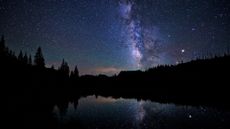 A rare 'black moon' rises this weekend: What is it, and what can you see?
Saturday's new moon is a seasonal "black moon" — a rare phenomenon that occurs once every 33 months. Here's what that means and why it's a great night for stargazing.
the-moon -
 See the final 'planet parade' of 2025, starting this weekend
Six of Earth's neighboring planets — Mercury, Venus, Jupiter, Saturn, Uranus, and Neptune — will briefly appear in the sky on the same night, starting Sunday (Aug. 17).
planets -
 Perseid meteor shower 2025: How to see 'shooting stars' despite the full moon
One of the most prolific meteor showers of the year will peak overnight on Aug. 12-13, but a bright moon will reduce its visual impact.
meteoroids -
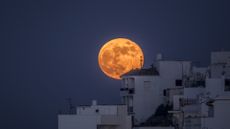 The full 'Sturgeon Moon' rises this weekend
In a rare skywatching treat, you can see August's full Sturgeon Moon rise soon after sunset on both Saturday, Aug. 9 and Sunday, Aug. 10.
the-moon -
 2 meteor showers to peak on the same night. Here's how to catch them at their best.
Two minor meteor showers — the Southern Delta Aquariids and Alpha Capricornids — peak overnight on Monday (July 29-30), making it a great night for stargazing.
meteoroids -
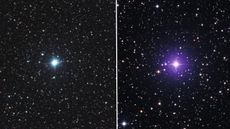 2 'new stars' have exploded into the night sky at once — potentially for the first time in history
Astronomers have spotted another never-before-seen "nova" blaze to life in the night sky. This may be the first time that simultaneous stellar explosions have been visible to the naked eye in recorded history.
2 Commentsastronomy -
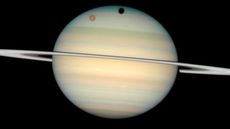 You can see a giant 'hole' shoot across Saturn this summer — and it won't happen again until 2040
There will be several chances to see the shadow of Saturn's largest moon, Titan, pass across the ringed planet's Earth-facing surface over the next few months. The rare spectacle is only visible every 15 years.
2 Commentsastronomy


