
-
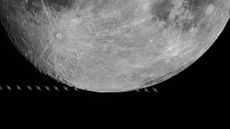 The blue supermoon will 'swallow' Saturn tonight — here's when the rare 'lunar occultation' begins
Here's everything you need to know to see the moon as it occults, or passes completely in front of, the bright planet Saturn tonight.
the-moon -
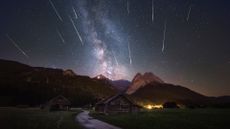 The 1st week of August is a stargazer's delight. Here's why.
With its moonless sky, the first week of August is one of the best times all year to see the Milky Way and meteor showers without a telescope. Here's how to be in the right place at the right time for the best view.
astronomy -
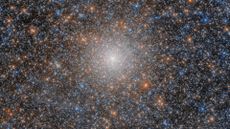 Space photo of the week: A cosmic 'fossil' holding some of the oldest stars in the universe
The Hubble Space Telescope zooms in on a dense ball of millions of stars within a galaxy orbiting the Milky Way. Its ancient origins raise big questions about how galaxies form and grow.
astronomy -
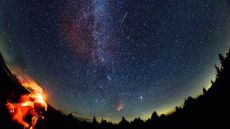 'Double' meteor shower will light up the skies next week. Here's how to watch.
As Earth's orbit intersects with those of two comets this month, stargazers will have a chance to view spectacular double meteor showers.
astronomy -
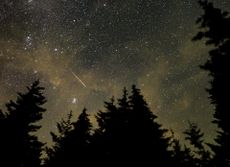 The best meteor showers of 2024 are yet to come. Here are the key nights to watch for.
Here's everything you need to know to see the best meteor showers of 2024.
astronomy -
 Delta Aquariids 2024: July's next meteor shower offers ideal conditions for 'shooting stars'
The Delta Aquariid meteor shower begins this week, bringing as many as 20 "shooting stars" per hour to the night sky. Here's why this year's shower offers ideal conditions for stargazers.
meteoroids -
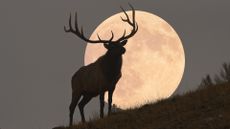 July's full 'Buck Moon' rises this week — and signals a big lunar transition is on the way
July's full moon — also known as the Buck Moon, the Thunder Moon and the Hay Moon — will be at its fullest on the night of July 21. It's the last "regular" full moon before a parade of four consecutive "supermoons" light up the sky.
the-moon -
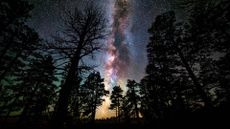 The Milky Way will be visible without a telescope this summer. Here are the key nights to watch for.
Summer is the best time to see the Milky Way in the Northern Hemisphere without a telescope. The key is to find clear, dark skies on moonless nights.
astronomy -
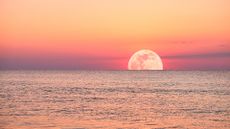 Strawberry Moon 2024: See summer's first full moon rise a day after solstice
June's full "Strawberry Moon" rises one day after the summer solstice in the Northern Hemisphere. This will be the lowest full moon of the year.
the-moon


