
-
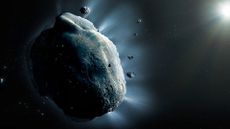 Asteroid four times the size of the Empire State Building barreling toward Earth on May 27
The near-Earth asteroid 7335 (1989 JA) will make a close approach to our planet on May 27, 2022, flying within about 2.5 million miles of Earth.
asteroids -
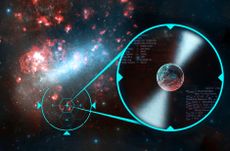 Distant 'galaxy' isn't a galaxy at all — but one of the brightest pulsars ever detected
The pulsar PSR J0523−7125 is so bright that astronomers thought it was a distant galaxy.
cosmology -
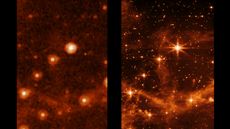 James Webb telescope reaches 'perfect' alignment ahead of debut science images
The James Webb Space Telescope's four science instruments are 'perfectly aligned' and ready to begin observations this summer, NASA said in a news conference.
space-exploration -
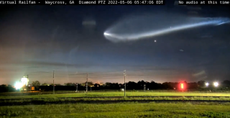 Cameras caught a 'space jellyfish' fly over Georgia. Here’s what it really was.
A so-called “space jellyfish” seen in the sky over Georgia was actually a SpaceX rocket launch. Here’s why it looked so weird.
space -
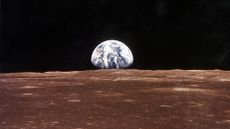 Astronauts can no longer commit crimes on the moon, Canada decrees
The Canadian government is considering a measure that will make it illegal for Canadian astronauts to commit crimes in space.
the-moon -
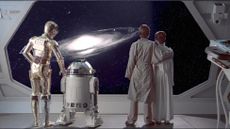 May the 4th be with you: 7 wild 'Star Wars' technologies scientists are building right now
From warp drives to lightsabers to deadly battle droids, here are 7 futuristic Star Wars technologies that scientists are working on in real life.
space -
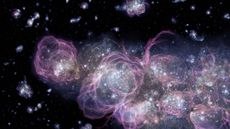 The universe could stop expanding 'remarkably soon', study suggests
The universe may stop expanding in just 100 million years if dark energy decays over time, a new study suggests.
cosmology -
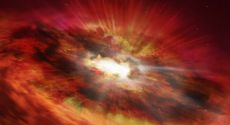 Ultra-rare black hole ancestor detected at the dawn of the universe
Scientists may have detected the first known 'transitioning red quasar' in the universe, dating to just 750 million years after the Big Bang.
black-holes -
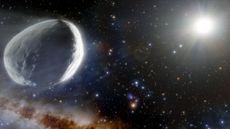 Largest comet ever seen has a heart 'blacker than coal,' and it's headed this way
Astronomers gazed into the icy, black heart of comet Bernardinelli-Bernstein, and found it is more massive than any comet nucleus ever seen.
comets


