
-
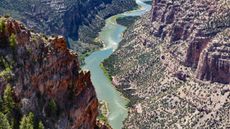 The Colorado River's largest tributary flows 'uphill' for over 100 miles — and geologists may finally have an explanation for it
Millions of years ago, the Green River carved a path through the Uinta Mountains instead of flowing around the formation. Now, researchers have discovered how this could have happened.
2 Commentsgeology -
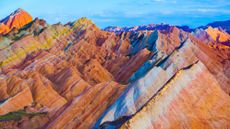 Rainbow Mountains: China's psychedelic landscape created when 2 tectonic plates collided
The colorful swirls and stripes that characterize China's Rainbow Mountains would have remained hidden without the epic tectonic collision that created the Himalayas.
geology -
 Moroccan fly maggot uses fake face on its butt to infiltrate termite colony
Researchers have discovered blow fly larvae with fake termite faces on their rears that enable them to socially integrate into termite colonies in the mountains of Morocco.
insects -
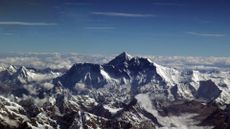 Will Mount Everest always be the world's tallest mountain?
The Himalayas' massive heights result from a unique combination of geologic factors.
geology -
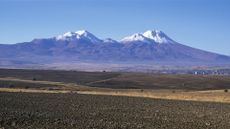 Earth's crust may be building mountains by dripping into the mantle
An odd phenomenon called lithospheric dripping might occur wherever mountains form.
geology -
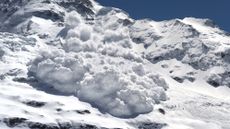 More people are surviving avalanches than decades ago — here's why
A study of avalanche survival data shows that survival rates have increased and rescues are faster, but time is still critical for buried victims.
health -
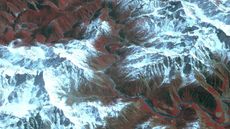 Yarlung Tsangpo: The deepest canyon on land hides a tree taller than the Statue of Liberty
The Yarlung Tsangpo Grand Canyon is Earth's largest terrestrial canyon, stretching 314 miles long and almost 20,000 feet from top to bottom at its deepest point in the Tibet Autonomous Region.
geology -
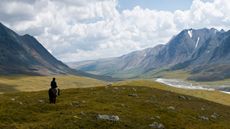 Boiling rocks from Earth's crust tore an ocean into Mongolia 410 million years ago
An ocean that opened up in what is now Mongolia 410 million years ago was created by a hot upwelling of rock known as a mantle plume.
geology -
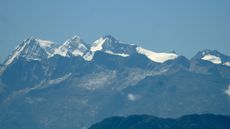 'Roots' of Colombian mountains 'dripped' into the mantle millions of years ago — but the peaks still stand tall
Earth's crust once formed a dense "root" supporting Colombia's northern Sierra Nevada de Santa Marta mountains, but new research suggests this prop sank into the mantle millions of years ago.
americas


