

-
 Enormous planet discovered around tiny star could break our understanding of solar system formation
The massive planet LHS 3154b orbits a star much smaller than Earth's sun, and its discovery could upend everything we think we know about how solar systems form.
exoplanets -
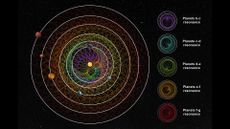 6 alien worlds have been 'waltzing' in perfect rhythm for 4 billion years
Six exoplanets with sizes between Earth and Neptune have been in rhythm with each other since they were born around the same star 4 billion years ago, new research suggests.
exoplanets -
 Scientists may finally understand why large alien planets keep turning into 'super-Earths'
New research finds that certain large exoplanets are shrinking due to internal processes, creating an abundance of rocky 'super-Earths'.
exoplanets -
 James Webb telescope detects 'fluffy' alien planet that rains sand
Clouds of silicate sand exist high in exoplanet WASP-107b's atmosphere, new James Webb Space Telescope observations reveal.
exoplanets -
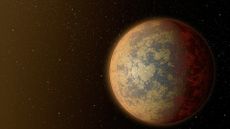 The oldest continents in the Milky Way may be 5 billion years older than Earth's
Several exoplanets at the edge of our galaxy could have formed continents — and advanced life — 5 billion years earlier than Earth, new research suggests.
exoplanets -
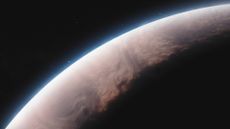 James Webb telescope detects alien planet with clouds made of quartz
The exoplanet WASP-17b's atmosphere is full of quartz clouds, according to a new James Webb Space Telescope observations.
exoplanets -
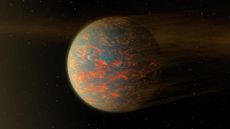 Mysterious signals from 'hell planet' 40 light-years from Earth could finally be solved by James Webb Space Telescope
The hellish super-Earth '55 Cancri e' may be constantly losing and re-growing its atmosphere, a new study of the planet's strange transit signals suggests.
exoplanets -
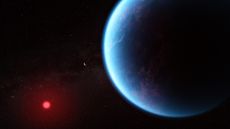 James Webb telescope sees potential signs of alien life in the atmosphere of a distant 'Goldilocks' water world
NASA's James Webb Space Telescope has detected potential traces of dimethyl sulfide, a chemical only known to be created by phytoplankton on Earth, in the atmosphere of an exoplanet believed to have its own liquid ocean.
exoplanets -
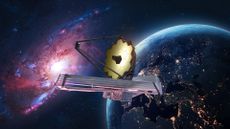 James Webb telescope could detect life on Earth from across the galaxy, new study suggests
Researchers have shown that if the James Webb Space Telescope was pointed at Earth from a distant star, it could detect the signatures of intelligent life in our planet's atmosphere.
exoplanets


