

-
 30 amazing women in science and math
From the first woman to win a Nobel Prize to the discoverer of jumping genes, here are some of the women who have made major contributions to science and mathematics.
human-behavior -
 Who were the Scythians?
Reference The Scythians were an important ancient society of warriors and pastoralists who dominated the steppe land north of the Black Sea between 800 B.C. and A.D. 300.
Reference -
 Hernán Cortés: Conqueror of the Aztecs
Hernán Cortés was a Spanish conquistador who conquered the Aztec Empire in the early 16th century.
human-behavior -
 Who were the Picts, the early inhabitants of Scotland?
Reference The Picts were a people of Celtic origin who lived in parts of Scotland from about the fourth century A.D. to the early Middle Ages.
Reference -
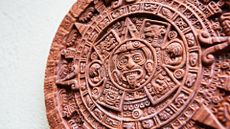 The Aztec civilization: Mexico's last great Indigenous empire
The Aztec Empire flourished in the Valley of Mexico between A.D. 1325 and 1519 and was the last great civilization before the arrival of the Spanish in the early 16th century.
archaeology -
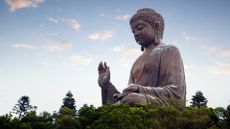 The Buddha: History, meditation, religion and images
Siddhartha Gautama, better known as the Buddha, was a spiritual teacher who lived during the fifth and sixth centuries B.C. in India and founded the Buddhist religion.
human-behavior -
 Is the Red Sea really red?
The Red Sea takes its name from periodic blooms of a blue-green algae called Trichodesmium erythraeum, which turn the normally vivid blue waters a reddish-brown.
middle-east -
 Why are manhole covers round?
There are a myriad of answers to the question, "why are manhole covers round?" But most of them have to do with functionality and economy.
planet-earth -
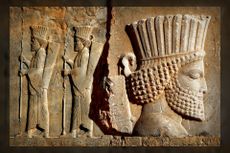 Who were the ancient Persians?
Reference The Persians, originally a semi-nomadic people from central Asia, settled on the Iranian plateau and founded the Achaemenid Empire.
Reference -
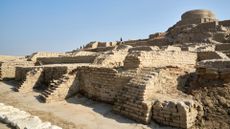 What was the Indus Valley Civilization?
Reference The Indus Valley Civilization — famous for its large, well-planned cities — is considered one of the six early pristine state-level civilizations.
Reference -
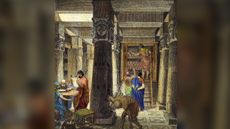 The rise and fall of the Great Library of Alexandria
Reference The Great Library of Alexandria in Egypt was the most important repository of knowledge in the ancient world.
Reference -
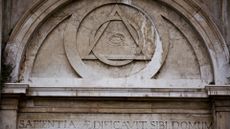 Freemasons: History, facts and myths
Reference Freemasons are often misunderstood as cult members or religious zealots, but they are actually part of the world's largest fraternal organization
Reference -
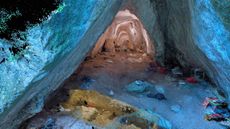 Burial of infant 'Neve' could be oldest of its kind in Europe
An infant burial discovered in the Italian Alps sheds light on how the hunter-gatherers of Europe dealt with issues of personhood and status 10,000 years ago.
archaeology -
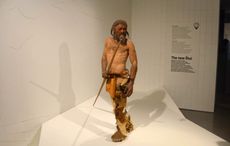 Ötzi the Iceman: The famous frozen mummy
Reference Ötzi the Iceman, a 5,300-year-old man whose mummified remains were dug out of an Italian glacier in the Alps, has fascinated the public since his discovery in 1991.
Reference -
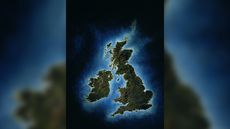 Who was the first person to write about the British Isles?
In the fourth century B.C., a little-known Greek mariner visited the British Isles. When he returned, he wrote a book about his travels, called "On the Ocean," which was read for centuries.
human-behavior -
 The most beautiful places in the world
Our list of 10 of the most beautiful places in the world covers an array of natural landscapes, cities, islands and cultural sites.
planet-earth -
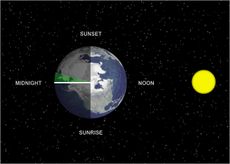 The international date line, explained
The international date line is a concept often fraught with misunderstanding and confusion. But it plays an important role in our lives and a central role in timekeeping.
planet-earth -
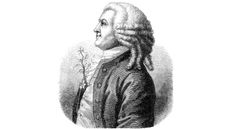 Who was Carl Linnaeus?
Carl Linnaeus, the famous 18th century Swedish botanist, created the basic foundation on which the modern binomial classification system is based.
human-behavior -
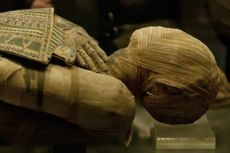 Mummification: The lost art of embalming the dead
Mummification, or the process of preserving the dead, was once a widespread practice among many ancient societies.
ancient-egyptians


