


-
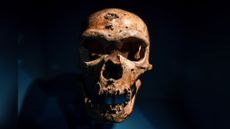 Who was the last Neanderthal?
We don't know when the last Neanderthal died, but many archaeologists think some of the last lineages lived in southern Iberia.
neanderthals -
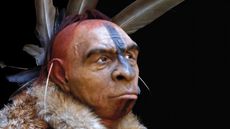 Did we kill the Neanderthals? New research may finally answer an age-old question.
Feature A complex picture of how Neanderthals died out, and the role that modern humans played in their disappearance, is emerging.
Feature -
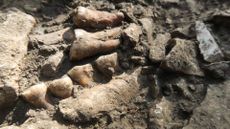 DNA of 'Thorin,' one of the last Neanderthals, finally sequenced, revealing inbreeding and 50,000 years of genetic isolation
Thorin — nicknamed after a dwarf in J. R. R. Tolkien's "The Hobbit" — is also called the "last Neanderthal" because he may have lived as recently as 42,000 years ago.
neanderthals -
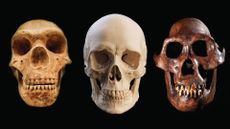 Why did Homo sapiens outlast all other human species?
What's the secret to Homo sapiens' success as a species?
neanderthals -
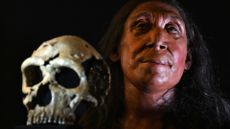 Neanderthals didn't truly go extinct, but were rather absorbed into the modern human population, DNA study suggests
Modern human DNA may have made up a surprisingly large amount of the Neanderthal genome, a new study finds.
neanderthals -
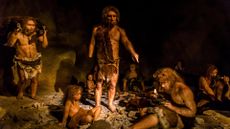 Neanderthals cared for 6-year-old with Down syndrome, fossil find reveals
The unique shape of an ear bone belonging to a Neanderthal child found in a cave in Spain suggests that she had Down syndrome.
neanderthals -
 Neanderthals and humans interbred 47,000 years ago for nearly 7,000 years, research suggests
DNA from prehistoric and modern-day people suggests that humans interbred with Neanderthals 47,000 years ago for a period lasting 6,800 years.
neanderthals -
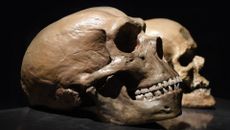 Neanderthals could talk — but how sophisticated was their language?
Neanderthals could talk, but they likely couldn't use or understand metaphors, which compare two unlike things, research suggests.
neanderthals -
 50,000-year-old Neanderthal bones harbor oldest-known human viruses
A new analysis of two skeletons suggests that three modern human viruses infected Neanderthals around 50,000 years ago.
neanderthals


