


-
 'It is the most exciting discovery in my 40-year career': Archaeologists uncover evidence that Neanderthals made fire 400,000 years ago in England
Archaeologists have found the earliest evidence yet of fire technology — and it was created by Neanderthals in England more than 400,000 years ago.
8 Comments -
 The 'hobbits' may have died out when drought forced them to compete with modern humans, new research suggests
A reduction in rainfall may have played a sizable role in the extinction of Homo floresiensis, the archaic human species nicknamed the "hobbit," a new study finds.
-
 'Intelligence comes at a price, and for many species, the benefits just aren't worth it': A neuroscientist's take on how human intellect evolved
Book In his book "One Hand Clapping," Nikolay Kukushkin explores explanations for how consciousness evolved, and ultimately, what makes us human.
37 CommentsBook -
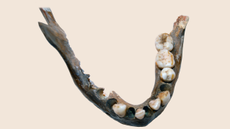 'An extreme end of human genetic variation': Ancient humans were isolated in southern Africa for nearly 100,000 years, and their genetics are stunningly different
Ancient genomes from southern Africa show that people evolved in isolation for upward of 100,000 years.
17 Comments -
 Modern humans arrived in Australia 60,000 years ago and may have interbred with archaic humans such as 'hobbits'
New genetic research shows that DNA and archaeological evidence align with the "long chronology" of the peopling of Australia.
23 Comments -
 Are humans still evolving? An anthropologist breaks it down.
We are indeed still evolving, though it can be hard to tell because it happens over generations and often involves things you can't see, such as what foods different people are able to digest.
-
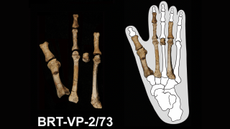 A fossilized foot found 15 years ago belonged to enigmatic human relative that lived alongside Lucy, scientists say
Freshly unearthed jaw bones and teeth that were found close to a previously discovered foot suggest human relatives tried several ways of walking before honing in on one strategy.
2 Comments -
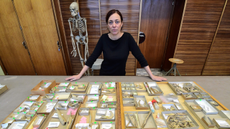 Neanderthals cannibalized 'outsider' women and children 45,000 years ago at cave in Belgium
Fragmented Neanderthal bones discovered in a cave in Belgium show that one group cannibalized the women and children of another group.
17 Comments -
 Science history: Iconic 'Lucy' fossil discovered, transforming our understanding of human evolution — Nov. 24, 1974
On an expedition in the Awash Valley in Ethiopia, two anthropologists uncovered the bones of a 3.2 million-year-old human ancestor. The iconic "Lucy" fossil would reveal much about our species' tangled family tree.
3 Comments


