
-
 Tumaco-Tolita gold figurine: A 2,000-year-old statue with a 'fancy nose ornament' from a vanished South American culture
The Tumaco-Tolita people, who lived in an area rich in natural gold, crafted intricate and delicate metal objects until the group disappeared 1,500 years ago.
americas -
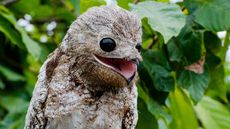 Great potoo: The 'tree stump' bird with a haunting growl and can see with its eyes closed
Throughout the night, great potoos emit a loud, moaning growl that has earned the bird a mythical status, with some communities believing the sounds to be children calling for lost parents.
8 Commentsamericas -
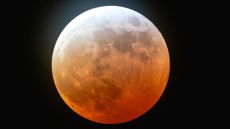 'Blood moon' total lunar eclipse: Stunning photos of our celestial neighbor turning red over the Americas
Skywatchers snapped photos of the "blood moon" hovering above North and South America last night. Here's a gallery of images to celebrate the total lunar eclipse.
2 Commentsamericas -
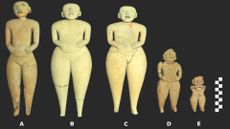 2,400-year-old puppets with 'dramatic facial expression' discovered atop pyramid in El Salvador
These striking puppets suggest that Indigenous people in what is now El Salvador had rituals that were more connected to the rest of Central American culture than previously thought.
3 Commentsamericas -
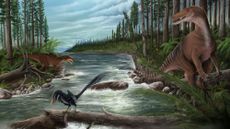 Australia's 'upside down' dinosaur age had two giant predators, 120 million-year-old fossils reveal
A new study has revealed that "hug of death" megaraptorids and previously unknown carcharodontosaurs shared Australia's unique Antarctic dinosaur ecosystem during the Cretaceous.
americas -
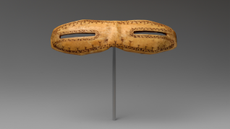 Thule snow goggles: 1,000-year-old Arctic eyewear carved from walrus tusks
These carved snow goggles were a necessary accessory for Arctic existence centuries ago.
4 Commentsamericas -
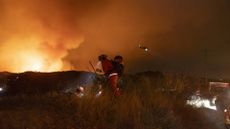 'We are creating the fire equivalent of an ice age': Humans have plunged Earth into the 'Pyrocene'
Humans have become a geologic force by cooking the planet — using fire on a scale that is altering land, water, air and ecosystems.
americas -
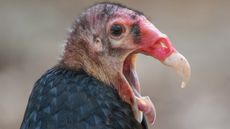 Turkey vulture: The bird that vomits acid up to 10 feet and poops antiseptic onto its legs
Turkey vultures feed on dead carcasses, helping to lower greenhouse gas emissions.
americas -
 Flu shot lowers hospitalization risk by 35% in vulnerable groups, data hint
Data from the Southern Hemisphere hint that this year's flu shot lowers the risk of hospitalization among vulnerable demographics.
americas


