
-
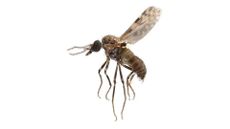 'Sloth virus' reported in Europe for 1st time — but what is it?
The Oropouche virus, which some media outlets are calling a "sloth virus," has been seen in European travelers returning home from the Americas.
americas -
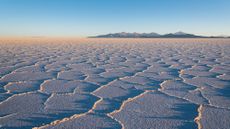 Salar de Uyuni: The world's largest salt desert and lithium reservoir surrounded by volcanoes
The Salar de Uyuni desert is famous for its gleaming surface waters and hexagonal salt crust patterns, but below this otherworldly landscape lie about 11 million tons of highly sought-after lithium.
americas -
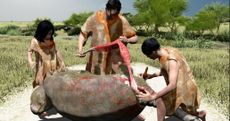 Humans reached Argentina by 20,000 years ago — and they may have survived by eating giant armadillos, study suggests
The discovery of butchered bones belonging to a glyptodont, a giant relative of the armadillo, suggests that humans were living in Argentina 20,000 years ago.
americas -
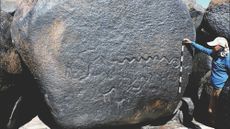 2,000-year-old rock art, including nearly 140-foot-long snake, may mark ancient territories in Colombia, Venezuela
Archaeologists used cameras and drones to fully map 14 massive rock art sites scattered across Venezuela and Colombia.
americas -
 1st Americans came over in 4 different waves from Siberia, linguist argues
The languages of the earliest Americans evolved in 4 waves, according to one expert.
americas -
 Obsidian blades with food traces reveal 1st settlers of Rapa Nui had regular contact with South Americans 1,000 years ago
The earliest settlers of Rapa Nui, also known as Easter Island, appear to have had some sort of contact with people from South America as early as 1,000 years ago, a new plant study finds.
americas -
 Scientists release genetically modified mosquitoes to fight dengue in Brazil
Genetically modified mosquitoes are being released in Brazil to reduce the spread of the viral infection dengue fever.
americas -
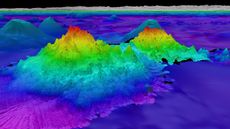 City-size seamount triple the height of world's tallest building discovered via gravitational anomalies
Researchers found and mapped four seamounts in the deep sea off the coast of Peru and Chile. The tallest of these new peaks rises around 1.5 miles above the seafloor.
americas -
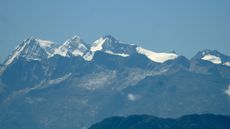 'Roots' of Colombian mountains 'dripped' into the mantle millions of years ago — but the peaks still stand tall
Earth's crust once formed a dense "root" supporting Colombia's northern Sierra Nevada de Santa Marta mountains, but new research suggests this prop sank into the mantle millions of years ago.
americas


