

-
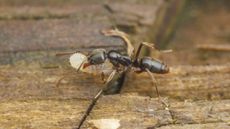 Invasive Asian needle ants are surging in US Southeast — and their bite can trigger anaphylaxis
Asian needle ants found in the southeastern states of the U.S. have been spreading north and west for years, but experts now consider them to be a medically important pest and urge caution.
insects -
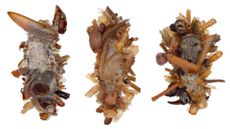 Bone collector caterpillar: The very hungry caterpillar of your nightmares
Bone collectors feast on dead and dying critters caught in a spider's web and then decorate themselves with the legs, wings and heads of their victims to avoid detection by their spider hosts.
insects -
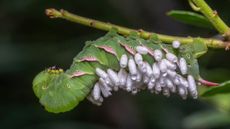 'A relationship that could horrify Darwin': Mindy Weisberger on the skin-crawling reality of insect zombification
INTERVIEW Science writer Mindy Weisberger speaks to Live Science about the parasites that turn their hosts — whether ant, beetle or caterpillar — into zombie-like puppets that act against their own interests.
INTERVIEW -
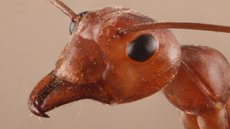 'The parasite was in the driver's seat': The zombie ants that die gruesome deaths fit for a horror movie
"Once the egg hatches, the ant has only a few weeks of life before it succumbs to the manipulations of its attacker, stumbling away from its home and family and then undergoing decapitation from the inside out."
19 Commentsinsects -
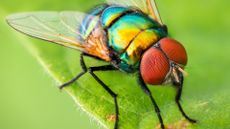 How many species of insects are there on Earth?
The number of insect species is mind-boggling — and they are a critical part of the environment.
insects -
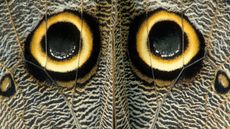 'An artist would be challenged to create such replicas': How looking closer reveals the beauty and lethal efficiency of insects
"When a dragonfly hunts, it hovers perfectly still and positions itself between its prey and a shadow cast behind it by, say, a tree, concealing its position. It's a bit like creeping up on someone in a forest hiding behind branches."
insects -
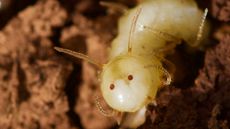 Moroccan fly maggot uses fake face on its butt to infiltrate termite colony
Researchers have discovered blow fly larvae with fake termite faces on their rears that enable them to socially integrate into termite colonies in the mountains of Morocco.
insects -
 Why are flies attracted to humans?
Flies are attracted to our pungent "cloud of effervescence," experts say.
insects -
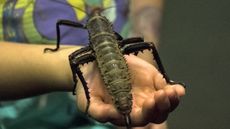 These insects keep evolving to look like sticks. Why?
Researchers have found that stick insects keep evolving the same 20 body plans, from the "tree lobster'" to the "bark hugger" and the "large-headed stick."
insects


