













Humans and Neanderthals Evolved from a Mystery Common Ancestor, Huge Analysis Suggests

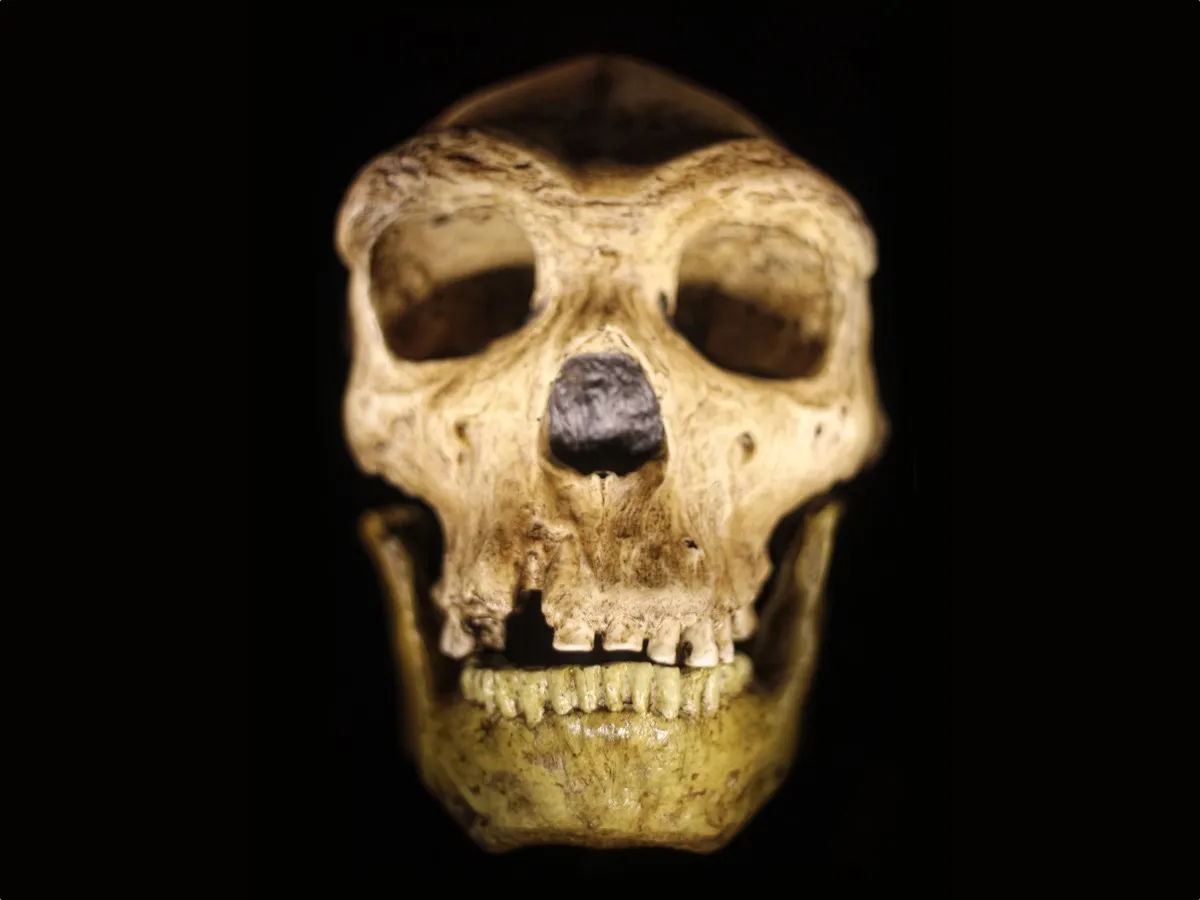
Modern humans and Neanderthals may have diverged at least 800,000 years ago, according to an analysis of nearly 1,000 teeth from humans and our close relatives.
This new estimate is much older than previous estimates based on ancient DNA analyses, which put the split between humans and Neanderthals as happening between 500,000 and 300,000 years ago.
However, while outside researchers called the new dental analysis impressive, they note that it's based on one big assumption: that tooth shape evolves in a steady fashion, especially in Neanderthals. If tooth shape doesn't evolve at a steady rate, then "the construction of this paper collapses," said Fernando Ramirez Rozzi, director of research specializing in human evolution at France's National Center for Scientific Research in Toulouse, who was not involved in the study. [Photos: See the Ancient Faces of a Man-Bun Wearing Bloke and a Neanderthal Woman]
That said, it is quite possible that teeth (and Neanderthal teeth in particular) do evolve at a predictable rate, meaning the new study's calculation might be on target. "At the moment, there is the idea of a steady evolutionary rate change in the shape of cheek-teeth," Ramirez Rozzi said.
Tons of teeth
The researchers examined 931 teeth belonging to a minimum of 122 individuals from eight groups, including humans and our close relatives. Of those, 164 of the teeth were from the early Neanderthals from the Sima de los Huesos ("Pit of the Bones") site in Spain, a sample that includes almost 30 individuals that lived about 430,000 years ago, during the middle Pleistocene epoch.

By comparing the differences in tooth shape between samples, study researcher Aida Gómez-Robles, a paleoanthropologist at University College London, was able to calculate the evolutionary rates for dental shape change and then estimate the divergence time from the last common ancestor between humans and Neanderthals.
The result — that Neanderthals and modern humans probably diverged more than 800,000 years ago — shows that the last common ancestor of these two groups is probably not Homo heidelbergensis, as some scientists think.
Get the world’s most fascinating discoveries delivered straight to your inbox.
"H. heidelbergensis cannot occupy that evolutionary position because it postdates the divergence between Neanderthals and modern humans," Gómez-Robles told Live Science in an email. "That means that we need to look at older species when looking for this common ancestral species."
The finding also "has profound implications for the way we interpret the fossil record and the evolutionary relationships between species," Gómez-Robles said.
Outside takes
Pushing back the divergence between Neanderthals and modern humans "is opening a new door" because it suggests that the two groups were distinct for much longer than previously thought, Ramirez Rozzi said.
However, this raises a question, he said. Humans and Neanderthals interbred around 60,000 years ago, when modern humans left Africa. (This interbreeding explains why the genomes of some modern humans contain nearly 3% Neanderthal DNA.) But if humans and Neanderthals broke apart at least 800,000 years ago, it's surprising that they were still able to interbreed just 60,000 years ago, Ramirez Rozzi said.
"In other words, almost 1 million years of evolution was not enough to establish barriers (genetic, endocrinological, behavioral, etc.) to separate definitively these two species?" he asked.
The argument is laid out well by Gómez-Robles, who is "a well-known specialist of the Neanderthal lineage dental morphology," said Bruno Maureille, director of research at the National Center for Scientific Research (CNRS), in Paris, who was not involved in the study.
But, it appears that the dental remains of Neanderthals from different pockets of Europe each have "their own particularities," Maureille told Live Science. "Can we simply try to draw such global scenarios? [I'm] not so sure."
The study was published online May 16 in the journal Science Advances.
- In Photos: Bones from a Denisovan-Neanderthal Hybrid
- In Photos: Neanderthal Burials Uncovered
- In Photos: Hominin Skulls with Mixed Traits Discovered
Originally published on Live Science.

Laura is the managing editor at Live Science. She also runs the archaeology section and the Life's Little Mysteries series. Her work has appeared in The New York Times, Scholastic, Popular Science and Spectrum, a site on autism research. She has won multiple awards from the Society of Professional Journalists and the Washington Newspaper Publishers Association for her reporting at a weekly newspaper near Seattle. Laura holds a bachelor's degree in English literature and psychology from Washington University in St. Louis and a master's degree in science writing from NYU.