













Fishing Technique Flattens the Seafloor

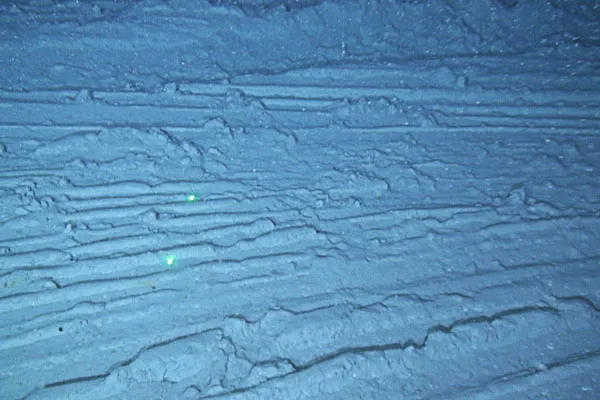
Fishing fleets are altering the seafloor much like farmer's ploughs have altered the landscape, indicates a study of the effects of so-called bottom trawling on the continental slope off the Spanish Mediterranean coast.
Bottom trawlers drag nets and gear to capture fish, shrimp and other marine life along the seafloor, and previous research has called out this technique for stirring up sediment and destroying habitat.
This new study by a Spanish team looked down into deeper waters than typically studied, at the upper portion of the continental slope, which drops out toward the deep ocean and offers insight into how the deep-sea landscape changes.
Bottom trawlers fish down to 2,625 feet (800 meters) in the northern Catalan margin, a region that contains La Fonera Canyon the focus of the new study.
Here, researchers measured sediment flow and found sediment was being stirred up on weekdays but not on weekends, a schedule that corresponds to fishermen's work week. They also combined maps of the seafloor terrain with satellite records of the routes of large bottom trawlers in the area.
They found that ship navigation tracks coincided with a smooth and homogenous seafloor, while untrawled areas had a complex surface. The smoothing out of the ocean bottom, the researchers note, eliminates variation in habitats, potentially reducing species diversity.
"Trawled continental-slope environments are the underwater equivalent of a gullied hill slope on land, part of which has been transformed into crop fields that are ploughed regularly," the team writes in Thursday's (Sept. 6) issue of the journal Nature.
Get the world’s most fascinating discoveries delivered straight to your inbox.
This alteration has the potential to reduce seafloor habitat affecting the species that live there, write the researchers led by Pere Puig of the Marine Sciences Institute in Spain. Since deep-sea trawling is practiced around the world it is possible that this fishing practice is altering the seafloor along continental slopes at a large scale, they write. [Photos of Deep-Sea Creatures]
Follow Wynne Parry on Twitter @Wynne_Parry or LiveScience @livescience. We're also on Facebook & Google+.
