













New Technique Stores Data in Bacteria
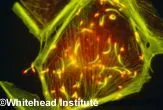
Artificial DNA with encoded information can be added to the genome of common bacteria, thus preserving the data. The technique was developed at Keio University Institute for Advanced Biosciences and Keio University Shonan Fujisawa Campus. If you think those USB flash memory "thumbdrives" are small, check this data storage out.
According to researchers, up to 100 bits of data can be attached to each organism. Scientists successfully encoded and attached the phrase "e=mc2 1905" to the DNA of bacillus subtilis, a common soil bacteria.
One early use for the technique would be to create special markers to identify legitimate versions of pharmaceuticals. However, the bacillus itself creates new copies of the data every time it reproduces itself, thus making it an ideal archival storage system.
Bacillus subtilis also creates extra copies of the data, inserting it in different places in its genome, further safeguarding the data. That's "multiple backup copies" for those of you who have lost data in the past.
The first time I read about this idea was in an excellent series of fantasy novels by Barbara Hambly. In her 1982 Darwath trilogy, she writes about how wizards of several thousand years ago succeeded in tying information to the DNA of selected individuals. In the story, several people from 1980's California find themselves transported across the Void to another planet and the Realm of Darwath. They face a deadly species of queerly magical beings - the Dark - who destroyed civilization thousands of years ago. Everything that was made of paper (like books and records) was burned to stave off attacks by the Dark. Tying memories to a few suitable bloodlines (DNA) was the only way to preserve a record (information) of that period that would endure.
Don't miss these other bacteria-related developments:
- First Motor Powered By Living BacteriaMycoplasma mobile, a micrometer-sized bacterium, pushes the rotor in the first motor powered by bacteria.
- 'Cellborg' Humidity Gauge First Bacterial CyborgThis appears to be the first instance in which a living cell becomes a fixed part of the structure of an electronic device.
- Bacillus Loquacious: AI-2 and the Talkative BacteriumBacteria are gregarious little creatures, chatting amongst themselves and even with members of other species.
Via Keio University Develops New Technology to Preserve Data in Bacteria.
Get the world’s most fascinating discoveries delivered straight to your inbox.
(This Science Fiction in the News story used with permission from Technovelgy.com - where science meets fiction.)