














Russian Military Launches Secret Surveillance Satellite Into Orbit

A Russian Soyuz rocket launched a top-secret military satellite designed to scope out other satellites in space on Monday (Nov. 25), according to government reports.
The Soyuz-2.1v launch vehicle brought the satellite into orbit from the Plesetsk Cosmodrome, which is roughly 500 miles or 800 kilometers north of Moscow, for the Russian Defense Ministry, the ministry said in a statement. The launch took place at 12:52 p.m. EST (1752 GMT or 8:52 p.m. local time).
"The spacecraft ... is launched into the target orbit from which the state of domestic satellites can be monitored," the ministry added. "The optical equipment of the spacecraft also allows you to take pictures of the Earth's surface."
Related: The Most Dangerous Space Weapons Concepts Ever
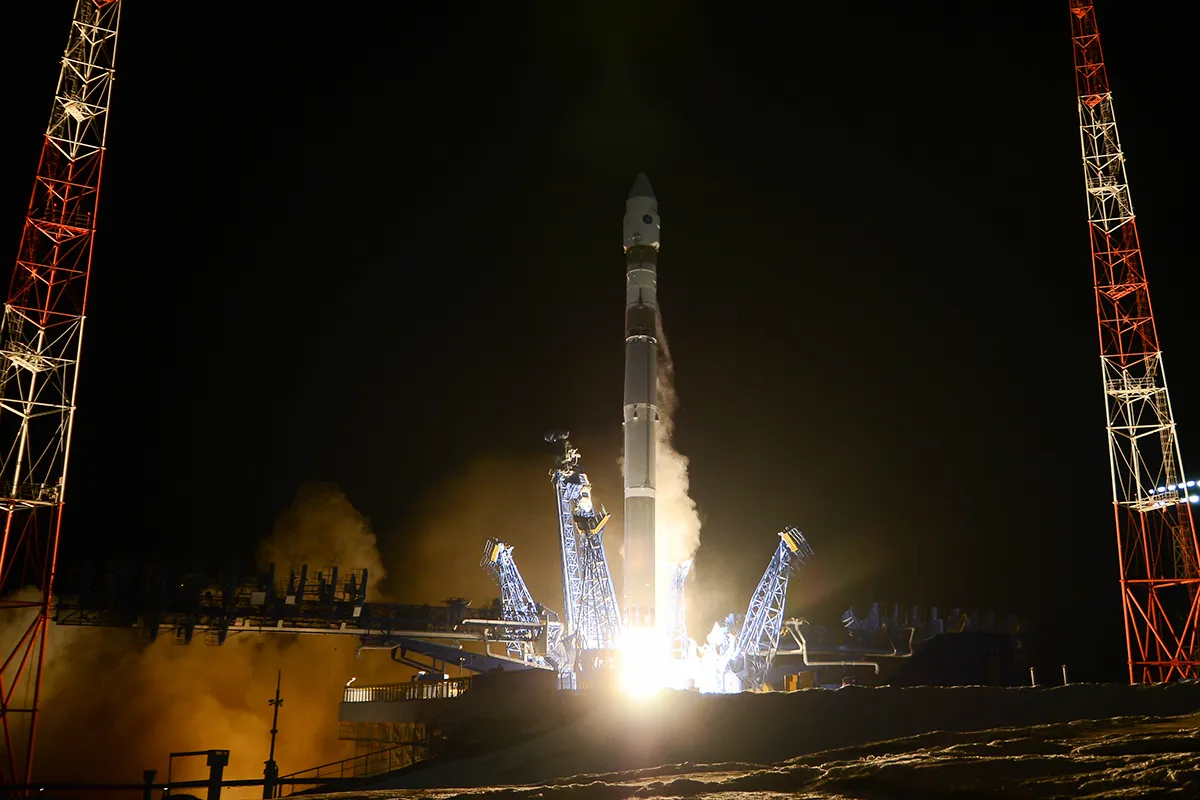
A Russian Soyuz 2.1v rocket launches a classified military satellite into orbit from the Plesetsk Cosmodrome in northern Russia on Nov. 25, 2019. The satellite can apparently track other satellites in orbit.
The spacecraft — whose name is not yet disclosed by the ministry or the Russian Federal Space Agency (Roscosmos) — is now under control of the Space Troops of the Aerospace Force. As of today (Nov. 26), it is functioning normally, the ministry said.
This is the fifth time a Soyuz-2 launch vehicle launched in 2019 from Plesetsk, Roscosmos said in their own statement (which Space.com translated into English using computer translation). Soyuz-2 is the next generation of rockets after Soyuz-U, which underwent 435 launches from Plesetsk between 1973 and 2012, Roscosmos added.
Russian authorities chose not to give notice of the launch ahead of time, but they did issue airspace warning notices of "drop zones" for rocket pieces as stages fell away from the Soyuz, according to SpaceflightNow. Trajectory information from these notices suggest that the Russians planned to launch a satellite into a near-polar orbit, which allows (over time) the satellite to view practically the entire Earth after several orbits.
Get the world’s most fascinating discoveries delivered straight to your inbox.
- Military Space: Spacecraft, Weapons and Tech
- Space Weapon? US Calls Out Russian Satellite's 'Very Abnormal Behavior'
- Can We Prevent War in Space? These Guidelines May Help
Follow Elizabeth Howell on Twitter @howellspace. Follow us on Twitter @Spacedotcom and on Facebook.

Elizabeth Howell was staff reporter at Space.com between 2022 and 2024 and a regular contributor to Live Science and Space.com between 2012 and 2022. Elizabeth's reporting includes multiple exclusives with the White House, speaking several times with the International Space Station, witnessing five human spaceflight launches on two continents, flying parabolic, working inside a spacesuit, and participating in a simulated Mars mission. Her latest book, "Why Am I Taller?" (ECW Press, 2022) is co-written with astronaut Dave Williams.