
















Is a Dog's Mouth Cleaner Than a Human's?
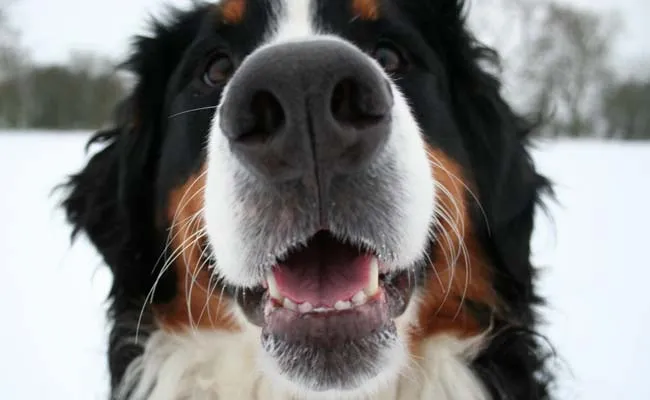
Here’s the myth that makes dogs sound like a dental miracle: Despite all the leftover macaroni, rubber bands and dead squirrels they chew, our canine friends still maintain better oral hygiene than human beings do, no matter how studiously we floss and how often we visit our dentists.
Could this really be true?
Well, sadly, no. In short, a dog’s mouth is besieged by its own legions of germs, roughly as huge in population as those living in the human mouth and causing a similar array of dental illnesses.
“It’s like comparing apples and oranges,” says Colin Harvey, a professor of surgery and dentistry at the University of Pennsylvania’s School of Veterinary Medicine. He is also the executive secretary at the American Veterinary Dental College.
Although there’s a vast overlap of bacteria in the mouths of both species, Harvey considers the question of which one is cleaner to be irrelevant because a) both are teeming with microbes, and b) in many cases, a dog’s dental bacteria differ from their human counterparts.
One example is the Porphyromonas, a family of rod-shaped bacteria known for causing periodontal disease, a serious gum infection that leads to the loosening and, eventually, detachment of teeth in both humans and animals. Scientists have spotted two distinct species within the family: P. gingivalis was found in the human dental plaque, while its sibling, P. gulae, was found in dogs. Both bacteria thrive on periodontal tissues, eating up the gums and reducing well-rooted teeth to shaky cavities.
Although there are no theories so far to correlate breed and a dog’s proneness to periodontal disease, small and old dogs generally have higher risks of developing a serious form of the disease.
Feed your curiosity with an exclusive mystery every week, solved with science and delivered direct to your inbox before it's seen anywhere else.
Another common dental disease in humans, however, has largely spared dogs. Dental caries (tooth decay), which according to a 2003 World Health Organization report may affect 90 percent of schoolchildren around the world, hits only about 5 percent of dogs. As complicated as the reason may be, most scientists, including Harvey, point to the scarcity of a bacterium in dogs’ mouths as the major explanation.
The culprit bacterium, S. mutans, eats a big sugar molecule by chopping the sugar into two slightly smaller molecules. This process produces acid as a byproduct. Therefore, the bacterium has evolved to require a slightly acidic habitat, and if lucky, it ends up in the more acidic human mouth rather than the more alkaline dog’s mouth.
One of the rumors related to the cleanliness of a dog’s mouth is the idea that human bites are more infectious than dog bites. However, this too doesn’t hold up to scrutiny. According to Jeein Chung, a veterinarian at Hoboken Animal Hospital in New Jersey, the danger of both human and dog bites depends on the kinds of bacteria in the mouth and the depth of the wound. The bottom line: Cleanse as thoroughly as possible after getting bit, and go to an emergency room if you feel the wound go anywhere beyond the muscles.
As for dogs’ favorite archrivals — I mean, besides squirrels — cats are found to be largely in an identical condition to that of dogs. “We haven’t done as much research on cats,” says Harvey. “But to the extent of what’s been studied, they are [almost] the same.”
This answer is provided by Scienceline, a project of New York University's Science, Health and Environmental Reporting Program.
Follow Life's Little Mysteries on Twitter @llmysteries. We're also on Facebook & Google+.