















Why Emotional Events Stick in Your Mind
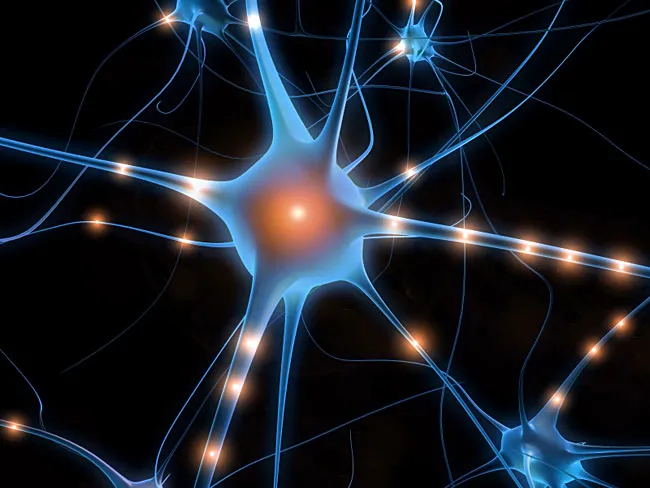
New research on mice could explain why you remember a break-up so vividly but can't for the life of you recall that meeting you had at work.
With information bombarding our senses like the billboard lights in Times Square, our brains can get overloaded. That's why memory-storing regions of the brain weed out the trivial and give priority to the significant, which can then get transformed into long-term memory.
The new study, published in the Oct. 5 issue of the journal Cell, reveals how emotions could help the brain "decide" which memories to seal in and which to toss out.
Memories are thought to form with the strengthening of connections between neurons. These connections rely on receptors to send and receive "brain data."
Past research has shown that emotional stress is linked with an increase in the hormone norepinephrine in the brain. Yet, exactly how the stress hormone influences the processes involved in neuron connections and thus memory formation has remained mysterious.
Hailan Hu of Cold Spring Harbor Laboratory in New York and colleagues say they have figured part of it out. They ran lab tests on mice, finding that norepinephrine, as well as emotional stress, leads to a chemical change in certain brain receptors. The change strengthened connections in the memory regions in mice brains, they say.
"Stimuli that would not be enough to form a memory now can form a memory," said study team member Roberto Malinow, also of Cold Spring Harbor Lab.
Get the world’s most fascinating discoveries delivered straight to your inbox.
Since mouse brains have many of the same regions as human brains, the researchers expect the same memory mechanisms would apply to us as well.
While both highs and lows in life can spark the memory-boosting chemical, Malinow notes that too much of the stress hormone can backfire, causing a lapse in memory.
"If you have too much norepinephrine it works the opposite way," Malinow told LiveScience. "So there might be an optimal amount of norepinephrine so that if you're too emotional, you might not remember things as well."
He stressed the finding is just one piece of a large puzzle linking emotions and memory.
- Top 10 Mysteries of the Mind
- World Trivia: Challenge Your Brain
- Vote: The Greatest Modern Minds
Jeanna Bryner is managing editor of Scientific American. Previously she was editor in chief of Live Science and, prior to that, an editor at Scholastic's Science World magazine. Bryner has an English degree from Salisbury University, a master's degree in biogeochemistry and environmental sciences from the University of Maryland and a graduate science journalism degree from New York University. She has worked as a biologist in Florida, where she monitored wetlands and did field surveys for endangered species, including the gorgeous Florida Scrub Jay. She also received an ocean sciences journalism fellowship from the Woods Hole Oceanographic Institution. She is a firm believer that science is for everyone and that just about everything can be viewed through the lens of science.