
Genetics is the study of genes, which are the basic units of inheritance that contain the blueprint for life, from determining the way that organisms look to every physiological process that occurs within them. Advances in genetics have come a long way since the discovery of the double helix of DNA in 1953. Scientists can now sequence the entire genetic code of thousands of people on a large scale to pinpoint genes that are associated with specific diseases and flag them as targets for drug development. Likewise, enzymes from bacteria can be used to modify genes for a plethora of purposes, including healthcare and farming.
Discover more about genetics

-
 Gene therapy improves hearing in 90% of patients with inherited deafness in largest trial of its kind
A new gene therapy tested in China has improved the hearing of 38 people who were born deaf due to mutations in a gene called OTOF.
2 Comments -
 Changing 'just one DNA letter' in female mice triggers growth of male genitalia
Scientists discovered that making a very small change to female mice's DNA caused them to develop male reproductive organs.
-
 Are allergies genetic?
Although babies born from parents with allergies are also more likely to have them, there are a number of outside factors that affect whether and how someone develops allergies.
-
 A doctor discovered the gene mutation behind his family's mysterious missing-teeth condition
A doctor who had a genetic condition that prevents teeth from forming searched for the DNA mutation that had affected his family for over 150 years.
-
 'It doesn't lie. So who are you?': What happens when DNA tests show a woman is not the mother of the child she gave birth to?
"At first, I kind of laughed … But they were serious. I could just see the seriousness in their faces." In this book excerpt, Lise Barnéoud explores the limitations of DNA testing.
14 Comments -
 'Some of them have accuracy that's close to zero': Experts unpack the promise and pitfalls of genetic tests aimed at consumers
INTERVIEW Live Science spoke with a bioethicist and sociologist about emerging genomic technologies, including those that enable parents to "score" and "select" IVF embryos.
INTERVIEW -
 Emerging embryo-selection technologies are currently 'little more than snake oil.' But someday, they could widen social inequities.
Book In the book "What We Inherit," experts unpack long-standing myths about genes and how those myths could shape public opinion around emerging embryo-selection technologies.
Book -
 New tech allows parents to 'score' IVF embryos for desirable traits — and it's in desperate need of regulation
Opinion Companies now offer polygenic embryo selection to prospective parents undergoing IVF. But the technology is dangerously underregulated.
7 CommentsOpinion -
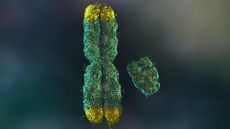 Many men lose their Y chromosomes as they age. It may shorten their lives.
A researcher explores why men lose their Y chromosomes in cells as they age and the health implications associated with this loss.


