Ancient Foot Suggests How Man Gave Up Treehouses

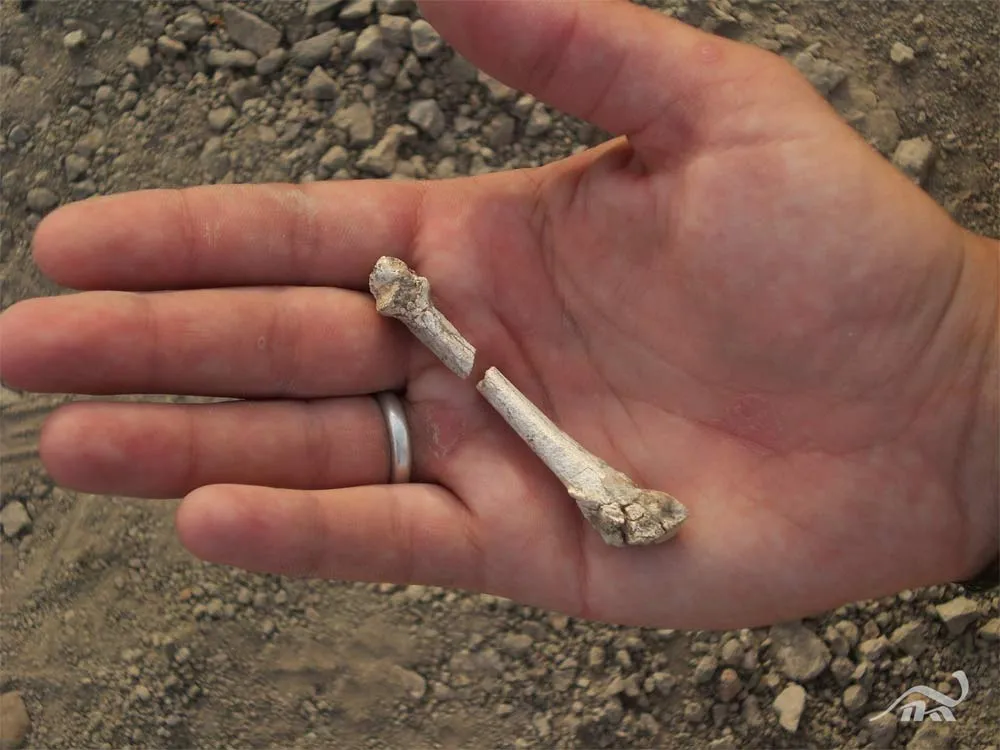
Ancient foot bones from a recently discovered pre-human species, which had opposable big toes like a gorilla's, could shed light on how the ancestors of humanity came to walk upright, researchers say.
Humans dominate the planet partly because walking upright frees their hands for tool use. Among the earliest known relatives of humanity to walk upright was Australopithecus afarensis, the species including the famed "Lucy." This hominin is a leading candidate for direct ancestor of the human lineage, living about 2.9 million to 3.8 million years ago in East Africa.
Although Lucy and her kin were bipedal, there is debate about how much they depended on life in trees. Now scientists also have fossils of a hitherto unknown species of hominin that lived about the same time and place as Australopithecus afarensis. Judging by its feet, this newfound relative of humanity was a tree-dweller – which suggests that, in turn, Australopithecus afarensis adapted to life walking on the ground.
"In biology, if you have two closely related species that live close to each other, they may start to diverge in what niches they occupy," said researcher Bruce Latimer, a paleoanthropologist at Case Western Reserve University.
Since this newfound hominin possessed feet good for climbing trees, "it does really hammer home the idea that Australopithecus afarensis might have been a bipedal animal that committed itself to the ground and walking long distances," Latimer told LiveScience. [Photos of New Hominin Species]
The 3.4-million-year-old fossils were discovered in 2009 in a part of Ethiopia known as Burtele. Nowadays this area is hot and dry, with temperatures skyrocketing up to 110 degrees Fahrenheit (43 degrees Celsius). But "nearby fossils of fish, crocodiles and turtles and physical and chemical characteristics of sediments show the environment was a mosaic of river and delta channels adjacent to an open woodland of trees and bushes," said fellow Case Western researcher Beverly Saylor.
Scientists have long argued that Australopithecus afarensis was the only pre-human species between 3 million and 4 million years ago. These new fossils of an unknown hominin species are the first incontrovertible evidence that at least two pre-human species lived at the same time and place around 3.4 million years ago.
Get the world’s most fascinating discoveries delivered straight to your inbox.
The fossils include eight bones from the front half of a right foot. Such hominin fossils are rare, since they are fragile and subject to decay or carnivores.
While the big toe of Lucy's species was lined up with the other four toes to make humanlike walking more efficient, the Burtele foot has an opposable big toe like a gorilla's. This probably made the species more adept than Lucy's at grasping branches and climbing trees.
The Burtele foot, however, does bear hints that it could have been used for upright walking. For instance, several bones have large, spherical features that suggest the hominin could hyperextend its toes to help the body push forward and upward. Still, unlike in Australopithecus and humans, the foot lacked an arch, an energy-absorbing feature of feet that helps protect bones.
"It wasn't walking great distances on the ground," Latimer said. "It would've had a quite awkward gait."
Project leader Yohannes Haile-Selassie, curator and head of physical anthropology at the Cleveland Museum of Natural History, said the researchers hope to uncover more fossil specimens of this unknown hominin, including its head and teeth, to help pinpoint what species it might be.
"This new discovery will definitely raise new questions and controversies as to how we understand the evolution of bipedality in the human lineage," Haile-Selassie told LiveScience.
The Burtele foot resembles that of another hominin, "Ardi," which lived 4.4 million years ago. It could be that Ardi – short for Ardipithecus ramidus – is the forerunner of both the Burtele hominin and Australopithecus, Haile-Selassie said.
The scientists detail their findings in the March 29 issue of the journal Nature.
Follow LiveScience for the latest in science news and discoveries on Twitter @livescience and on Facebook.