













School: Not the Only Way to Learn
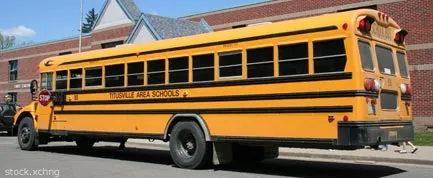
All over the country, little kids are hoisting their backpacks and stepping aboard a fleet of mustard-yellow busses. They will spend six hours a day away from home for the next nine months learning to read and write, and how to keep still.
At the same time, many parents are packing their cars with the entire contents of teenage bedrooms and driving older kids off to college. For most of these young adults, it will be the first time they'll have to find their own dinner and wash their own clothes.
In Western culture, every kid goes to school (even if school is at home). Formal learning, where an adult teaches and children listen and learn, is so engrained in our culture that we can't imagine a childhood without schooling.
But the truth is, going to school is a recent phenomenon, even in the West. The classroom, composed of a group of kids and an adult teacher, goes back to Medieval times, but for centuries, school was only for a privileged few (and certainly not for girls). The idea that everyone "should" go to school developed in the 20th century as kids were pulled off the factory line and off the farm and sent to public institutions supported by the community.
School is now a social policy that we equate with progress and successful economies. Less developed nations feel the same way; when kids can spend the entire day at school rather than herding cows or weeding gardens, it means a culture can afford to lose their labor.
We also feel that children must go to school to become independent and self-reliant adults.
But the assumption that school is the only way kids learn adult skills is wrong. Children in many cultures, in fact, are more accomplished and self-sufficient than children who spend the day at a desk.
Get the world’s most fascinating discoveries delivered straight to your inbox.
Anthropologist Karen Kramer of the State University of New York at Stony Brook reports that Maya children in Mexico can sometimes go to school, but classes are few and far between. Instead, Maya kids work very hard at other tasks.
They prepare fields for planting, they weed and harvest crops. They haul water, chop wood, wash clothes and care for younger children. They also act as family messengers, running all over the place borrowing things and returning them, or picking up goods at the local grocery store.
Maya kids are highly accomplished at living day-to-day. Left on their own, they wouldn't starve or fall apart. They would plant and weed and go get water, and take care of each other.
Unlike Western kids, they would still survive, even without understanding Shakespeare or knowing how to do algebra, or having the experience of riding the yellow bus.
Meredith F. Small is an anthropologist at Cornell University. She is also the author of "Our Babies, Ourselves; How Biology and Culture Shape the Way We Parent" (link) and "The Culture of Our Discontent; Beyond the Medical Model of Mental Illness" (link).
- Video: Attention Training
- Top 10 Mysteries of the Mind
- Vote for the Greatest Modern Mind