













If You Spot Bigfoot, Should You Shoot Him?

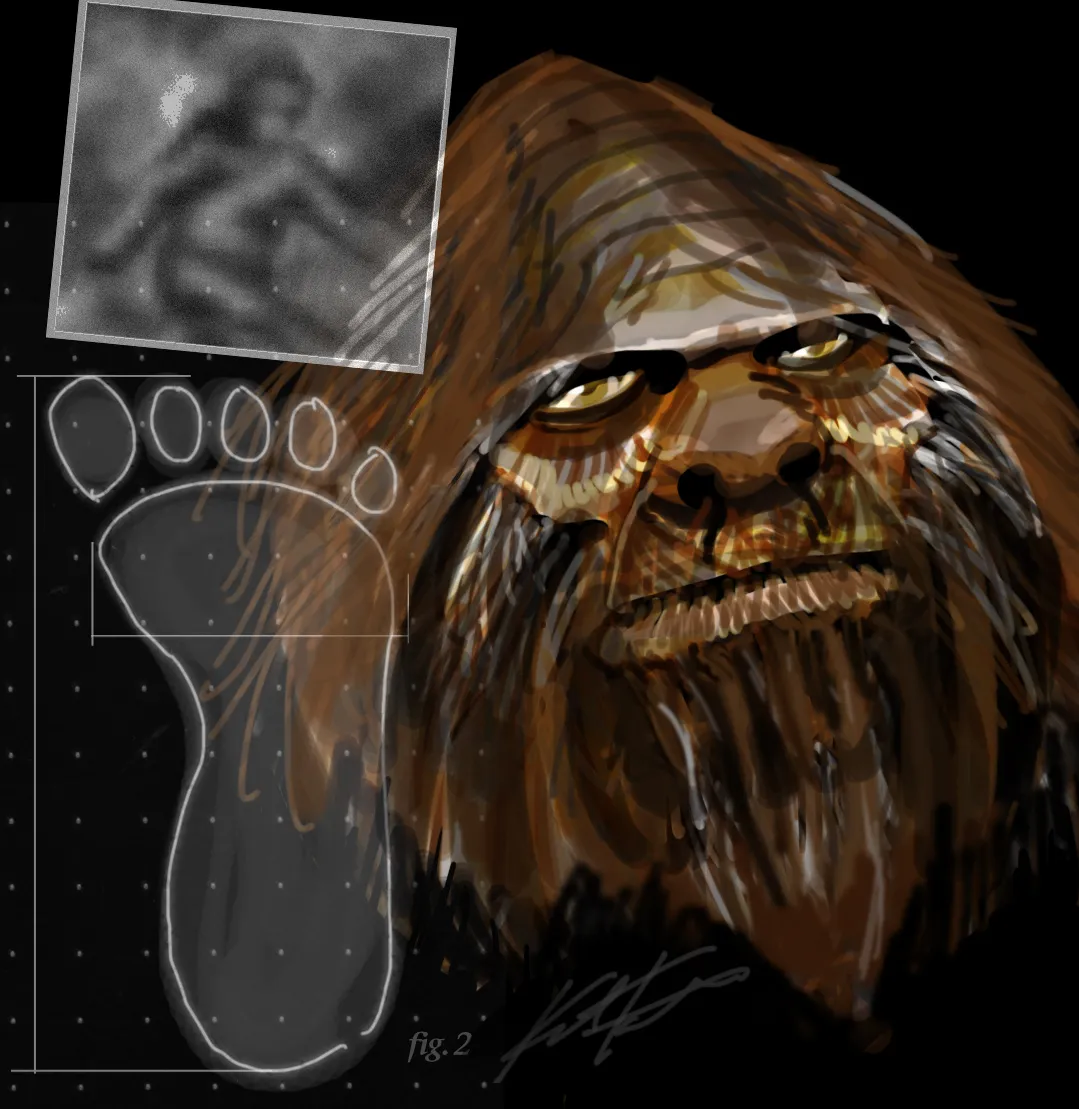
In the new Animal Planet reality TV show optimistically titled "Finding Bigfoot," a team of experts examines video of an alleged Sasquatch spotted in the Canadian Rockies. The video, shot by a man named Todd Standing, shows something large and dark, standing atop a wooded ridge and then ducking back behind a bush. It could pretty much be anything, and when the experts concluded that the subject was probably not a Bigfoot, Standing expressed his frustration: "No video is ever going to be evidence, ever. It's never going to be good enough…"
Standing, like many Bigfoot researchers, misses the problem: It's not so much that any Bigfoot video is inherently worthless, it's that his video, like all that have come before it, is of such poor quality that there's no way to know what we're seeing. It could have been anything – a guy in a dark jacket (or gorilla costume), a bear or even Bigfoot. The fatal flaw in Bigfoot photos and videos is the image quality, not the image subject. If Standing, the "Finding Bigfoot" team, or anyone else shot well-lit, clear video of what was obviously a 12-foot-tall, hairy bipedal creature in the woods, that would be compelling.
But even the highest-quality photograph or video can't be considered definitive proof of Bigfoot, the Loch Ness Monster, or any other mythical beast. Similarly, if the goal is to simply make scientists and the general public take Bigfoot seriously, then some verified remains of the creature – be they hair, teeth, blood, bones or something else – would do the trick. [Infamous 'Yeti Finger' Flunks DNA Test]
But definitive proof is a very high standard. Most Bigfoot enthusiasts — and the general public — would be satisfied with nothing less than the rock-solid definitive proof offered by a living or dead specimen.
This issue brings up a longstanding debate within the Bigfoot community: Would be ethical to shoot and kill a Bigfoot? Some say yes, because that's the only way to prove they exist, and once proof is found, funds could be made available to protect them as an endangered species. Others say no -- that because Bigfoot sightings are so rare, they must have very small populations and killing one might drive the animals to extinction. Shooting a suspected Bigfoot with tranquilizer darts is an option that has gained some steam.
Ethics and the lethal-or-nonlethal debate aside, there's a good reason aiming your gun at a Bigfoot could be a bad idea: It might be illegal. A Texas teen shot what he believed to be a Chupacabra earlier this year, and while charges were not brought against him, if the creature turned out to be someone's dog or a mangy coyote, he could potentially have faced a felony charge.
The point is, you simply can't know for sure if the mysterious, burly figure you have lined up in your sights is the real beast, or a bear or someone's pet – or, even worse, just a person in a gorilla suit.
Get the world’s most fascinating discoveries delivered straight to your inbox.
This story was provided by Life's Little Mysteries, a sister site to LiveScience.
Benjamin Radford is deputy editor of Skeptical Inquirer science magazine and author of Scientific Paranormal Investigation: How to Solve Unexplained Mysteries. His website is www.BenjaminRadford.com.
