How to Spot T. Rex Footprints

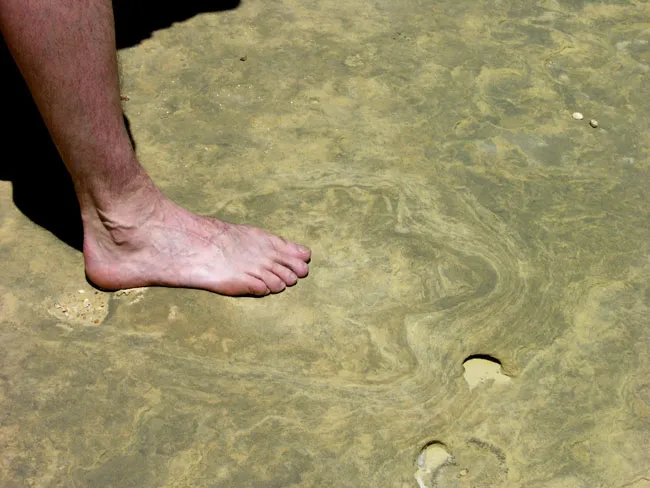
The largest predators to ever stride the earth—T. rex and its kin—often left indelible footprints with their massive steps, and some of their tracks are still evident millions of years after the dinosaurs perished. In most cases, dinosaur footprints are less than ideally preserved, and many times are barely recognizable as tracks. Now a field guide of sorts amassing research on how such footprints can get eroded could help identify these tracks, no matter their state. This could help reveal details about dinosaur anatomy and locomotion otherwise lost to history. "Commonly it's hikers that bring these tracks to the attention of scientists," said University of Nebraska geologist David Loope. "This work could help people find more tracks than they might find otherwise, a lot of subtle, poorly preserved tracks that you might have walked over." Milàn and Loope detailed their footprint findings in the May issue of the Journal of Geology. Utah theropods Tyrannosaurus rex and its kin were a kind of dinosaur known as theropods, or "beast-footed." Footprints of theropods are especially impressively preserved at the Twentymile Wash Dinosaur Tracksite at Grand Staircase Escalante National Monument in southern Utah. There, therapods strode across soft sand, more than 160 million years ago in middle of the Jurassic, in what were windswept dunes. Loope and University of Copenhagen paleontologist Jesper Milàn analyzed theropod footprints at the Utah site. Dinosaur footprints may still exist as true tracks—that is, the original prints left in the sand by these "terrible lizards," filled in later with darker sediment. True tracks preserve many of the anatomical details of the foot, such as number of digits and impressions of claws. Often tracks get worn away. Still, erosion can expose the underlying layers of sand that got ruptured when the dinosaurs took a step. Such "undertracks" extend to considerable depths below and around actual tracks, radiating out in concentric circles. Undertracks can appear quite different from one another depending on how much erosion they experienced and what type of surface they were originally printed in, making them potentially hard to identify. Broader implications Milàn and Loope's guide also features details on a range of theropod undertracks, showing how researchers have to, for instance, account for whether the step was taken on a sloping or flat surface, or whether it was taken during the wet or dry season. This work should also shed light on footprints made by other ancient creatures, they said. "This work will help us understand more about the trackmakers and their tracks," said Brent Breithaupt, curator and director of the University of Wyoming's Geological Museum in Laramie, who also studies dinosaur tracks. "It's just the tip of the iceberg concerning the story of dinosaur tracks at this specific, particularly impressive site." Loope added that finding these poorly preserved tracks could help reveal places dinosaurs traveled, "shedding light on what kinds of ecosystems they were part of."
- Images: Dinosaur Art
- Avian Ancestors: Dinosaurs that Learned to Fly
- All About Dinosaurs
Get the world’s most fascinating discoveries delivered straight to your inbox.