













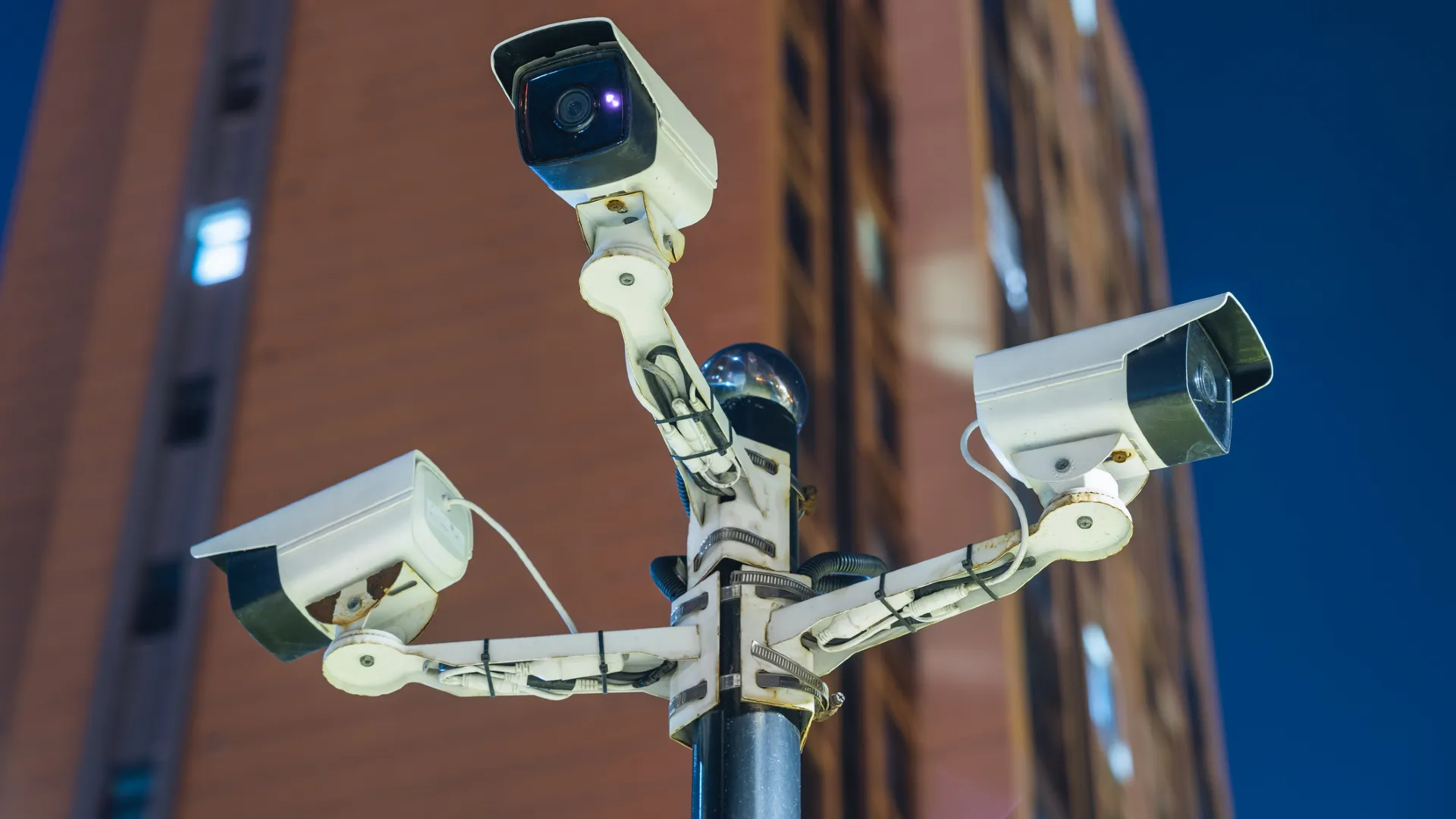
For decades, cars dictated urban planning in the United States.
Few could have predicted that they would one day also double as nodes for surveillance.
In thousands of towns and cities across the U.S., automatic license plate readers have been installed at major intersections, bridges and highway off-ramps.
These camera-based systems capture the license plate data of passing vehicles, along with images of the vehicle and time stamps. More recently, these systems are using artificial intelligence to create a vast, searchable database that can be integrated with other law enforcement data repositories.
As a scholar of technology policy and data governance, I see the expansion of automatic license plate readers as a source of deep concern. It's happening as government authorities are seeking ways to target immigrant and transgender communities, are already using AI to monitor protests, and are considering deploying AI systems for mass surveillance.
Eyes on the road
Using cameras to track license plates dates to the 1970s, when the U.K. was embroiled in a long-simmering conflict with the Irish Republican Army.
The Met, London's police force, developed a system that used closed-circuit television cameras to monitor and record the license plates of vehicles entering and exiting major roads.
Get the world’s most fascinating discoveries delivered straight to your inbox.
The system and its successors were seen as useful crime fighting tools. Over the next two decades, they expanded to other cities in the U.K. and around the world. In 1998, U.S. Customs and Border Protection implemented this technology. By the 21st century, it had started appearing in cities across the U.S.
There are different ways for a jurisdiction to implement these systems, but local governments usually sign contracts with private companies that provide the hardware and service.
These companies often entice authorities with free trials of surveillance equipment and promises of free access to their data in ways that bypass local oversight laws.
AI thrown into the mix
Recently, AI has been incorporated into these camera systems, significantly increasing their reach.
The vehicle information that's captured is typically stored in the cloud, creating a massive web of data repositories. If a camera collects information from a suspect's car or truck — say, one also listed in the National Crime Information Center — AI can flag it and send an instant alert to local law enforcement.
In fact, that's a selling point of Flock Safety, one of the biggest providers of automatic license plate readers. The company uses infrared cameras to capture images of vehicles. AI then analyzes the data to identify subjects and quickly alert local authorities.
On the surface, automatic license plate readers seem like a logical way to fight crime. More information about the whereabouts of suspects can potentially help law enforcement. And why worry about cameras if you're following the law?
But there are few peer-reviewed studies on their effectiveness. Those that exist find little evidence that they've led to reductions in violent crime rates, though they seem to be helpful in solving some crimes, like car thefts.
Furthermore, installation and maintenance are costly.
For example, Johnson City, Tennessee, signed a 10-year, US$8 million contract with Flock in 2025. Richmond, Virginia, paid over $1 million to the company between October 2024 and November 2025 and recently extended its contract, despite opposition from some residents.
The Conversation reached out to Flock for comment and did not hear back.
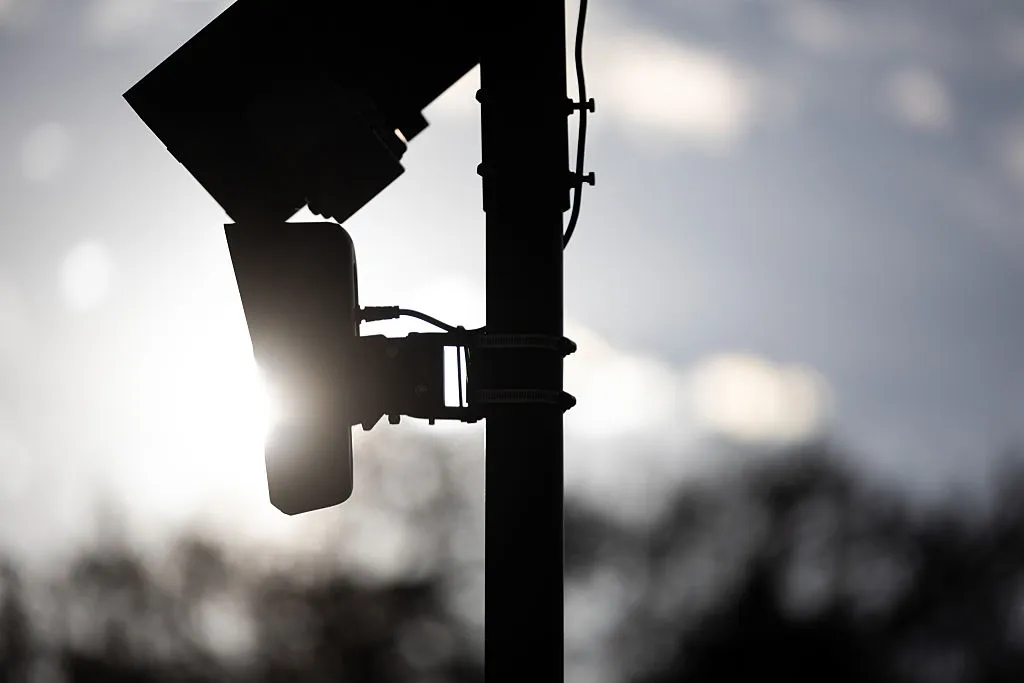
A Flock surveillance camera seen in Houston, Texas.
Erosion of civil liberties in plain sight
The technology seems to highlight the pitfalls of what scholars call "technosolutionism," the belief that complex issues like crime, poverty and climate change can be solved by technology.
Even more disquieting, to me, is the fact that these camera systems have created a mass location tracking infrastructure knitted together by artificial intelligence.
The U.S. doesn't have a federal law like the European Union's General Data Protection Regulation that meaningfully limits the collection, retention, sale or sharing of location and mobility data.
As a result, data gathered through surveillance infrastructure in the U.S. can circulate with limited transparency or accountability.
License plate readers can easily be accessed or repurposed beyond their original goals of managing traffic, meting out fines or catching fugitives. All it takes is a shift in enforcement priorities — or a new definition of what counts as a crime — for the original purpose of these cameras to recede from view.
Civil liberties groups and digital rights organizations have been sounding the alarm about these cameras for over a decade.
In 2013, the American Civil Liberties Union published a report titled "You are Being Tracked: How License Plate Readers Are Being Used To Record Americans' Movements." And the Electronic Frontier Foundation has decried them as "street-level surveillance."
A counter-camera movement emerges
The promise of these cameras was simple: more data, less crime.
But what followed has been murkier: more data, and a significant expansion of power over the public.
Without robust legal safeguards, this data can possibly be used to target political opposition, facilitate discriminatory policing or chill constitutionally protected activities.
This has already happened during the current administration's aggressive deportation efforts. Automatic license plate reader databases were shared with federal immigration agencies to monitor immigrant communities. Recently, Customs and Border Protection was granted access to over 80,000 Flock cameras, which have also been used to surveil protests.
DeFlock's map of Flock cameras shows that Beverly Hills really went hard on Santa Monica Blvd, and only Santa Monica Blvd. Seems redundant? deflock.org/map
— @lemonodor.bsky.social (@lemonodor.bsky.social.bsky.social) 2026-08-10T11:32:28.542Z
Then there's reproductive health care. After the Supreme Court overturned Roe v. Wade in 2022, there were fears that people traveling across state lines to get an abortion could potentially be identified through automatic license plate reader databases. In Texas, authorities accessed Flock’s surveillance data as part of an abortion investigation in 2025.
Flock told NPR in February 2026 that cities control how this information is shared: "Each Flock customer has sole authority over if, when, and with whom information is shared." The company noted that it has made efforts to "strengthen sharing controls, oversight and audit capabilities within the system." But NPR also reported that many city officials around the U.S. didn't realize how widely the data was being shared.
In response, some states have sought to regulate the technology.
Washington state lawmakers are deliberating the Driver Privacy Act. The legislation would prohibit agencies from using the surveillance technology for immigration investigations and enforcement, and from collecting data around certain health care facilities. Protests would also be shielded from surveillance.
Meanwhile, grassroots initiatives such as DeFlock have also emerged.
DeFlock's online platform documents the spread of automatic license plate reader networks in order to help communities resist their deployment. The movement frames these systems not merely as traffic technologies, but also as linchpins of an expanding government data dragnet — one that demands stronger democratic oversight and community consent.
This edited article is republished from The Conversation under a Creative Commons license. Read the original article.

Jess Reia is an Assistant Professor of Data Science & Public Policy and a 2025-2027 Andrew Carnegie Fellow at the University of Virginia, where they co-lead the Digital Technology for Democracy Lab. They are also a Visiting Scholar at Fudan University and a Research Associate at the Data & Society Research Institute. Reia works primarily on topics of technology policy, data justice, human rights and urban governance. A policymaker by training, they have collaborated with governments for over a decade and conducted research that has been published in four languages. Reia is also a public scholar whose writing and interviews have been featured in numerous outlets, including Estadão, Le Devoir, and BBC.
You must confirm your public display name before commenting
Please logout and then login again, you will then be prompted to enter your display name.