













In a first, congenital deafness in teens and adults treated with new gene therapy
This is the first time such results have been achieved in both children and adult patients born with a specific type of congenital deafness.

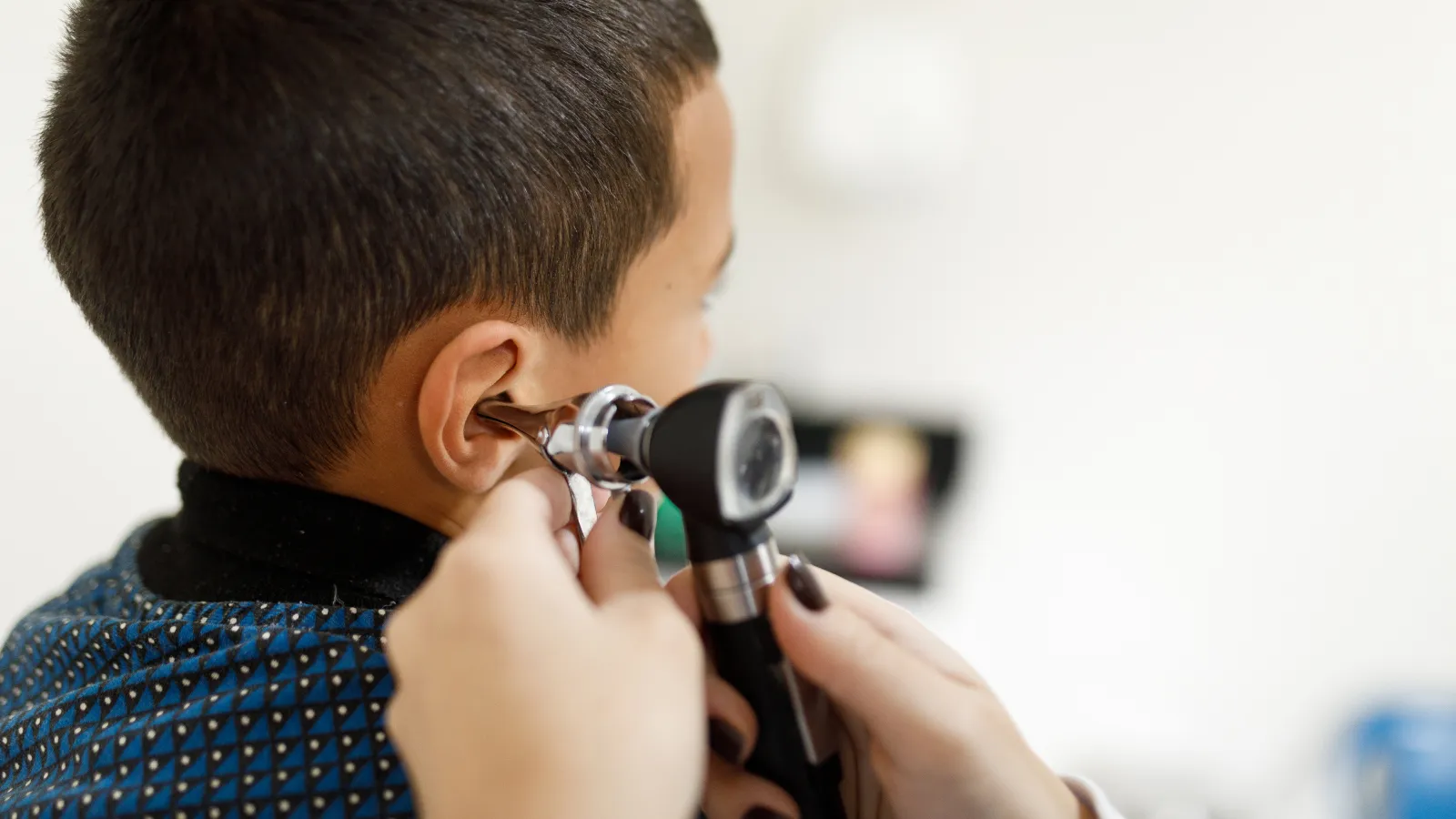
Up to 3 in every 1,000 newborns has hearing loss in one or both ears. While cochlear implants offer remarkable hope for these children, it requires invasive surgery. These implants also cannot fully replicate the nuance of natural hearing.
But recent research my colleagues and I conducted has shown that a form of gene therapy can successfully restore hearing in toddlers and young adults born with congenital deafness.
Our research focused specifically on toddlers and young adults born with OTOF-related deafness. This condition is caused by mutations in the OTOF gene that produces the otoferlin protein — a protein critical for hearing.
The protein transmits auditory signals from the inner ear to the brain. When this gene is mutated, that transmission breaks down leading to profound hearing loss from birth.
Unlike other types of genetic deafness, people with OTOF mutations have healthy hearing structures in their inner ear — the problem is simply that one crucial gene isn't working properly. This makes it an ideal candidate for gene therapy: if you can fix the faulty gene, the existing healthy structures should be able to restore hearing.
In our study, we used a modified virus as a delivery system to carry a working copy of the OTOF gene directly into the inner ear's hearing cells. The virus acts like a molecular courier, delivering the genetic fix exactly where it's needed.
Related: Gene therapy: What is it and how does it work?
Get the world’s most fascinating discoveries delivered straight to your inbox.
The modified viruses do this by first attaching themselves to the hair cell's surface, then convincing the cell to swallow them whole. Once inside, they hitch a ride on the cell's natural transport system all the way to its control centre (the nucleus). There, they finally release the genetic instructions for otoferlin to the auditory neurons.
Our team had previously conducted studies in primates and young children (5- and 8-year-olds) which confirmed the virus therapy was safe. We were also able to illustrate the therapy's potential to restore hearing — sometimes to near-normal levels.
But key questions had remained about whether the therapy could work in older patients — and what age is optimal for patients to receive the treatment.
To answer these questions, we expanded our clinical trial across five hospitals, enrolling ten participants aged 1 to 24 years. All were diagnosed with OTOF-related deafness. The virus therapy was injected into the inner ears of each participant.
We closely monitored safety during the 12 months of the study through ear examinations and blood tests. Hearing improvements were measured using both objective brainstem response tests and behavioral hearing assessments.
From the brainstem response tests, patients heard rapid clicking sounds or short beeps of different pitches while sensors measured the brain's automatic electrical response. In another test, patients heard constant, steady tones at different pitches while a computer analysed brainwaves to see if they automatically followed the rhythm of these sounds.
For the behavioral hearing assessment, patients wore headphones and listened to faint beeps at different pitches. They pressed a button or raised their hand each time they heard a beep — no matter how faint.
Hearing improvements were both rapid and significant — especially in younger participants. Within the first month of treatment, the average total hearing improvement reached 62% on the objective brainstem response tests and 78% on the behavioral hearing assessments. Two participants achieved near-normal speech perception. The parent of one 7-year-old participant said her child could hear sounds just three days after treatment.
Over the 12-month study period, ten patients experienced very mild to moderate side-effects. The most common adverse effect was a decrease in white blood cells. Crucially, no serious adverse events were observed. This confirmed the favourable safety profile of this virus-based gene therapy.
Treating genetic deafness
This is the first time such results have been achieved in both adolescent and adult patients with OTOF-related deafness.
The findings also reveal important insights into the ideal window for treatment, with children between the ages of 5 and 8 showing the most pronounced benefit.
While younger children and older participants also showed improvement, their recovery was less dramatic. These counter-intuitive results in younger children are surprising. Although preserved inner-ear integrity and function at early ages should theoretically predict a better response to the gene therapy, these findings suggest the brain's ability to process newly restored sounds may vary at different ages. The reasons for this are not yet understood.
RELATED STORIES
This trial is a milestone. By bridging the gap between animal and human studies and diverse patients of different ages, we're entering a new era in the treatment of genetic deafness. Although questions still remain about how long the effects of this therapy last, as gene therapy continues to advance, the possibility of curing — not just managing — genetic hearing loss is becoming a reality.
OTOF-related deafness is just the beginning. We, along with other research teams, are working on developing therapies that target other, more common genes that are linked to hearing loss. These are more complex to treat, but animal studies have yielded promising results. We're optimistic that in the future, gene therapy will be available for many different types of genetic deafness.
This edited article is republished from The Conversation under a Creative Commons license. Read the original article.

Dr. Maoli Duan earned his PhD degree from the Karolinska Institute and currently serves as both a senior consultant and scientist. Dr. Duan's primary research focus is on ear disorders, ranging from studies in animal models to human clinical applications. His goal is to conduct translational and clinical research that can ultimately be implemented in medical practice. He serves on the editorial boards of scientific journals and has authored more than 150 peer-reviewed publications.
You must confirm your public display name before commenting
Please logout and then login again, you will then be prompted to enter your display name.