

-
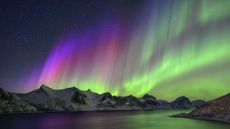 A particularly active 'aurora season' could be just weeks away
September could be a prime time to see vibrant auroras, thanks to a quirk of Earth's tilt that leads to more intense geomagnetic activity around the equinox.
the-sun -
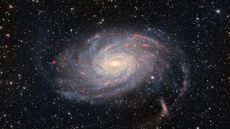 Space photo of the week: Milky Way's galactic twin captured by Dark Energy Camera
NGC 6744 is a spiral galaxy bigger than, but otherwise very similar to, our own. NASA has dubbed the large spiral galaxy the Milky Way’s ‘big brother’.
astronomy -
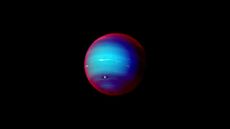 Space photo of the week: 1st-ever close-up of Neptune is Voyager 2's final portrait of a planet
Voyager 2, NASA's longest-running mission, explored Neptune during a historic encounter on Aug. 25, 1989, sending back humanity's first close-ups of the planet.
neptune -
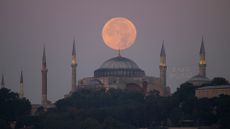 Tonight's 'Sturgeon Moon' will be the 1st 'blue supermoon' of 2024: Here's how to see it at its biggest and best
The year's first supermoon is also the third full moon in a summer that includes four, making it a 'blue supermoon'. Here's how to see August's full Sturgeon Moon rise.
the-moon -
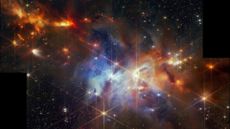 Space photo of the week: James Webb telescope catches baby stars roaring to life
A new image of the Serpens Nebula captured by the James Webb Space Telescope shows that when clouds collapse to form stars, all of those stars spin in the same direction.
astronomy -
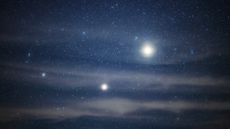 Jupiter Mars conjunction: How to see 2 planets 'kiss' in the sky before sunrise on Wednesday
Look east before dawn on Wednesday, Aug. 14, to see the giant planet and the Red Planet just a third of a degree from one another in a rare planetary conjunction.
planets -
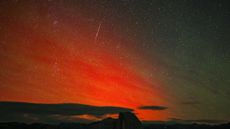 The Perseid meteor shower is peaking NOW! Here's how to see the most 'shooting stars'.
Up to 75 'shooting stars' per hour may be visible in the night sky this evening as the annual Perseid meteor shower peaks on Monday (Aug. 12). The annual shower is linked to debris from Comet Swift-Tuttle.
meteoroids -
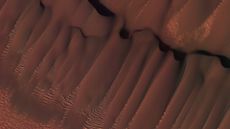 Space photo of the week: Stunning sand dunes slash across Mars' polar ice cap
This stunning image of dune fields near Mars' north polar ice cap, taken by NASA's Mars Reconnaissance Orbiter, showcases the impact of polar winds on the Red Planet's landscape.
mars -
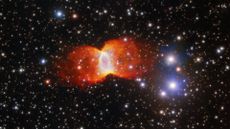 Space photo of the week: A cosmic butterfly emerges from a star's slow death
A Hawaii telescope just captured a sun-like star's glowing gas layers as it expands. The resulting butterfly-shaped nebula is a sight to behold.
astronomy -
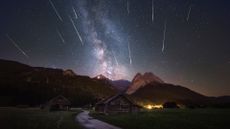 The 1st week of August is a stargazer's delight. Here's why.
With its moonless sky, the first week of August is one of the best times all year to see the Milky Way and meteor showers without a telescope. Here's how to be in the right place at the right time for the best view.
astronomy -
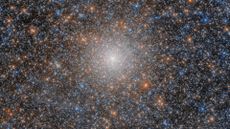 Space photo of the week: A cosmic 'fossil' holding some of the oldest stars in the universe
The Hubble Space Telescope zooms in on a dense ball of millions of stars within a galaxy orbiting the Milky Way. Its ancient origins raise big questions about how galaxies form and grow.
astronomy -
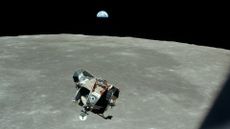 Space photo of the week: 55 years ago, the 'world's loneliest man' snapped this iconic Apollo 11 image
Command module pilot Michael Collins took this iconic Apollo 11 photo 55 years ago today, after his historic trip around the far side of the moon made him "the world's loneliest man".
the-moon -
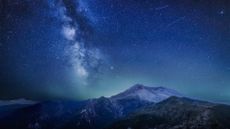 Delta Aquariids 2024: July's next meteor shower offers ideal conditions for 'shooting stars'
The Delta Aquariid meteor shower begins this week, bringing as many as 20 "shooting stars" per hour to the night sky. Here's why this year's shower offers ideal conditions for stargazers.
meteoroids -
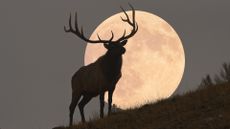 July's full 'Buck Moon' rises this week — and signals a big lunar transition is on the way
July's full moon — also known as the Buck Moon, the Thunder Moon and the Hay Moon — will be at its fullest on the night of July 21. It's the last "regular" full moon before a parade of four consecutive "supermoons" light up the sky.
the-moon -
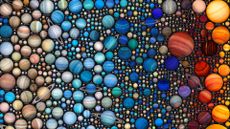 Space photo of the week: 900 alien worlds packed into a single image
Slovakian artist Martin Vargic's spectacular new infographics artistically portray, visualize and compare more than 1,600 planets in other star systems.
exoplanets -
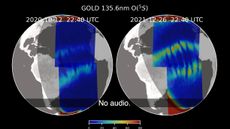 NASA spots unexpected X-shaped structures in Earth's upper atmosphere — and scientists are struggling to explain them
NASA's GOLD mission found unexpected X- and C-shaped structures in the plasma of Earth's ionosphere. Researchers have likened our upper atmosphere to "alphabet soup."
the-sun -
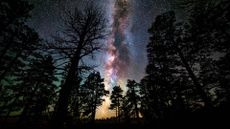 The Milky Way will be visible without a telescope this summer. Here are the key nights to watch for.
Summer is the best time to see the Milky Way in the Northern Hemisphere without a telescope. The key is to find clear, dark skies on moonless nights.
astronomy -
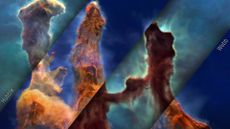 Space photo of the week: James Webb telescope gives the 'Pillars of Creation' a stunning 3D makeover
A new multiwavelength 3D visualization of the iconic "Pillars of Creation" showcases the differences between Hubble and James Webb Space Telescope data.
astronomy -
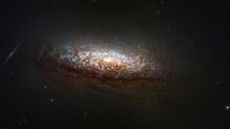 Space photo of the week: Hubble roars back to life with exquisite image of nearby galaxy
The sparkling galaxy NGC 1546 stars in Hubble's first new image since changing to its new "one-gyro mode," ending the telescope's roughly month-long break.
astronomy -
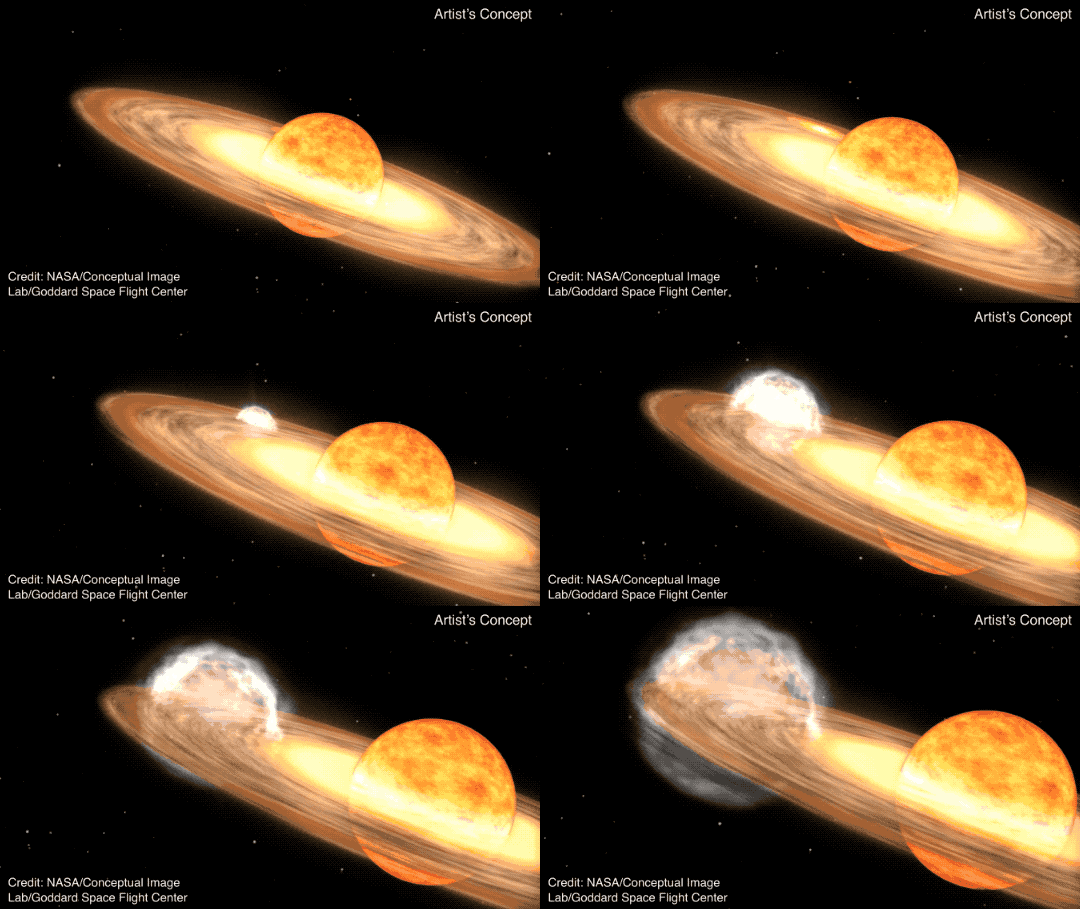 A 'new star' will appear in the sky any night now. Here's how to watch the Blaze Star ignite.
The "Blaze Star" T Coronae Borealis is expected to erupt with a magnificent explosion sometime between now and September, becoming visible to the naked eye. Here's how to find it when it does.
astronomy -
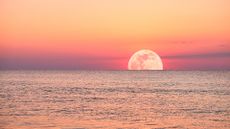 Strawberry Moon 2024: See summer's first full moon rise a day after solstice
June's full "Strawberry Moon" rises one day after the summer solstice in the Northern Hemisphere. This will be the lowest full moon of the year.
the-moon -
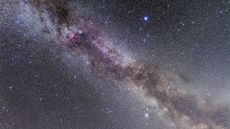 Three bright stars mark the beginning of summer. Here's how to spot the 'Summer Triangle' this week.
The appearance this week of the three bright Summer Triangle stars — Vega, Deneb and Altair — marks the beginning of summer in the Northern Hemisphere. Here's how to spot them.
astronomy -
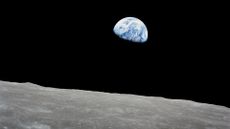 Space photo of the week: 'Earthrise,' the Christmas Eve image that changed the world
Snapped from lunar orbit in 1968 by NASA astronaut Bill Anders, who died this week at age 90, 'Earthrise' is perhaps the most iconic image of our planet ever taken.
the-moon -
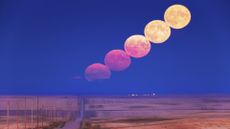 The 1st 'major lunar standstill' in more than 18 years is about to occur. Here's how to see it.
A major lunar standstill is about to occur. The phenomenon happens every 18.6 years when the moon rises and sets at its most extreme points on the horizon, while also climbing to its highest and lowest point in the sky.
the-moon


