

-
 Why are recurring dreams usually nightmares?
Recurring dreams may feature taking a test the dreamer didn’t study for, having to make a speech or being attacked. Here's why our sleeping brain comes back to these unpleasant dreams again and again
neuroscience -
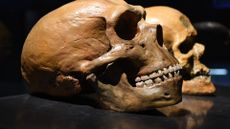 Are Neanderthals and Homo sapiens the same species?
Scientists have been vollying the question back and forth for more than a century.
neanderthals -
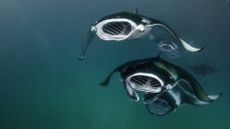 6 species that scientists got wrong
The definition of a species is surprisingly unsettled, and the classifications of some of the best-known animals have come under scrutiny.
animals -
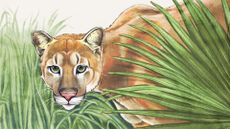 What defines a species? Inside the fierce debate that's rocking biology to its core
Feature The question of what defines a species has vexed scientists across the ages, particularly in conservation, where decisions require a firm understanding of biodiversity.
Feature -
 Did humans cross the Bering Strait after the land bridge disappeared?
Evidence suggests that people likely boated across the narrow passage between Russia and Alaska when the crossing was submerged.
archaeology -
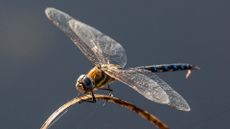 Which animal is the best hunter? (And which is the worst?)
There are lots of ways to measure predatory prowess, and the animal kingdom is full of worthy contenders.
animals -
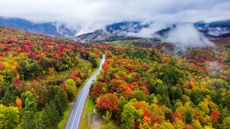 Why do leaves change color in the fall?
Plants draw on a suite of pigments to produce energy from sunlight, and in the fall, some become more obvious than others.
plants -
 What's the deepest-occurring gemstone on Earth?
Very few gems can withstand the intense pressure of Earth's mantle, but some require it to crystallize.
geology -
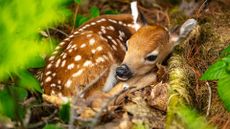 Why do so many baby animals have spots?
Youngsters often hunker down to hide from predators, and spots can provide excellent camouflage.
animals -
 How fast is a bullet?
The answer depends on the design of the bullet and the gun, as well as on what happens once the bullet leaves the muzzle.
physics-mathematics -
 Why can't we smell ourselves as well as we smell others?
It isn't true that we can't smell ourselves, although we do become habituated to our own scent.
evolution -
 Why are humans good long-distance runners?
Walking upright has allowed us to become some of the best distance runners in the world, but at the expense of speed.
health -
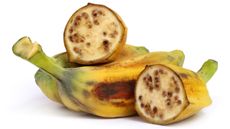 How do plants with seedless fruit reproduce?
Plants are capable of producing seedless fruit through a process called parthenocarpy, and humans have long leveraged it in agriculture.
plants -
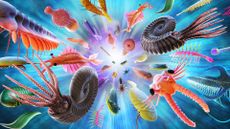 Did the Cambrian explosion really happen?
Something unique does seem to have taken place during this time when so many animal groups first appeared, but it's not an open-and-shut case.
evolution -
 Is there an 'up' and a 'down' in space?
Any object with mass distorts the space-time continuum, which we perceive as gravity pulling us "down" toward that object's center.
space -
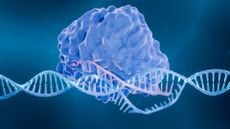 Meet 'Fanzor,' the 1st CRISPR-like system found in complex life
Scientists discovered Fanzor proteins, which work like CRISPR but are smaller and more easily delivered into cells, and used them to edit human DNA.
bacterial-fungal -
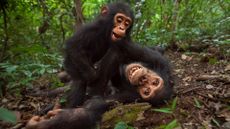 Do all animals go through adolescence?
All species experience the bodily changes of puberty, but the social lessons that define the shift from childhood to adulthood are more nuanced.
animals -
 What happens if you skydive through a cloud?
What it's like to skydive through a cloud depends in part on the type of cloud, but regardless, you'll likely end up cold and wet.
planet-earth


