













Ah-CHOO! 3 Snortworthy Facts About Sneezes

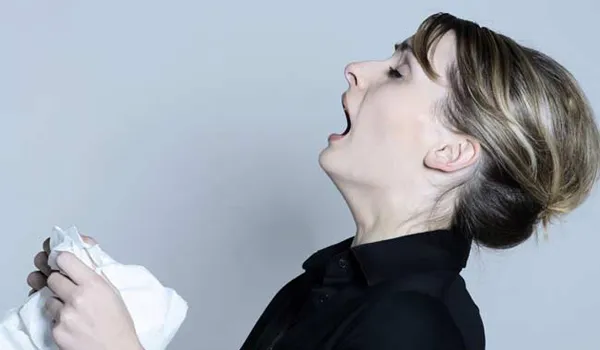
It's that time of year again — pollen is in the air, the sun is shining and spring is all around. And that means, lots of sneezing.
Sneezes are one of the body's natural defense mechanisms against foreign invaders, protecting the lungs and other organs from contamination. Sneezing can be triggered by many things, including common colds, allergies to pollen or pet dander, smoke or pollution, dust, mildew and mold, cold air or bright sunlight.
Sneezes begin when respiratory epithelium, which is the layer of cells that line the nose, becomes irritated and triggers the ending of the trigeminal cranial nerve, which then tells the brain to initiate the sneeze reflex. But here are some lesser known facts about these nasal explosions. [Is It Safe to Hold in a Sneeze?]
Why do we close our eyes while sneezing?
The sneeze reflex triggers the body to contract muscles all over, from the eyelids to the sphincter. Why this occurs is a mystery, however. It could be because of how the nervous system is wired.
One possibility is that the body associates protecting the nasal passages with protecting the eyes. In fact, 1 in 4 people sneeze in bright sunlight, known as the photic sneeze reflex, or by the cleverly contrived name, autosomal dominant compelling helio-opthalmic outburst, or ACHOO, syndrome.
Can sneezing make you have an orgasm (or vice versa)?
Get the world’s most fascinating discoveries delivered straight to your inbox.
Some people have compared the act of sneezing to an orgasm. While the two phenomena have some similarities, the comparison is mostly anecdotal.
However, there have been reports of men and women who sneeze when they're sexually aroused, possibly because of crossed up wiring in the autonomic nervous system, researchers say.
There does seem to be a connection — both the nose and the genitals contain erectile tissue. And some people develop stuffy noses during sex, a condition romantically referred to as honeymoon rhinitis.
Why do some people sneeze so loudly?
From a delicate sniffle to an elephantine roar, sneezes come in many shapes and sizes. The reason comes down to differences in anatomy and self-control.
One survey found that 45 percent of people say their public sneezes differ from their private ones, according to a representative for the allergy drug Benadryl.
No matter how you sneeze, remember to cover your mouth to prevents the spread of germs. Besides, it's only polite.
Follow Tanya Lewis on Twitter and Google+. Follow us @livescience, Facebook & Google+. Original article on Live Science.
