

From the deadliest snakes such as black mambas and king cobras to the biggest snakes such as giant pythons and anacondas, Earth's serpents have a habit of slithering into our consciousness and instilling fear or fascination. We're driven by the latter here at Live Science, and that's why our expert writers and editors bring you strange snake stories, engaging facts about brown snakes and cottonmouth snakes, and more through our latest snake news, articles and features.
Discover more about snakes
-
 Snakes keep evolving into cannibals — here's what scientists think is going on
A review of over 500 reports of cannibalistic behavior in snakes finds it's appeared multiple times in different evolutionary lineages, leading researchers to hypothesize it's beneficial for snakes under certain circumstances.
3 Commentssnakes -
 Never-before-seen footage captures moment scientists find new, giant anaconda species in Amazon
Scientists recently discovered a new species of green anaconda in the Amazon rainforest. A new Nat Geo series shows the moment they encountered this snake in the wild.
10 Commentssnakes -
 Anacondas became massive 12 million years ago — and it worked so well, they haven't changed size since
The snakes stayed large and thrived even when cooling temperatures and shrinking habitats killed off other giant reptiles millions of years ago.
snakes -
 Venomous snake strikes captured in extreme detail through high-speed videos for first time
Over 100 videos of venomous snake strikes reveal three different types of attacks, with some biting down several times "to prolong the venom flow into their prey."
5 Commentssnakes -
 Scientists could soon create a 'universal antivenom.' But would it save lives?
A recent study hints that we could make a universal antivenom for snakebites, but some scientists say we need something else instead.
snakes -
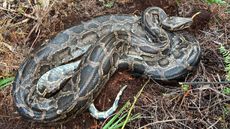 Cold snap in Florida made Burmese python puke up a whole deer
Difficulty digesting large meals may limit where these temperature-sensitive snakes can call home — and that might be a good thing in places where they're invasive.
snakes -
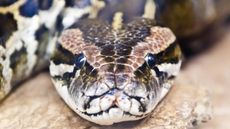 Scientists discover Burmese pythons have never-before-seen cells that help them digest entire skeletons
Specialized cells in the intestinal lining of Burmese pythons allows them to completely absorb the skeletons of their prey.
snakes -
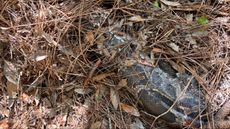 Florida bobcat bites the head off of 13-foot Burmese python in the Everglades
Wildlife experts believe that predators native to the Everglades are beginning to fight back against the invasive species of snake.
6 Commentssnakes -
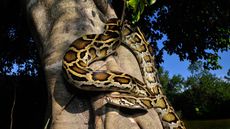 'An up-tempo version of Darwinian evolution': How a mega freeze in Florida may have caused Burmese pythons to evolve at a blindingly fast speed
"The 2010 cold snap may have created a subset of pythons better able to survive cold temperatures — and thus better adapted to spread beyond the northern boundaries of its current range."
3 Commentssnakes


