Discovery May Triple the Number of Stars In the Universe

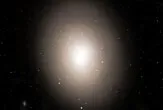
Stars known as red dwarfs might be far more common than previously thought, enough to triple the total number of stars known in the universe, a new study suggests.
These new findings could also boost the number of planets that could harbor life, astronomers announced today (Dec. 1).
Red dwarfs are dim compared to stars such as our sun and just 10 to 20 percent as massive. As such, astronomers could not detect them in galaxies other than our Milky Way and its closest neighbors until now.
Now astronomers have used powerful scientific instruments on the W.M. Keck Observatory in Hawaii to detect the faint signature of red dwarfs in eight massive so-called elliptical galaxies located between about 50 million and 300 million light-years away.
"It is remarkable that we can measure and quantify the light of these incredibly feeble stars in galaxies outside of the Milky Way," researcher Pieter van Dokkum, an astronomer at Yale University, told SPACE.com.
Elliptical galaxies are some of the largest galaxies in the universe. The largest of these galaxies were thought to hold more than 1 trillion stars (compared with the 400 billion stars in our Milky Way). [Top 10 Star Mysteries]
The new finding suggests there may be five to 10 times as many stars inside elliptical galaxies than previously thought, which would triple the total number of known stars in the universe, researchers said.
Get the world’s most fascinating discoveries delivered straight to your inbox.
The final, total tally for the number of stars in the universe still remains murky, the scientists cautioned. Determining the total star population of the cosmos requires an accurate number for galaxies as well, they added.
"It's this latter quantity that is quite uncertain. Nevertheless, best estimates are around 100 sextillion – a 1 with 23 zeros," van Dokkum said. "Our results would then triple that number, but again, there's a large additional uncertainty associated with this estimate."
The researchers' computer models based on these findings suggest that red dwarfs are far more common than expected, with these galaxies each possessing roughly 20 times more red dwarfs on average than the Milky Way, said researcher Charlie Conroy, an astronomer at the Harvard-Smithsonian Center for Astrophysics.
"The abundance of these stars is very surprising — there are many more than we had expected," van Dokkum said.
All in all, red dwarfs could make up at least 80 percent of the total number of stars and at least 60 percent of all the mass found in stars.
"No one knew how many of these stars there were," van Dokkum said. "Different theoretical models predicted a wide range of possibilities, so this answers a longstanding question about just how abundant these stars are."
These findings suggest that galaxies might contain less of the mysterious substance labeled "dark matter" than before thought. Instead, red dwarfs could contribute more mass than realized.
"We need to revise current estimates of the masses and star formation activity of nearby and distant galaxies," van Dokkum said.
Moreover, the increased number of red dwarfs means there could increase the number of planets orbiting stars, which in turn boosts the number of potentially habitable planets.
To date, astronomers have discovered just over 500 alien planets around other stars.
"There are possibly trillions of Earths orbiting these stars," van Dokkum said. He added that the red dwarfs they discovered, which are typically more than 10 billion years old, have been around long enough for complex life to evolve. "It's one reason why people are interested in this type of star."
Van Dokkum and Conroy detail their findings in the Dec. 2 issue of the journal Nature.
This article was provided by SPACE.com, a sister site of Live Science.