All Human-Made Objects on Earth Amount to 30 Trillion Tons
Get the world’s most fascinating discoveries delivered straight to your inbox.
You are now subscribed
Your newsletter sign-up was successful
Want to add more newsletters?
Delivered Daily
Daily Newsletter
Sign up for the latest discoveries, groundbreaking research and fascinating breakthroughs that impact you and the wider world direct to your inbox.
Once a week
Life's Little Mysteries
Feed your curiosity with an exclusive mystery every week, solved with science and delivered direct to your inbox before it's seen anywhere else.
Once a week
How It Works
Sign up to our free science & technology newsletter for your weekly fix of fascinating articles, quick quizzes, amazing images, and more
Delivered daily
Space.com Newsletter
Breaking space news, the latest updates on rocket launches, skywatching events and more!
Once a month
Watch This Space
Sign up to our monthly entertainment newsletter to keep up with all our coverage of the latest sci-fi and space movies, tv shows, games and books.
Once a week
Night Sky This Week
Discover this week's must-see night sky events, moon phases, and stunning astrophotos. Sign up for our skywatching newsletter and explore the universe with us!
Join the club
Get full access to premium articles, exclusive features and a growing list of member rewards.
It's safe to say that humans have accumulated a lot of stuff over the years. Scientists recently discovered that all objects on Earth created by people adds up to an astoundingly large figure.
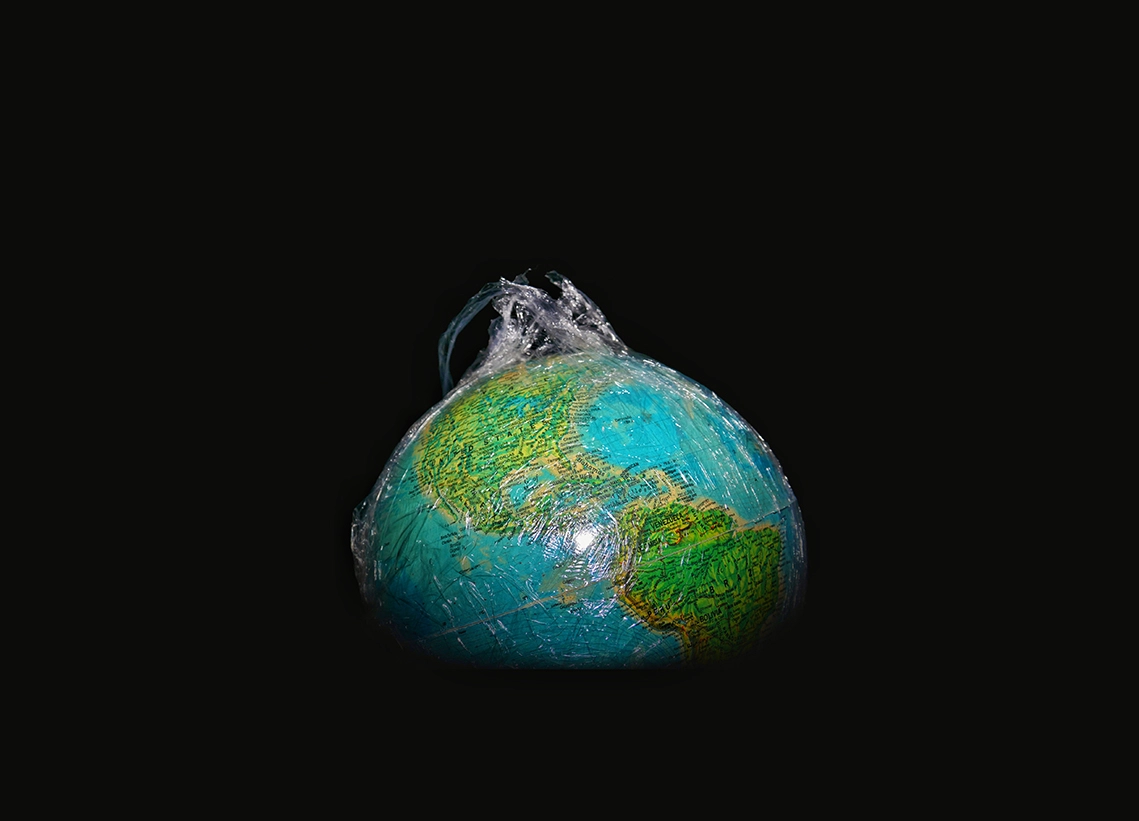
How large? According to a new study, the estimated mass of every bit of urban and rural infrastructure, every vehicle and machine, every device and construction on land, sea and in the air, every piece of technology, and all the garbage in landfills, is approximately 30 trillion tons.
All of these objects are collectively known as Earth's "technosphere." Distributed evenly over the planet's surface, the technosphere would translate into about 110 pounds (50 kilograms) for every 11 square feet (1 square meter), the researchers said. [Top 10 Ways to Destroy Earth]
"It is all of the structures that humans have constructed to keep them alive, in very large numbers now, on the planet: houses, factories, farms, mines, roads, airports and shipping ports, computer systems, together with its discarded waste," study co-author Jan Zalasiewicz, a professor of palaeobiology at the University of Leicester, in the United Kingdom, said in a statement.
"The technosphere is a system, with its own dynamics and energy flows – and humans have to help keep it going to survive," Zalasiewicz said.
The appearance of the technosphere is linked to a newly-described geological age called the Anthropocene — a period defined by humanity's reshaping of Earth — which extends from the 1950s to the present.
Unlike Earth's biosphere — the parts of the planet that sustain life — the technosphere does a poor job of recycling the materials that make it up. Instead of breaking down and refueling growth, elements of the technosphere simply take up more space in landfills.
Get the world’s most fascinating discoveries delivered straight to your inbox.
"The technosphere may be geologically young, but it is evolving with furious speed, and it has already left a deep imprint on our planet," Zalasiewicz added.
The findings were published online Nov. 30, in the journal The Anthropocene Review.
Original article on Live Science.


Mindy Weisberger is a science journalist and author of "Rise of the Zombie Bugs: The Surprising Science of Parasitic Mind-Control" (Hopkins Press). She formerly edited for Scholastic and was a channel editor and senior writer for Live Science. She has reported on general science, covering climate change, paleontology, biology and space. Mindy studied film at Columbia University; prior to LS, she produced, wrote and directed media for the American Museum of Natural History in NYC. Her videos about dinosaurs, astrophysics, biodiversity and evolution appear in museums and science centers worldwide, earning awards such as the CINE Golden Eagle and the Communicator Award of Excellence. Her writing has also appeared in Scientific American, The Washington Post, How It Works Magazine and CNN.