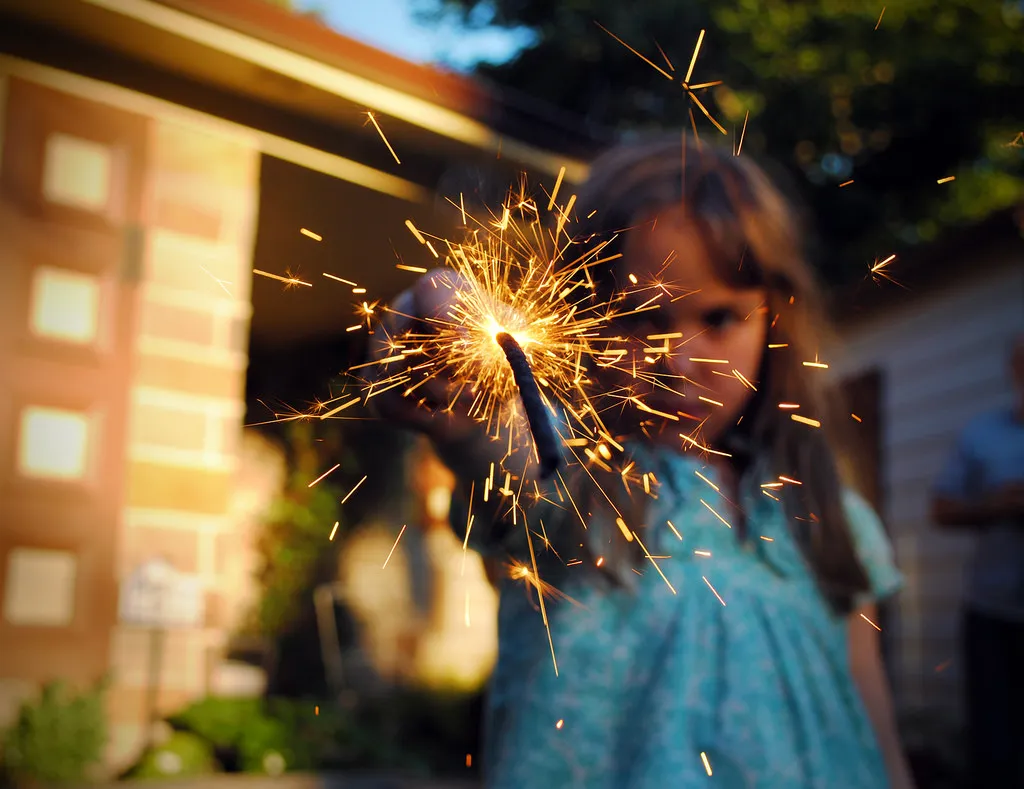
This weekend, people in the U.S. will be celebrating Independence Day, and across the country preparations are underway to mark the occasion with fireworks and other pyrotechnics. Sparklers offer a smaller but prolonged pyrotechnic experience, and they have become mainstays of Fourth of July celebrations, but how do they work?
A new video from the American Chemical Society's (ACS) YouTube series "Reactions" examines the chemistry of sparklers in extreme slow-motion.
"Pyrotechnics, fireworks, sparklers, all these types of things, it's like a culinary art," Chris Mocella, co-author of the book "Chemistry of Pyrotechnics: Basic Principles and Theory" (CRC Press, 2010) and technical adviser for the new ACS video, told Live Science. "It's all chemistry at the basic level, but there are fun little tricks and things you can do with the different material you have." [50 Fabulous 4th of July Facts: Fiery Fireworks]
In pyrotechnics, the special ingredients are fuel and an oxidizer. In the case of a sparkler, the fuel is mostly a powdered metal and the oxidizer is most often potassium nitrate. When the powdered metal is oxidized, it creates a lot of extra energy.
The light that’s emitted, the heat, and the sounds that sparklers make are all leftover energy converted into something that we can perceive — all part of the brilliant cascade of glittering sparks.
"When you burn firewood, that’s combustion, but it takes a long time for all of that to burn down," Mocella said. "When you strike a match, that’s also combustion, but the match head gives out much faster. And then a firework is an extremely fast type of combustion."
Sign up for the Live Science daily newsletter now
Get the world’s most fascinating discoveries delivered straight to your inbox.
In the case of fireworks, all of the pyrotechnic material in the middle (usually a black powder, like gun powder) is confined very tightly. When it is ignited, the initial combustion releases heat and gas that builds up pressure to the point of an explosion.
When a sparkler is lit, that same combustion happens but it doesn't explode in your hand. This is because the reaction does not happen fast enough, Mocella said. He explained that the combustion happens in a line. As you light the top of a sparkler the reaction begins: the oxygen is liberated, it oxidizes the metal, which releases more heat and that ignites the next little bit of the pyrotechnic going all the way down the line, he said.
While the powdered metal in a sparkler acts as the fuel, there are larger-size pieces of metal, about the size of fine grains of sand, that create the sparkles themselves.
"When those get ignited, that's the sparkle that you see," Mocella said. "Those [tiny pieces of metal] are ejected into the air, and they burn in the air almost like a little tiny shooting star."
Without these larger pieces of metal, the sparkler would burn down just like a match, albeit a very hot match.
Kacey Deamer is a journalist for Live Science, covering planet earth and innovation. She has previously reported for Mother Jones, the Reporter's Committee for Freedom of the Press, Neon Tommy and more. After completing her undergraduate degree in journalism and environmental studies at Ithaca College, Kacey pursued her master's in Specialized Journalism: Climate Change at USC Annenberg. Follow Kacey on Twitter.