It's quick and easy to access Live Science Plus, simply enter your email below. We'll send you a confirmation and sign you up for our daily newsletter, keeping you up to date with the latest science news.
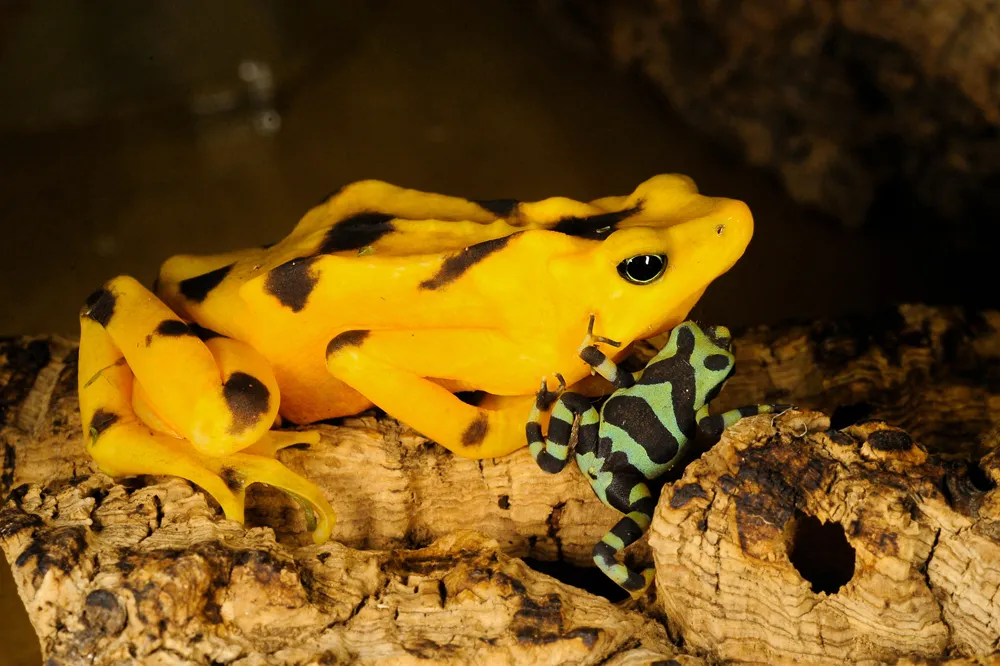
Panamanian golden frogs, Atelopus zeteki, have a variety of toxins that protect them from predators. Although the adults are yellow, the young are a bright green, which helps them blend into their mossy stream habitat.
Julie Larsen Maher is staff photographer for the Wildlife Conservation Society (WCS), the first woman to hold the position since the society's founding in 1895. In addition to field visits, Maher photographs the animals at WCS's five New York-based wildlife parks: the Bronx Zoo, Central Park Zoo, New York Aquarium, Prospect Park Zoo and Queens Zoo. She contributed this article to Live Science'sExpert Voices: Op-Ed & Insights.
Red-eyed tree frogs, Agalychnis callidryas, are colorful amphibians found in the tropical lowlands of Central America where the animals hunt after dark for their insect prey. The frogs are arboreal and are commonly be found on plants and trees.
Humble beginnings
Lemur leaf tadpoles, Agalychnis lemur, are purple-gray with a rosy-colored center body. Their transparent fins will morph to legs as they become adult frogs.
I can see you now ...
Sign up for the Live Science daily newsletter now
Get the world’s most fascinating discoveries delivered straight to your inbox.
Lemur leaf frogs, Agalychnis lemur, are tree frogs from Costa Rica, Columbia and Panama that spend their days sleeping on the undersides of leaves. Males defend their territory by grabbing intruder frogs and pushing them off their perches.
Here to help
The common coqui, Eleutherodactylus coqui, are diminutive grayish-brown frogs native to Puerto Rico. Coqui lay their eggs on land, where the babies hatch directly into sub-adult frogs, skipping the tadpole stage that most amphibians experience.
A unique sight
Amazon milk frogs, Trachycephalus resinifictrix, are arboreal and nocturnal. The males are known for their boisterous calls, which they usually make from watery pools in tree hollows. Their tadpoles also develop in such hollows.
Sitting pretty
Native to Australia and New Guinea, White's tree frogs, Litoria caerulea, have unique skin secretions with antibacterial and antiviral properties that help to guard against infections.
Good mom
Panamanian golden frogs, Atelopus zeteki, have a variety of toxins that protect them from predators. Although the adults are yellow, the young are a bright green, which helps them blend into their mossy stream habitat.
Can you see me now?
Sometimes called bumblebee frogs, yellow banded poison frogs, Dendrobates leucomelas, are native to Venezuela, Columbia and Brazil. Each frog has its own unique set of markings, like a human fingerprint. They can secrete a toxin when threatened.
Posing for a photo shoot
Blue poison frogs, Dendrobates tinctorius "azureus," can live as many as seven years in the wilds of Suriname and Brazil. As their name indicates, glands within the frog's skin are filled with poison — a defense against predators.
Sneakin' suspicion
Surinam horned frogs, Ceratophrys cornuta, from South America are large amphibians with big mouths — their mouths are one and a half times wider than the length of their bodies. The size of their mouths is useful in catching favorite foods like mice and lizards.
From far and wide
Solomon Island leaf frogs, Ceratobatrachus guentheri, live on the forest floor in the tropical forests of the Solomon Islands and Papua New Guinea, where they lay their eggs in leaf litter. The eggs undergo direct development with no tadpole stage.
Beware the frog
Pichincha poison frogs, Oophaga sylvatica, found in Columbia and Ecuador, lay a small clutch of only two to five eggs at a time. Once hatched, the female frogs carry individual, mature tadpoles on their backs to nearby small pools of water.
For more animal photos and stories, check out WCS's photo blog, Wild View, including the posts Frog Blog – Bright Warnings and A Place in the Forest. Follow all of the Expert Voices issues and debates — and become part of the discussion — on Facebook, Twitter and Google+. The views expressed are those of the author and do not necessarily reflect the views of the publisher. This version of the article was originally published on Live Science.

 Live Science Plus