













DARPA's 'Luke Skywalker' Arm Wins FDA Approval

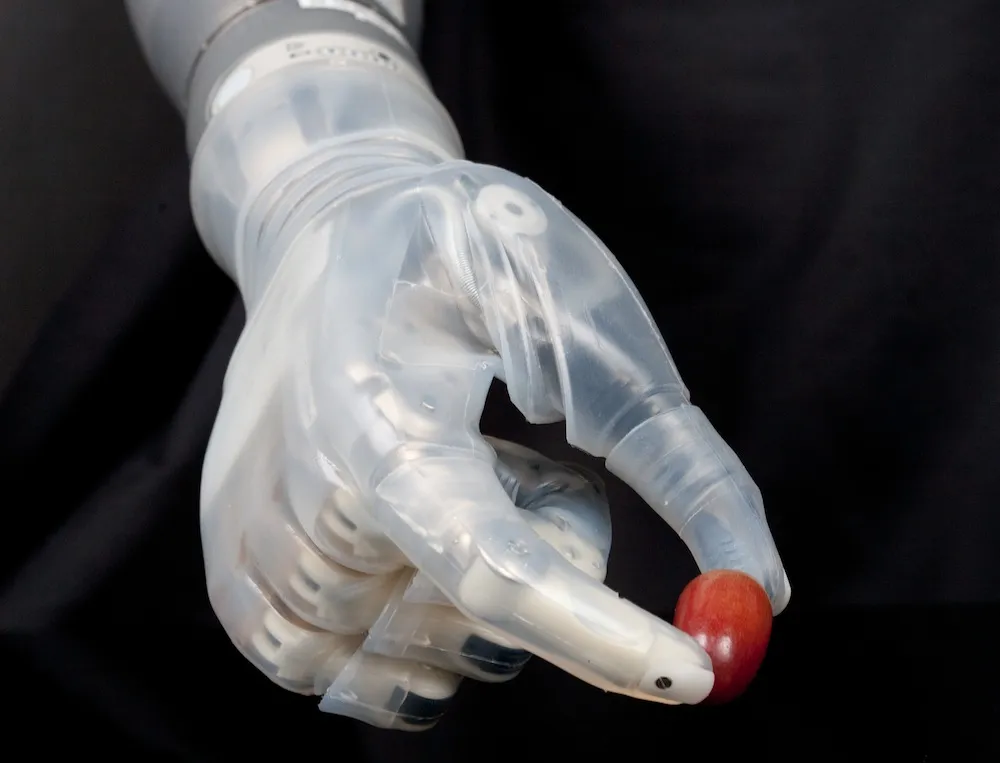
An extremely advanced prosthetic arm — sometimes compared to Luke Skywalker's arm from "Star Wars" — has been approved for clinical use by the U.S. Food and Drug Administration, officials announced.
The DEKA arm, funded by the Defense Advanced Research Projects Agency (DARPA), is an upper-limb prosthetic designed to restore near-natural control to amputees. The high-tech limb can handle objects as delicate as a grape or as hefty as a power tool, researchers said.
The military research agency launched the Revolutionizing Prosthetics program in 2006 with the goal of developing a prosthetic device "to repay some of the debt we owe to our service members," Dr. Geoffrey Ling, director of DARPA's Biological Technologies Office, said in a statement. [Humanoid Robots to Flying Cars: 10 Coolest DARPA Projects]
The program aims to provide a more sophisticated alternative to prosthetic devices such as the split-hook device invented in 1912.
The DEKA Arm System, developed by the company DEKA Integrated Solutions in Manchester, New Hampshire, uses wireless signals from sensors in the user's feet and other inputs to control the arm's multiple joints. The arm is about the same size and weight as a natural limb, and is battery-powered. The user can select among six different grips.
The arm's development would not have been possible without a host of technological advances, including the miniaturization of motor parts, computer controls and sensors and manufacturing that uses lightweight but strong materials.
The FDA approved the device based on a study of 36 participants, funded by the Department of Veterans Affairs, as well as additional tests and trials funded by the U.S. Army Medical Research and Materiel Command. The device is designed for people who are 18 or older.
Get the world’s most fascinating discoveries delivered straight to your inbox.
Follow Tanya Lewis on Twitterand Google+. Follow us @livescience, Facebook& Google+. Original article on
