













Zapping the Brain Makes People Obey Social Norms

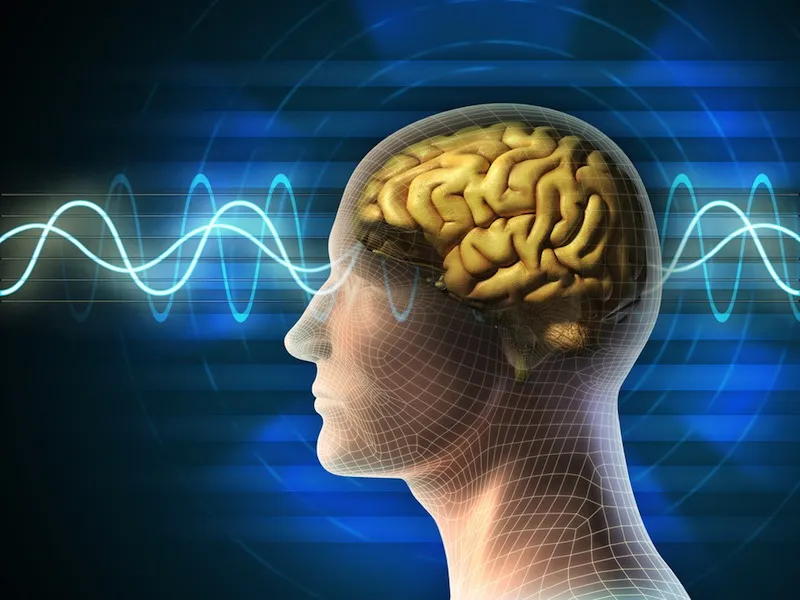
From dress codes to anti-incest laws, all human societies have social norms that specify how people should behave in various situations. Scientists have now shown that a zap of electricity to the brain can influence whether people choose to comply with these norms or not.
"The complexity of human interactions is so big, so independent, that our society wouldn’t function without norms, said study researcher Christian Ruff, an economics professor at the University of Zurich, in Switzerland. "Even though humans are very good at following norms, we're always tempted to break them. We need punishment threats to follow correctly," Ruff told LiveScience.
A previous study using function magnetic resonance imaging showed that the right lateral prefrontal cortex (rLPFC) is activated when people follow social norms to avoid being punished. Ruff and colleagues wondered if stimulating this area could make people more or less sensitive to the threat of punishment. [The 10 Most Destructive Human Behaviors]
Money games
The researchers recruited Swiss female college students, who interacted with each other via a computer game with real monetary consequences.
During the experiment, researchers applied small electrical shocks called transcranial direct current stimulation to the rLPFC region of some of the participants' brains. By varying the direction of the electrical current, the researchers could either boost or decrease brain activity in this region. Some participants did not receive brain zaps, and so served as a control group.
Students were paired up, and one student was given a sum of money, which she could choose how to split with another student. If the recipient felt the split was unfair, she could "punish" the donor student by taking away some of the donor's money and investing it.
Get the world’s most fascinating discoveries delivered straight to your inbox.
The students who started with the money voluntarily chose to give away only 10–20 percent on average. When the recipient punished them by taking the remaining funds away, the donor students gave away 40–50 percent in subsequent rounds — closer to the fairness norm in Western cultures of a 50-50 split, Ruff said.
The brain stimulation had very different effects depending on whether students were voluntarily following the norm as opposed to when they were threatened with punishment.
When the threat of punishment was present, brain-boosting stimulation caused students to give away more money, while brain-reducing stimulation made them give away less money. In contrast, when giving was voluntary, boosting and reducing brain stimulation had the opposite effects, making the students give away less money or more money, respectively.
Ruff and his colleagues also had the students play the money game with computers rather than with other students. In this case, stimulating the rLPFC had much weaker effects.
Context matters
The findings, detailed today (Oct. 3) in the journal Science, suggest that the rLPFC does not simply function as a switch that makes people comply with social norms. Rather, this brain area uses the social context to determine whether to comply with norms or not.
"Here, brain stimulation to the exact same region has opposite effects on cooperative behavior that depend entirely on context," said neuroscientist Joshua Buckholtz of Harvard University, who was not involved with the study. Buckholtz suggested that the context of having a punishment threat or not could be changing the connectivity between the rLPFC and other brain areas.
The idea that the brain could be manipulated to make people more compliant with social norms has far-reaching implications for the legal system. "If we know this mechanism, we might think about ways to influence it to help people who have trouble following norms," Ruff said. But it's not as easy as simply zapping a criminal's brain to make them comply with the law.
"There's a big difference between acute modification in the lab and a long-term change in the way people represent and process social norms in nature," Buckholtz said.
Follow Tanya Lewis on Twitter and Google+. Follow us @livescience, Facebook & Google+. Original article on LiveScience.
