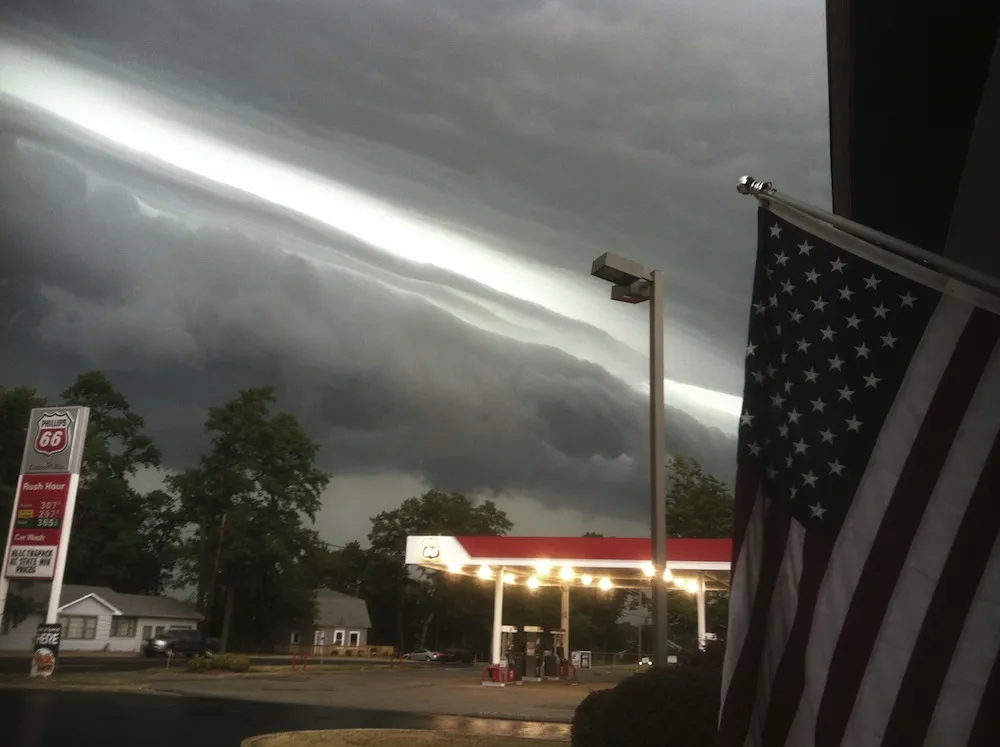
When people say they can smell a storm coming, they're right. Weather patterns produce distinctive odors that sensitive noses sniff out. This year's peculiar weather patterns—such as drought in the Midwest and a "super derecho" of thunderstorms earlier this summer—are no exception. In fact, as the rains return after a dryspell, many of these odors are stronger than ever. So, what are the scents of a summer storm? Here's a breakdown of three common odors:
—Oh, ozone Before the rain begins, one of the first odors you may notice as winds pick up and clouds roll in is a sweet, pungent zing in your nostrils. That's the sharp, fresh aroma of ozone—a form of oxygen whose name comes from the Greek word ozein (to smell). Tropospheric chemist Louisa Emmons at the National Center for Atmospheric Research explains that ozone emanates from fertilizers and pollutants as well as natural sources. An electrical charge—from lightning or a man-made source such as an electrical generator—splits atmospheric nitrogen and oxygen molecules into separate atoms. Some of these recombine into nitric oxide, and this in turn reacts with other atmospheric chemicals, occasionally producing a molecule made up of three oxygen atoms—ozone, or O3. (Most atmospheric oxygen is made up of two atoms—O2.) The scent of ozone heralds stormy weather because a thunderstorm's downdrafts carry O3 from higher altitudes to nose level.
—Petrichor potpourri Once the rains arrive, other odors come with them. Falling water disturbs and displaces odoriferous molecules on surfaces, particularly on dry ones, and carry them into the air. If you happen to be near vegetation, these molecules may come from plants and trees. For city dwellers, these odorants rise up from concrete and asphalt. Some are fragrant, others foul.
Latest Videos FromLive Science
There's a name popularly ascribed to this range of post-precipitation scents: petrichor. Petrichor was first described in 1964 by mineralogists Isabel Joy Bear and R. G. Thomas of Australia's Commonwealth Scientific and Industrial Research Organization. As they defined it, it occurs when airborne molecules from decomposing plant or animal matter become attached to mineral or clay surfaces. During a dry spell, these molecules chemically recombine with other elements on a rock's surface. Then when the rains came, the redolent combination of fatty acids, alcohols and hydrocarbons is released.
—Damp earth After a storm has moved through, what's often left is an earthy-musty whiff of wetness. This is the aroma of geosmin, a metabolic by-product of bacteria or blue-green algae. Geosmin can be a comforting call to gardeners eager to dig in the dirt, but it's less beloved when it contaminates wine or drinking water, leaving a damp stench.
Why an aroma at all? All these chemicals stirred up by the weather can carry messages. Some biologists suspect that petrichor running into waterways acts as a cue to freshwater fish, signaling spawning time. Microbiologist Keith Chater at the John Innes Center in England has proposed that geosmin's fragrance may be a beacon, helping camels find their way to desert oases. In return, the bacteria that produce geosmin use the camels as carriers for their spores.
But do these smells send meaningful messages to humans? Anthropologist Diana Young at the University of Queensland has studied the traditions of aboriginal people in Australia's Western Desert. There, the first rains before wet wintry and summer months are an important event, mingling the sweet odors of damp gum leaf oils, eucalyptus, animal waste and dust. The rains bring game such as kangaroo and emu, quench thirst and transform the red desert into a verdant landscape. Young says that to these people the smell of rain is linked to the color green, a connection she calls "cultural synesthesia." In fact, many of these Aboriginal peoples manufacture their own perfume with plant and animal fats and rub it onto their bodies, a symbolic connection of body and landscape. The odor is believed to be protective and cleansing, linking present generations to their ancestors.
This article was first published on Scientific American. © 2011 ScientificAmerican.com. All rights reserved. Follow Scientific American on Twitter @SciAm and @SciamBlogs. Visit ScientificAmerican.com for the latest in science, health and technology news.