














Iconic Telescopes Should Lose Funding, New Report Suggests

A newly released report from a National Science Foundation (NSF) committee offers some hard-hitting news, with recommendations to cut funding to several iconic telescopes and astronomical facilities as part of an aggressive new path for the agency over the next decade.
The report, titled "Advancing Astronomy in the Coming Decade: Opportunities and Challenges," examines all the projects that fall under the National Science Foundation's Division of Astronomical Sciences (AST), and identifies changes that need to be made over the next 10 years to cope with the increasingly constrained budgetary climate.
"The emphasis of portfolio review is to maintain balance between grants and facilities, recognizing the important role that both play in astronomical research," Daniel Eisenstein, chair of the portfolio review committee and a professor at the Harvard-Smithsonian Center for Astrophysics in Cambridge, Mass., told reporters in a news briefing today (Aug. 17).
The panel concluded that NSF should discontinue funding for the following astronomical facilities:
- 2.1 meter telescopes at Kitt Peak National Observatory in Arizona
- Wisconsin-Indiana-Yale-NOAO (WIYN) Observatory in Arizona
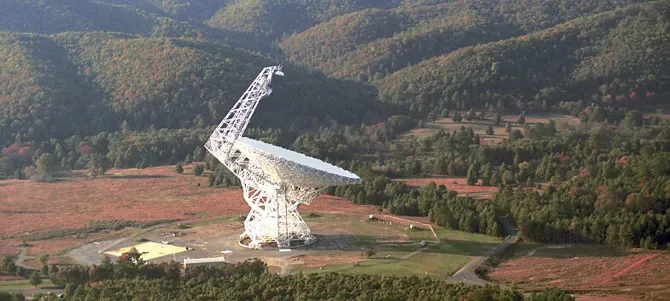
- Robert C. Byrd Green Bank Telescope in West Virginia
- Very Long Baseline Array in New Mexico
- McMath-Pierce Solar Telescope in Arizona
"Retaining the above facilities in the face of declining budgets risks significantly greater shortfalls, which would be a far more severe loss to the forward momentum of the field," the committee said in its report.
A difficult balancing act
The recommended cuts will help make way for new, state-of-the-art facilities and midsize projects, and will also ensure that NSF maintains a strong grants program.
Get the world’s most fascinating discoveries delivered straight to your inbox.
"Divestment from these highly successful, long-running facilities will be difficult for all of us in the astronomical community," the report said. "We must, however, consider the science tradeoff between divesting existing facilities and the risk of devastating cuts to individual research grants, mid-scale projects, and new initiatives." [Planetary Science Takes a Hit in 2013 (Infographic)]
The assessments were made based on priorities that were outlined in the National Academy of Sciences' decadal surveys of astronomy and astrophysics (titled "New World, New Horizons," or NWNH) and planetary sciences (titled "Visions and Voyages," or V&V). The surveys, which were released in 2010 and 2011 respectively, represent consensus from the scientific community, and identify specific science goals and objectives for the next decade.
The 17-member NSF panel attempted to reconcile the main objectives from the decadal surveys with what will likely be realistic given the NSF's budget projections.
"Our committee was charged to consider the priorities set by the decadal surveys and to set priorities between those new initiatives and the current programs and facilities, and to do so within the significant budget constraints," Eisenstein said.
Tightening the NSF's belt
The NSF's budget request for the fiscal year 2013 totals $7.37 billion, which would increase the agency's funding by $340 million, or 4.8 percent, from the previous year. Over the next decade, however, all signs point to little budget growth, if any. As such, the panel was tasked with determining how the NSF can best continue to facilitate valuable science within a tighter economic climate.
The panelists made their recommendations based on two budgetary scenarios: a more status quo approach, in which the AST's budget is 65 percent of what was envisioned in the decadal surveys, and a more pessimistic view in which the AST's budget is only 50 percent that.
According to the committee, the Division of Astronomical Sciences 2012 budget is already $45 million short of what was projected for the fiscal year 2012 in the astronomy and astrophysics decadal survey that was released in 2010.
"This presents a considerable challenge in implementing the strong NWNH recommendations for both new facilities and for maintaining the strength of the grants programs," the report said. "AST must find the proper balance between current facilities and new endeavors between large projects and small grants, and between risk and reward. It must continue to invest in the training of a highly skilled and creative workforce."
The Associated Universities Inc. (AUI) and the National Radio Astronomy Observatory (NRAO), which operate the Green Bank Telescope (GBT) and the Very Long Baseline Array (VLBA), responded to the report's findings.
"AUI and NRAO recognize and acknowledge the need to retire obsolete facilities to make way for the state-of-the-art," officials said in a statement. "However, both the GBT and the VLBA are the state-of-the-art, and have crucial capabilities that cannot be provided by other facilities. Separately the two telescopes provide unparalleled scientific access to the universe. When their information is combined, the instruments provide the highest sensitivity and resolution available for any astronomical instrument in the world." [Photos: World's Largest Telescope Being Built in Chile]
Some good news, too
Still, it's not all doom and gloom.
The report's findings do not automatically shutter the five identified facilities, said James Ulvestad, director of the National Science Foundation's Division of Astronomical Sciences.
"The committe is basically advisory," Ulvestad said. "They provide recommendations to the NSF, and we, in our division, then take that report and provide recommendations that pass up through our various chains of command."
The results of these discussions will shape the NSF's budget proposal process. In the meantime, the agency will also look into potential partnerships with universities and other organizations that would enable these facilities to stay open.
"We fully intend to pursue those avenues rigorously before we go down any roads to closure," Ulvestad said.
The committe also identified programs that should be expanded, and new projects that should be seen as priorities over the next decade. For instance, the panel urged NSF to begin construction of the Large Synoptic Survey Telescope (LSST) as soon as possible. The $465 million LSST is a planned wide-field telescope that will be able to observe the entire available sky ever three nights from Chile.
The committee proposed developing a new program for midscale projects — ones costing between $3 million and $50 million — that address the goals set forth in the decadal surveys.
The report also pledges continued support for other major facilities, including the Atacama Large Millimeter/submillimeter Array (ALMA), the Advanced Technology Solar Telescope (ATST), the Karl G. Jansky Very Large Array (VLA), and the Arecibo Observatory.
"While the current economic climate poses a severe challenge, we remain optimistic in our belief that the AST portfolio will be a vibrant force for astronomical research in the next decade," the report concluded.
This story was provided by SPACE.com, a sister site to LiveScience. Follow Denise Chow on Twitter @denisechow or SPACE.com @Spacedotcom. We're also on Facebook and Google+.

Denise Chow was the assistant managing editor at Live Science before moving to NBC News as a science reporter, where she focuses on general science and climate change. Before joining the Live Science team in 2013, she spent two years as a staff writer for Space.com, writing about rocket launches and covering NASA's final three space shuttle missions. A Canadian transplant, Denise has a bachelor's degree from the University of Toronto, and a master's degree in journalism from New York University.