















Why Was Mount St. Helens so Destructive?

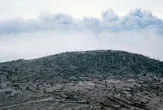
In just three minutes, the blast of the Mount St. Helens volcanic eruption hurled 3.7 billion cubic yards of fiery rock and dust (enough to fill 1 million Olympic pools) over 230 square miles (595 square km) of pristine forest landscape on May 18, 1980. Before the day was over, 57 people were dead. Nearly 7,000 big game animals, including deer and elk, perished along with countless fish and birds. Millions of Douglas fir trees lay like as many match sticks on the scorched Earth.
A number of forces, including the amount of gas in the magma, the rock structure inside the volcano, and the asymmetrical way that magma rose to the surface contributed to the massive devastation of the explosion.
Tremors before the blast
It all started in March of 1980, when small earthquakes rumbled through the volcano's base and set off a series of steam eruptions. These earthquakes may have opened tiny cracks in the surface rocks, where water seeped down and instantly vaporized due to the heat, said Steve Malone, a professor of geophysics at the University of Washington.
Earthquakes under the volcano intensified over the next few weeks. On the morning of May 18, a larger earthquake with a magnitude of 5.0 triggered a landslide on one side of the volcano. This landslide sent layers of rock tumbling down the mountain, so the magma underneath was suddenly relieved of the pressure above it.
The effect, Malone said, was like shaking up a bottle of soda and then popping the top off of the bottle.
"The sudden pressure release allowed all of the gases in the magma to expand, and the magma was blown to bits," Malone said.
Get the world’s most fascinating discoveries delivered straight to your inbox.
Lop-sided magma
This explosion blew out the side of the mountain in what geologists call a lateral blast, and triggered the largest terrestrial landslide in recorded history.
The reason for that sideways explosion, Malone said, was that the magma within the volcano rose to the top asymmetrically. It's likely that this happened because the magma followed pathways within the volcano that had been carved by previous eruptions many years ago.
"Because of the previous eruption, in the mid-1800s," Malone said, "the center of the lava bulge was offset slightly." Compounding this, the rocks directly overlying this off-center bulge were weaker than those covering other parts of the volcano.
"It was basically like a loaded gun," aimed outward from the mountain's north face, said John Pallister, the chief of the U.S. Geological Survey’s Volcano Disaster Assistance Program. Volcanoes have complex internal structures, and if the top of the mountain becomes very olidifies, the magma within may push out toward one side as it rises.
This initial sideways blast not only set off the giant landslide, it also paved the way for the enormous vertical plume of ash and smoke that erupted from the top of the mountain later that morning.
When the landslide sent tons of rocks from the mountain's north face careening over the landscape, the magma deeper within the mountain was then relieved of its overlying pressure.
The gases dissolved in this lower magma then violently expanded, creating the volcanic plume that lasted for nine hours and sent ash as far away as the Great Plains.
Learning from St. Helens
The lateral blast off the north side of Mt. St. Helens helped scientists to understand the nature of such sideways eruptions. By studying the features of the landscape afterward and observing the pattern the destruction created on the ground near Mt. St. Helens, geologists have been able to recognize that same pattern elsewhere.
"The hummock-filled terrain," said Pallister, referring to the small, irregular mounds of rock dispersed throughout the area in the wake of the explosion, "opened the eyes of the scientific community worldwide about laterally directed events at volcanoes.”
"There's a vast field of those hummocks near Mount Shasta [in California] that geologists had scratched their heads about. In an instant, it became clear," Pallister said, that a lateral blast had occurred there as well.
The mystery that remains, Malone said, is how to understand the subtle changes brewing within a volcano for years before an eruption. There weren't many seismic events at Mt. St. Helens before March of 1980. Although it is exceedingly rare for a volcano to erupt without any warning in the preceding weeks, the goal is to learn to see the warning signs even further in advance.
"We know the magma system must be doing something," Malone said, "We need to try to understand better what happens in between, to detect changes years before an eruption. We need to understand the evolution of the process and the physics of the process, so we know why we don't see them until the last minute."
- Gallery: The Incredible Eruption of Mount St. Helens
- 10 Wild Volcano Facts
