













Colossal Flood Created the Mediterranean Sea

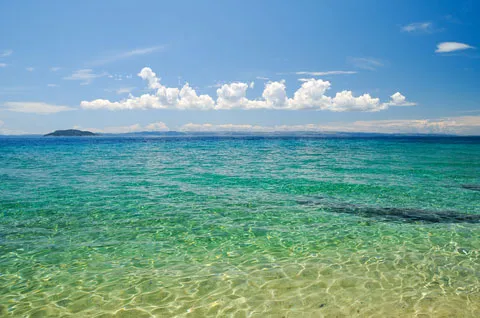
The Mediterranean Sea as we know it today formed about 5.3 million years ago when Atlantic Ocean waters breached the strait of Gibraltar, sending a massive flood into the basin.
Geologists have long known that the Mediterranean became isolated from the world's oceans around 5.6 million years ago, evaporating almost completely in the hundreds of thousands of years that followed.
Scientists also largely agree that the Mediterranean basin was refilled when the movements of Earth's crustal plates caused the ground around the Gibraltar Strait to subside, allowing the ocean waters of the Atlantic to cut through the rock separating the two basins and refill the sea.
But exactly how the waters cut their way through and how long it took them to do so wasn't known.
A new study that used seismic data and holes drilled into the rock at the strait revealed that the ocean water cut a 124-mile- (200-kilometer-) long channel across the strait over the course of several thousand years.
The team that conducted the study estimates that the water flowed across slowly at first, over a period of several thousand years. (Though slow in this case is still three times the rate of discharge of the Amazon River today.) But 90 percent of the water likely came over in a rush over the course of several months to two years. Peak rates of water level rise in the basin may have been as high as 33 feet (10 meters) per day, the study authors report.
But rather than rushing over in a giant version of Niagara Falls, the flood likely took the shape of a huge water ramp several miles wide, descending from the Atlantic to the Mediterranean, the study, led by Daniel Garcia-Castellanos of the Institut de Ciencies de la Terra Jaume Almera, CSIC in Barcelona, Spain.
Get the world’s most fascinating discoveries delivered straight to your inbox.
The study's findings are detailed in the Dec. 9 issue of the journal Nature.

Andrea Thompson is an associate editor at Scientific American, where she covers sustainability, energy and the environment. Prior to that, she was a senior writer covering climate science at Climate Central and a reporter and editor at Live Science, where she primarily covered Earth science and the environment. She holds a graduate degree in science health and environmental reporting from New York University, as well as a bachelor of science and and masters of science in atmospheric chemistry from the Georgia Institute of Technology.