













Live Science is one of the biggest and most trusted popular science websites operating today, reporting on the latest discoveries, groundbreaking research and fascinating breakthroughs that impact you and the wider world.
We believe that science can help explain the things that matter to you and shine a light on everything from the mysteries of our universe to the inner workings of an atom. Our team of experienced editors and science journalists are here to guide you through the most important stories with clarity, authority and humor.
Whether you’re interested in dinosaurs or archaeology, weird physics or astronomy, health, human behavior or the mysteries of our planet — for those with a curious mind, your journey of discovery begins here.

Our mission
Our goal is to make the wonders of science and the world around us relevant, useful and interesting to everyone by informing and entertaining our readers.
When looking for the most fascinating and important stories, our staff dig through scientific journals and keep up to date with what the top institutions are working on, to investigate how science impacts current events and how new discoveries may affect you. We don’t just take scientists’ findings at face value, however — we investigate whole papers, scrutinize the results and speak to experts in the field to separate the science from the fiction. Every story is looked at by two experienced editors before it is taken live, and every story is fact-checked and checked for spelling, institutional affiliations, and clarity before publication. Read more about our editorial standards, our AI policy and how we write our articles.
When we aren’t covering the latest science news, you can find us delivering in-depth features, such as the wildest conspiracy theories to the most inspiring Black scientists in past and modern history; holding a microscope to some of the oddest questions in Life’s Little Mysteries; or testing the toys, games and health products we think our readers will enjoy. Find out how we test, and why you can trust our reviews.
If you would like to pitch stories to Live Science, please read our submission guidelines first.
Our history
Live Science launched in 2004 with just three team members, as a complement to the space and astronomy news site Space.com. The site received Webby Awards as an Honoree in the Science category in 2008 and 2010. It was acquired by TechMediaNetwork, later called Purch, in 2009. Future PLC acquired Purch in 2018 and is the current publisher of Live Science, operating out of New York City, London and Bath, England.
Who we are

Andy is a content director at Future, and has been working in media and journalism for over 20 years. He currently oversees Live Science, while working on projects across a number of brands at Future Plc. Andy is also a tutor in Game Design at the National Film and TV School in the UK, a photographer, and a professional mentor. In his spare time you'll find Andy out with a camera in his hand, capturing urban and night-sky landscapes, or building Lego with his son.

Alexander McNamara is the Editor-in-Chief at Live Science, and has more than 15 years’ experience in publishing at digital titles. More than half of this time has been dedicated to bringing the wonders of science and technology to a wider audience through editor roles at New Scientist, BBC Science Focus, and now Live Science, developing new podcasts, newsletters and ground-breaking features along the way. In 2024 he was shortlisted for Editor of the Year at the Association of British Science Writers awards for his work at Live Science.
Before dedicating himself to science, he covered a diverse spectrum of content, ranging from women’s lifestyle, travel, sport and politics, at Hearst and Microsoft. He holds a degree in economics from the University of Sheffield, and before embarking in a career in journalism had a brief stint as an English teacher in the Czech Republic. In his spare time, you can find him with his head buried in the latest science books or tinkering with cool gadgets.

Tia is the managing editor and was previously a senior writer for Live Science. Her work has appeared in Scientific American, Wired.com and other outlets. She holds a master's in bioengineering from the University of Washington, a graduate certificate in science writing from UC Santa Cruz and a bachelor's in mechanical engineering from the University of Texas at Austin. Tia was part of a team at the Milwaukee Journal Sentinel that published the Empty Cradles series on preterm births, which won multiple awards, including the 2012 Casey Medal for Meritorious Journalism.

Laura is the managing editor, as well as the archaeology and Life's Little Mysteries editor at Live Science. She also reports on general science, including paleontology. Her work has appeared in The New York Times, The Washington Post, Scientific American, Scholastic, Popular Science and Spectrum, a site on autism research. She has won multiple awards from the Society of Professional Journalists and the Washington Newspaper Publishers Association for her reporting at a weekly newspaper near Seattle. Laura holds a bachelor's degree in English literature and psychology from Washington University in St. Louis and a master's degree in journalism with an advanced certificate in science writing from NYU.

Brandon is the space channel editor at Live Science, and he was formerly a staff writer and editor at Reader's Digest magazine. His writing has appeared in The Washington Post, CBS.com, the Richard Dawkins Foundation website and other outlets. He holds a bachelor's degree in creative writing from the University of Arizona, with minors in journalism and media arts. He enjoys writing most about space/astronomy, geoscience and the mysteries of the universe.

Nicoletta Lanese is the health channel editor at Live Science and was previously a news editor and staff writer at the site. She is a recipient of the 2026 AHCJ International Health Study Fellowship, with a project focused on antibiotic stewardship practices in Japan and the U.S. They hold a graduate certificate in science communication from UC Santa Cruz and degrees in neuroscience and dance from the University of Florida. Beyond Live Science, Lanese's work has appeared in The Scientist, Science News, the Mercury News, Mongabay and Stanford Medicine Magazine, among other outlets. Based in NYC, she also remains involved in dance and performs in local choreographers' work.

Hannah Osborne is the planet Earth and animals editor at Live Science. Prior to Live Science, she worked for several years at Newsweek as the science editor. Before this she was science editor at International Business Times U.K. Hannah holds a master's in journalism from Goldsmith's, University of London.

Keumars is the technology editor at Live Science. He has written for a variety of publications including ITPro, The Week Digital, ComputerActive, The Independent, The Observer, Metro and TechRadar Pro. He has worked as a technology journalist for more than five years, having previously held the role of features editor with ITPro. He is an NCTJ-qualified journalist and has a degree in biomedical sciences from Queen Mary, University of London. He's also registered as a foundational chartered manager with the Chartered Management Institute (CMI), having qualified as a Level 3 Team leader with distinction in 2023.

Pandora is the trending news editor at Live Science. She is also a science presenter and previously worked as Senior Science and Health Reporter at Newsweek. Pandora holds a Biological Sciences degree from the University of Oxford, where she specialised in biochemistry and molecular biology.

Harry is a U.K.-based senior staff writer at Live Science. He studied marine biology at the University of Exeter before training to become a journalist. He covers a wide range of topics including space exploration, planetary science, space weather, climate change, animal behavior and paleontology. His recent work on the solar maximum won "best space submission" at the 2024 Aerospace Media Awards and was shortlisted in the "top scoop" category at the NCTJ Awards for Excellence in 2023. He also writes Live Science's weekly Earth from space series.

Ben Turner is a U.K.-based staff writer at Live Science. He covers physics and astronomy, among other topics such as weird animals and climate change. He graduated from University College London with a degree in particle physics before training as a journalist. When he's not writing, Ben enjoys reading literature, playing the guitar and engaging in chess.

Kristina Killgrove is a staff writer at Live Science with a focus on archaeology and paleoanthropology news. Her articles have also appeared in venues such as Forbes, Smithsonian and Mental Floss. Killgrove holds postgraduate degrees in anthropology and classical archaeology and was formerly a university professor and researcher. She has received awards from the Society for American Archaeology and the American Anthropological Association for her science writing.

Sascha is a U.K.-based staff writer at Live Science. She holds a Bachelor’s degree in Biology from the University of Southampton and a master’s degree in Science Communication from Imperial College London. Besides writing, she enjoys playing tennis, bread-making and browsing second-hand shops for hidden gems.

Patrick Pester is the trending news writer at Live Science. His work has appeared on other science websites, such as BBC Science Focus and Scientific American. Patrick retrained as a journalist after spending his early career working in zoos and wildlife conservation. He was awarded the Master's Excellence Scholarship to study at Cardiff University where he completed a master's degree in international journalism. He also has a second master's degree in biodiversity, evolution and conservation in action from Middlesex University London. When he isn't writing news, Patrick investigates the sale of human remains.
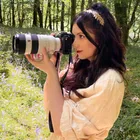
Kimberley is the optics writer at Live Science, covering cameras and photography equipment, binoculars and telescopes. Her primary area of expertise is photography, having over 6 years of photography experience in various genres. Before joining Live Science, she was a regular contributor to Space.com and Tech Radar.
Her photos have been published in a number of national magazines, including Digital Camera World, Practical Photography, and most recently, Cosmopolitan. Based in South Wales, U.K., she can often be found underneath the dark skies of the Bannau Brycheiniog National Park with a pair of binoculars in hand, or forcing her friends into impromptu flower field photoshoots during golden hour.

Laura is a senior copy editor at Live Science, where she's held both staff and freelance roles since 2013. Before joining Live Science full time, she edited for a range of publications covering science, tech and business, including Space.com, Tom's Guide and Business.com. Laura has also reported on renewable energy news and served as a Spanish-to-English translator. She has bachelor’s degrees in Communications and Spanish from Marist University.

James is Live Science’s production editor and is based near London in the U.K. Before joining Live Science, he worked on a number of magazines, including How It Works, History of War and Digital Photographer. He also previously worked in Madrid, Spain, helping to create history and science textbooks and learning resources for schools. He has a bachelor’s degree in English and History from Coventry University.

Kenna Hughes-Castleberry is the content manager at Live Science. Formerly, she was the science communicator at JILA, a physics research institute in Colorado. She holds a master's degree in science communication from Imperial College London and bachelors in both biology and English literature from Colorado State University. Kenna is also a huge octopus fan, with her upcoming book "Octopus X" scheduled for release in spring of 2027.

Elise studied marine biology at the University of Portsmouth in the U.K. She has worked as a freelance journalist focusing on the aquatic realm. Elise is working with Live Science through Future Academy, a program to train future journalists on best practices in the field.

Bavana is the video editor at Live Science. Previously, she spent three years as a motion graphics designer and content manager at a multimedia publication in India. She holds a bachelor’s degree in advertising from Symbiosis University, Pune, and a Master’s degree in Business and Marketing from the University of Warwick.

Niba (@NotesByNiba) is a video host and producer focused on science, culture and research-driven storytelling. Her work spans SciShow, Seeker (The Verge), Stanford University, and Lawrence Berkeley National Laboratory including her PBS series Hungry Planet and KQED series Big Ideas. Originally trained as a plant developmental geneticist, she studied genetics and toxicology at the University of California, Davis, genetics at Duke University and science communication at Northwestern University. Her work has been recognized with awards from the World Congress of Science and Factual Producers and the STEM Advocacy Institute, as well as fellowships with the AAAS Mass Media Fellowship, Woods Hole Oceanographic Institution, Jackson Wild, and the UC Berkeley Simons Institute for the Theory of Computing.
Contact us
Live Science
130 W. 42nd Street,
7th Floor
New York, NY 10036
If you have any questions, concerns or feedback regarding the site, please feel free to contact us at: [email protected].
For more information about your Live Science subscription, please contact customer services at: [email protected].
To receive amazing science news straight to your inbox, sign up for the Live Science newsletter.
Affiliate & advertising disclosure
We always aim to provide unbiased editorial created by our journalists and writers. We also need to pay our teams and website costs so we make money in a number of ways. We sometimes use affiliate links to products and services on retailer sites for which we can receive compensation if you click on those links or make purchases through them. From time to time we also publish advertorials (paid-for editorial content) and sponsored content on the site. When this is the case the content is clearly marked as sponsored or promoted, so you’ll always know which content is editorial and which is not. See more about content funding on Live Science here.
Future PLC is our parent company and has an in-depth terms and conditions page with a lot more information that you can read right here.
We are committed to helping you find the best products and services for your needs and connecting you with trustworthy retailers where you can purchase them at competitive prices. Within our editorial content, we often provide links to products and services on retailer sites for which we can receive compensation — called an affiliate fee — if you click on those links or make purchases through them. That affiliate fee is paid to us by the retailer and does not directly affect the price you pay for the product or service.
Our expert editorial teams are independent. This means the products and services they select to appear in our articles are chosen based on their unbiased, expert judgement and relevance to the readers' needs and article content.
While our editors may be informed by commercial insights to understand the market, our goal is always to provide independent, objective, valuable and useful advice to our readers.
Our curated product widgets that you see in some of our articles are intended to help you find the best products and services, at competitive prices, at trusted retailers. Those widgets are powered by our own software, called Hawk, which displays the latest product and price information from thousands of retailers. We will always do our best to ensure that we display the most up-to-date information possible. On occasion, a retailer may have updated their prices, up or down, before the adverts displayed by Hawk are updated. Retailers may also add delivery or other costs to the purchase — please see the retailer's site for more information. The affiliate fees we receive help us to continue developing Hawk as well as helping to pay our teams and other website costs.
We also run advertising in various forms. Ads on our websites are designed in a way that makes them clearly identifiable as ads and distinguishable from our editorial articles.
From time to time, we also publish paid-for editorial content on the site. This content is labelled so you can see who has funded it and how it was created. We have a full guide to content funding on Live Science here. You can also see the full terms and conditions that apply to your use of our sites right here.
Why you can trust us
Live Science is part of Future PLC. The site and overall company are fiercely committed to protecting your privacy. Please see our in-depth privacy policy to find out more.

Live Science is a member of the IPSO (Independent Press Standards Organisation) which regulates the UK print and digital news industry. We abide by the Editors’ Code of Practice and are committed to upholding the highest standards of journalism.
If you think that we have not met those standards and want to make a complaint, please contact [email protected]. If we are unable to resolve your complaint, or if you would like more information about IPSO or the Editors’ Code, contact IPSO on 0300 123 2220 or visit www.ipso.co.uk
Community Guidelines
Our comment section is for thoughtful discussion of article topics. Together we’re developing a space where people share your passion and where you can enjoy conversations built on a foundation of respect and common interests.
Our team is dedicated to providing quality content — please keep that in mind and keep disagreements respectful. Not every comment needs to be a debate — it’s fine to just talk! — but please approach all disagreements in a spirit of openness and tolerance.
If you feel like you’re getting too invested, take a deep breath and step away. You are never obligated to reply to a fellow commentator. If someone is breaching our rules or making the comments a less welcoming place then please use the report button so that our Community team can investigate further.
Whenever someone joins the comment section here at Live Science they should find them welcoming and insightful. We want to build a community that you’re proud to recommend to others and we can only do that together.
Please read our guidelines below to understand what is allowed and how our moderation system works.
Note: If your post is removed, it's never a personal attack but a step to maintain a respectful and engaging community in line with our guidelines.
- Stay on Topic
- Comments should be relevant to the article or discussion at hand.
- Posts that stray into unrelated topics like politics or religion will be removed.
- Respectful Interaction
- Healthy debate is welcome, but personal attacks, harassment, or demeaning language toward others, including staff, are not permitted.
- Hate speech or discriminatory language of any kind will result in a ban.
- Threatening Behavior
- Any threats made toward staff, the subjects of articles or other users will be reviewed for what action needs to be taken and you will be banned.
- If a threat is deemed to be credible we will contact local law enforcement.
- No Self-Promotion
- Do not use the comments to advertise personal products or services.
- Attempts to drive readers to third-party sites will be deleted.
- Prohibited Content
- Do not promote or describe illegal activities, including piracy or hacking.
- Users doing so will be banned.
- Impersonation is Prohibited
- Do not impersonate other users, influencers, staff members, or any person/organization.
- Users doing so will be banned.
- Privacy Matters
- Never share personal identifying information like email addresses or phone numbers.
- Do not ask others to provide their personal information or share information (dox) anyone in our comment sections this will lead to an immediate ban.
- Spam Policy
- Spam comments will lead to an immediate and permanent ban.
- Language
- Comments should be in English to ensure moderators can effectively enforce these guidelines.
- Respect Moderation Decisions
- Do not publicly discuss moderator actions. If you believe you have been banned in error contact [email protected]
- Names
- All of the above rules apply equally to names and using abusive language, fraudulently claiming to be staff or any other misuse of your display name will lead to a ban.
Our guidelines cannot cover every situation and our moderation team reserve the right to remove any comment at any time. The Live Science Team and Future PLC do not endorse the opinions and views shared by readers in our comment sections.
Pre-moderation: When dealing with a large volume of comments it’s impossible to handle them in real time. Comments may be pre-moderated due to their content, article settings or reports by other users. If you are finding yourself to be consistently pre-moderated then it is not targeted. How you are choosing to post is getting picked up by the system or reported by other users and can usually be fixed by following our guidelines or considering how others might read what you have posted.
Ban Appeals: If you wish to appeal a ban please contact [email protected]. Please include the name of the site you are posting on, your username and respectfully explain why you believe the ban should be overturned.