













Why 'Survival of the Fittest' Produces Runts
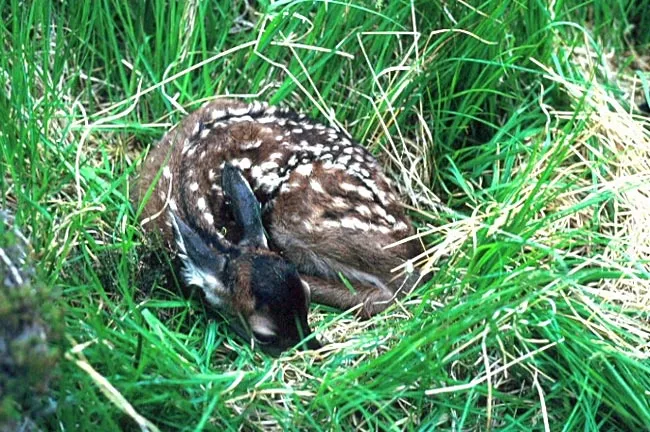
Like a secret ingredient to a signature recipe, "survival of the fittest" is a crucial part of the theory of evolution. The fittest individuals survive to mate and pass on their genetic lineage, and the weaker creatures fail to pass on their wimpy genes.
But if that's how it works, where do all the runts in nature come from?
A new study of red deer populations, detailed in a recent issue of the journal Nature, suggests that a genetic tug-of-war related to sex may be responsible. When red deer search for mates , each sex instinctively looks for different qualities. Males seek out females that will produce the biggest, toughest sons, and females seek males that carry a genetic blueprint for the best offspring-creating daughters.
It turns out, however, that the genes that make a good male aren't the same genes that make a good female.
Such an evolutionary paradox creates weak members of each sex every generation alongside stronger members, and the "bad" genes don't disappear because they're inextricably tossed back and forth between the sexes, like a hot potato.
"The role of males is to gain control over female harems, so there's strong selection going on for them to be competitive during the rut season," said Katharina Foerster, an evolutionary biologist at the University of Edinburgh in Scotland and co-author of the study.
Females, however, don’t compete to mate. "A fit female survives pregnancy and supports her calves, so her investment is over the whole year," Foerster explained. The bottom line: Both male and female traits work from the same set of genetic instructions—and that good genes for a male make a runty female, and vice-versa.
Get the world’s most fascinating discoveries delivered straight to your inbox.
To discover the "antagonistic" genetic behavior, Foerster and her team used 34 years of data of a red deer population in the Isle of Rum, Scotland. In total, data on 3,559 deer from eight generations were involved, along with mating observations and DNA evidence.
Foerster said it's possible humans experience something similar. "Theoretically, this can appear in any species," she said. But our complex mate-choosing behavior makes it hard for evolutionary scientists observe it.
The research helps explain why there's so much variation in genes that biologists couldn't previously account for.
"Nature is running towards an optimal solution, looking for the best puzzle pieces to play with," Foerster said. In the case of red deer and other animals, however, the piece for both a fit male and female doesn't exist. "I'm not sure this is something successful evolution achieved, because it shows there’s a constraint."
- Top 10 Useless Limbs (and Other Vestigial Organs)
- 10 Things You Didn't Know About You
- The Sex Quiz