













Is Solitary Confinement A Form Of Torture?
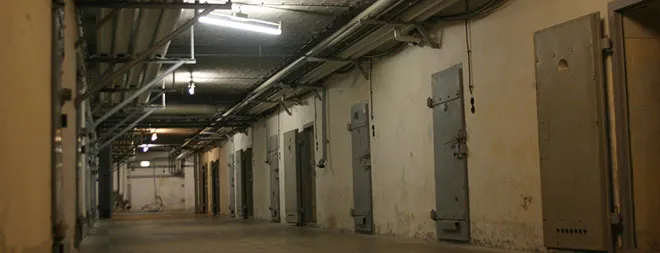
(ISNS) — As many as 80,000 inmates could be in solitary confinement cells in state and federal prisons across the U.S., a throwback to a 200-year-old, widely discredited practice, a group of researchers said.
In some cases prisoners are locked in tiny, windowless cells with virtually no sensory input for 20 years. The researchers said there is no scientific evidence that the practice does anything to pacify the prison environment, which is the main rationale for the practice. They do know that it does cause physical, emotional, and psychological damage to the prisoners. In fact, a large proportion of solitary confinement prisoners suffer from serious mental and physical disorders as a result of their isolation. For those reasons, many researchers call it a form of torture.
At a presentation at the annual meeting of the American Association for the Advancement of Science in Chicago last week, the researchers from the U.S. and Denmark said the U.S. is not the only country locking up prisoners in solitary but it is the one with the most prisoners in these conditions.
The U.S. Supreme Court has never ruled on the constitutionality of solitary confinement, but a case brought by prisoners at California’s Pelican Bay Penitentiary may succeed in declaring the practice unconstitutional, said Jules Lobel, president of the Center for Constitutional Rights and a professor of law at the University of Pittsburgh and one of the presenters. Lobel is bringing the case to the courts.
The use of solitary confinement is not universal in American prisons, experts said, and while it does happen in the federal system, many states, such as Maryland, do not isolate prisoners from the rest of the prison community the way the scientists describe. California has special housing units for prisoners who must be isolated from the community, usually because of gang-related issues, but they do not live in the circumstances described by the scientists, according to Deborah Hoffman of the California Department of Corrections and Rehabilitation.
There are no sure figures on how many prisoners live in solitary confinement. But, at least one, Robert King, who spent 29 years in those conditions at the Louisiana State Penitentiary at Angola, was one of the speakers at the meeting in Chicago. He still suffers the effects of the extreme isolation, he said.
The practice of completely isolating prisoners began in Pennsylvania and New York, and goes back to a theory proposed in the early 19th century, said Peter Scharff Smith, a senior researcher at the Danish Institute for Human Rights.
Get the world’s most fascinating discoveries delivered straight to your inbox.
Quakers in Philadelphia proposed that if prisoners were kept in complete isolation, they might find redemption and rehabilitation by concentrating on their weaknesses without distraction and ultimately become closer to God. Taking up the theory, Pennsylvania built a wheel-shaped prison in Philadelphia designed to ensure that every prisoner was completely alone.
One famous visitor to this prison, called the Eastern State Penitentiary, was Charles Dickens. In 1842, he wrote in “American Notes” that life in the prison was “rigid, strict, and hopeless.” The prison is still standing but has not been used since 1971.
Nonetheless, solitary confinement became a model for prisons around the world, particularly in Europe, Smith said. But around the turn of the 20th century, most countries agreed that it was cruel and worthless and the practice was dropped. Then, in the 1970s and '80s U.S. prison populations began to explode, and the use of solitary confinement also grew.
“The United States is an outlier in the world both in terms of the numbers, and an outlier in the amount of time people spend in [isolation],” said Craig Haney, a psychologist at the University of California, Santa Cruz. “It is not uncommon for people to spend 10 or more years in conditions that are severe.”
Juan E. Méndez, UN Special Rapporteur on torture, told the UN General Assembly in 2011;that solitary confinement "can amount to torture," he said.The typical cell is a room slightly larger than a king-sized bed for a prisoner to "eat, sleep and defecate,” Haney said. The prisoner is allowed out of the room for exercise one hour a day, but is denied human contact.
The prisoners lose orientation and a sense of self, Haney said. They sustain high rates of anxiety, stress, depression, and related disorders. No one knows what percentage suffer from mental illness or whether they went into solitary mentally ill or became that way due to the confinement because there has not been sufficient research, Smith said.
Huda Akil, of the Molecular & Behavioral Neuroscience Institute at the University of Michigan, in Ann Arbor, said the deprivation of social contact and stimulation actually has a physical effect on the brain obvious in autopsies. Some parts of the brain shrink, such as the hippocampus, a region for memory and navigation.
Martin Horn, former New York City Commissioner of Correction and Probation and a lecturer at the John Jay College of Criminal Justice in New York, said prison authorities sometimes have to segregate inmates for order and safety. For example, if one prisoner rapes another prisoner, “what do you say to the mother of the [next] one he rapes?”
But locking someone up with total sensory deprivation as the scientists describe is “wrong, wrong, wrong,” and he has never seen it in his 40 years of experience.
“It is never right to deprive a prisoner of light, air, perhaps a television, and visits. It is wrong under any circumstances,” said Horn.
Inside Science News Service is supported by the American Institute of Physics. Joel Shurkin is a freelance writer based in Baltimore. He is the author of nine books on science and the history of science, and has taught science journalism at Stanford University, UC Santa Cruz and the University of Alaska Fairbanks. He tweets at @shurkin.