













Sea Stars Divide into 2 Species in Evolutionary Flash

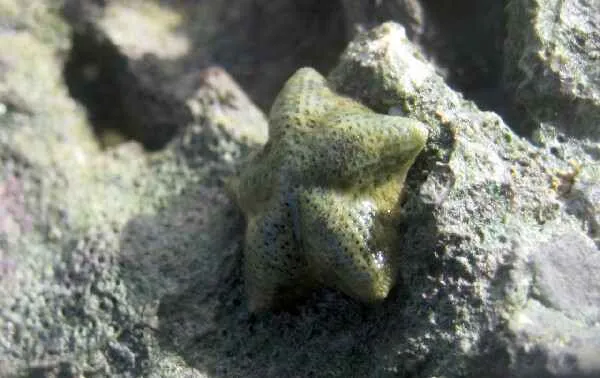
Two sea stars evolved into independent species in extraordinarily little time, a genetic study indicates.
By examining differences in the genetic codes of two closely related "cushion stars," researchers concluded ancestors of the two species stopped interbreeding as little as 6,000 years ago.
This qualifies as "one of the fastest known marine speciation events," write the authors, referring to the creation of new species.
The sea stars may look identical, though they live in different areas on the Australian coast. One, Cryptasperina hystera, lives on a few beaches and islands at the far southern end of the range belonging to the second sea star, Cryptasperina pentagona
But their sex lives couldn’t be more different: C. pentagona has two separate sexes, males and females, that release sperm and eggs into the water to fertilize and become larvae. These larvae float around in the water before settling down and growing into adult sea stars. [The Animal Sex Quiz]
C. hystera are hermaphrodites that brood their young inside their bodies, give birth to tiny sea stars that then mature into adults.
"It's as dramatic a difference in life history as in any group of organisms," Rick Grosberg, a professor of evolution and ecology at the University of California, Davis, said in a statement released by the university.
Get the world’s most fascinating discoveries delivered straight to your inbox.
The genetic analysis indicated that the species diverged between 6,000 and 22,000 years ago.
But how? The research team, led by Jonathan Puritz of the University of Hawaii, suggests a small population of these species' ancestors, even as few as one individual, colonized a remote area at the far southern end of the range and became isolated by a fluctuation in the boundary between cold and warm water in the Coral Sea. Over time, the colonizers became a distinct species, C. hystera.
The results of this research were detailed online July 18 in the journal Proceedings of the Royal Society B.
Follow LiveSciencewriter Wynne Parry on Twitter @Wynne_ParryorLiveScience @livescience. We're also on Facebook & Google+.
