













Claustrophobics Have Distorted Personal Space
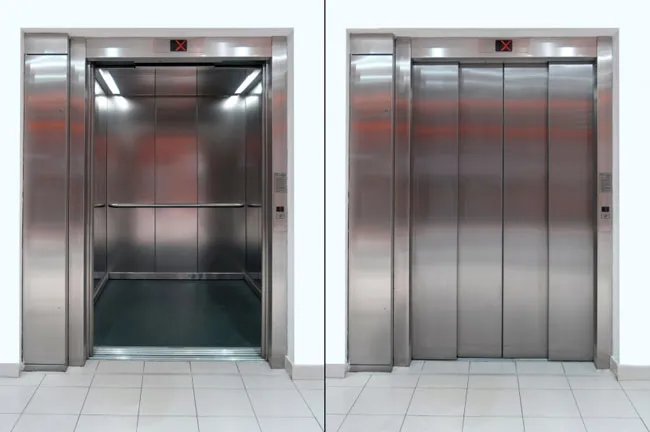
Everyone has their own "personal space" — the distance or boundary an individual needs to define their own comfort zone. New research suggests those who project their personal space too far beyond their bodies — beyond the norm of arm's reach — are more likely to experience claustrophobic fear.
The study is one of the first to focus on the perceptual mechanisms of claustrophobic fear. The theory is that individuals with claustrophobic fear have problems with spatial perception.
"We've found that people who are higher in claustrophobic fear have an exaggerated sense of the near space surrounding them," said psychologist Dr. Stella Lourenco, who led the research. "At this point, we don't know whether it's the distortion in spatial perception that leads to the fear, or vice versa. Both possibilities are likely."
Some form of claustrophobic fear is common for everyone. However, full-blown claustrophobia, found in about 4 percent of the population, can trigger panic attacks when someone finds themselves in a "tight" situation such as a crowded elevator or riding through a tunnel.
"Increasing our understanding of the factors that contribute to claustrophobia may help clinicians develop more effective therapies for what can be a highly debilitating fear,” said Dr. Matthew Longo, one of the study's co-authors.
Claustrophobia is not easy to define as some people who experience traumatic events in restricted spaces don’t develop full-blown claustrophobia, said Lourenco.
"That led us to ask whether other factors might be involved. Our results show a clear relation between claustrophobic fear and basic aspects of spatial perception."
Get the world’s most fascinating discoveries delivered straight to your inbox.
Researchers believe claustrophobia and acrophobia (the fear of heights) are tied to some imbalance in how we normally perceive objects that are close and far away.
"It makes adaptive sense to be more aware of things that are closer to the body, for both utilitarian purposes and defensive ones," Lourenco said. "It also makes adaptive sense to be afraid of things that are too far away from you on the vertical dimension, since there can be a great cost to falling."
As a continuation of their research, the investigators are asking normal research subjects, who are not seeking treatment for claustrophobia or acrophobia, to estimate various distances.
While the subjects who have higher levels of claustrophobic fear underestimate horizontal distances, those who have more acrophobic fear overestimate vertical distances.
"One intriguing possibility is that these two types of fear may form opposite ends of a single spatial-perceptual continuum," Lourenco said.