

-
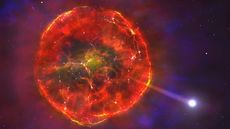 1st supernovas may have flooded the early universe with water — making life possible just 100 million years after the Big Bang
A new study suggests that the explosive deaths of the universe's earliest stars created surprising quantities of water that may have sparked extraterrestrial life in the very first galaxies.
cosmology -
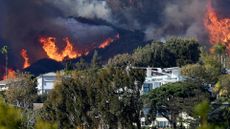 Stark 'drought' maps reveal just why wildfires have blazed through Los Angeles
The state is seeing a sharp water divide this year, with lots of rain in the north while the south has stayed dry. A hydrologist explains what’s happening.
weather -
 Why do we add fluoride to drinking water, and is it safe?
Fluoride is added to tap water in many countries around the world. But why?
health -
 What's the best way to kill norovirus, the 'stomach bug'?
Only certain cleaners kill norovirus, a leading cause of vomiting, diarrhea and foodborne illness. Why is that?
viruses-infections-disease -
 Comets played a 'major' role in making life on Earth possible, new study hints
A reanalysis of the data from the "rubber-ducky" comet 67P, collected nearly a decade ago, suggests comets may have deposited a lot more water on Earth than scientists previously thought.
comets -
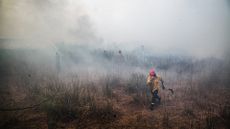 'A harbinger of what's to come:' NASA satellites show massive drop in global freshwater levels
NASA satellites discovered that Earth's surface has lost enough water to empty Lake Erie two and a half times since 2015. And the problem could be here to stay.
rivers-oceans -
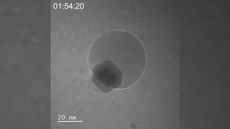 Watch atoms fuse into world's 'smallest bubble' of water in 1st-of-its-kind 'nanoscale' video
A new study captured never-before-seen footage of hydrogen and oxygen atoms combining to form a miniature water droplet out of "thin air." The newly improved reaction could one day help astronauts make water in space.
chemistry -
 Why does drinking water feel so good when you're thirsty?
Drinking water triggers a variety of complex biochemical reactions that reward rehydration and help satiate our thirst.
neuroscience -
 'Brain-eating' infections could become more common, scientists warn
Researchers think climate change will soon cause an increase in the incidence of Naegleria fowleri infections, a "brain-eating" disease.
bacterial-fungal


