
-
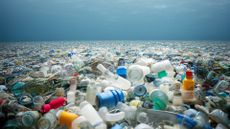 Scientists break down cheap plastic using the air — and turn it into something far more valuable
Scientists developed a new method for breaking down one of the most common plastics to a byproduct that can be upcycled into more valuable materials.
3 Commentschemistry -
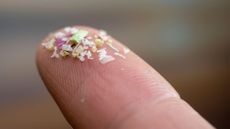 'Plastics are there and seem to be getting worse': Viral study of microplastics in human brains shows worrisome trend, but has flaws
A close-up shot of microplastics resting on a human finger.
neuroscience -
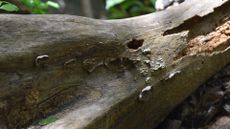 Plastic-eating fungi could help take a bite out of Earth's rampant pollution crisis, study suggests
Certain wood-decay fungi can also break down plastic.
planet-earth -
 Plastic in Birds' Stomachs Reveals Ocean's Garbage Problem
Plastic found in the stomachs of dead ocean birds reveals the Pacific Ocean off the northwest coast of North America to be more polluted than was realized.
rivers-oceans -
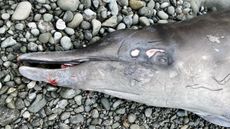 Mysterious dead beaked whale covered in unusual injuries washes up on California beach
A dead beaked whale with mysterious injuries on its face recently washed up on a California beach. Experts are unsure why the animal died or even which species it belongs to.
whales -
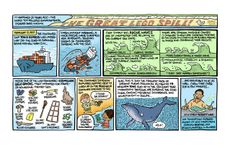 5 million shipwrecked Legos still washing up 25 years after falling overboard
A once-in-a-century wave that struck a cargo ship 25 years ago caused the worst toy-related environmental disaster of all time, known as the Great Lego Spill.
planet-earth -
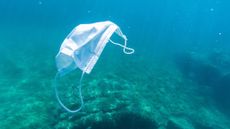 28,000 tons of COVID-19 waste now swirling around in our oceans
The pandemic intensified "pressure on this already out-of-control problem."
rivers-oceans -
 Microbes in cow stomachs can help recycle plastic
These bacteria usually eat natural polyesters, like those found in the outer coating of plant cells.
bacterial-fungal -
 Scientists convert plastic waste into vanilla flavoring
Scientists have figured out a way to convert plastic waste into vanilla flavoring with genetically engineered bacteria, according to a new study.
chemistry


