













Futuristic Spy Plane Maneuvers Like a Bird

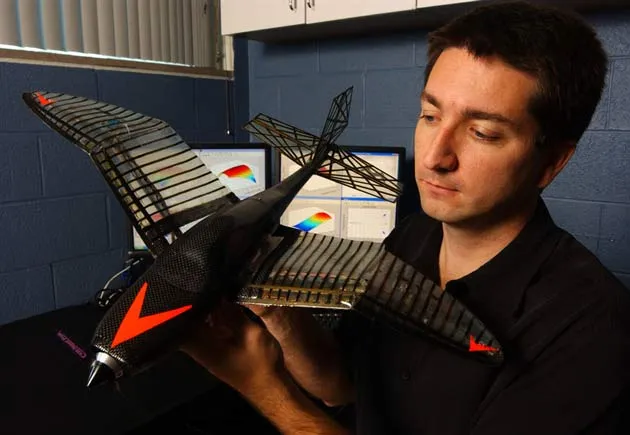
Engineers working on futuristic spy planes are taking flight lessons from seagulls.
Robotic drones developed in a military-funded project change their wing shape to navigate urban areas. The goal: to soar down a boulevard and swoop between buildings.
"If you fly in the urban canyon, through alleys, around parking garages and between buildings, you need to do sharp turns, spins and dives," said project leader Rick Lind, an aerospace engineer at the University of Florida. "That means you need to change the shape of the aircraft during flight."
The military has employed drones in Iraq and Afghanistan to take pictures and fire missiles. Up to now, their flight capabilities have been rudimentary. Ultimately, military officials would like to have drones that could sniff for biological weapons in individual buildings.
A gull in flight. AP Photo
Lind previously worked at NASA and helped develop shape-changing wings for the F-18 fighter jet. Since then, he has re-examined how the Wright Brothers controlled their early planes by twisting wings instead of using flaps. Then he pondered the true masters of flight.
"Birds morph all the time, and they're very agile," Lind said. "There's no reason we can't achieve the same control that birds achieve."
Lind's colleague, doctoral student Mujahid Abdulrahim, photographed agile seagulls in action, then developed a prototype drone based on the gulls' ability to flex at the shoulder and elbow. Elbows straight, the plane glides well. Elbows down, it loses stability but is highly maneuverable. Elbows up, control is maximized for landing.
Get the world’s most fascinating discoveries delivered straight to your inbox.
Tiny motors move the wings through the full range of motion in 12 seconds, "fast enough to use in a city landscape," Abdulrahim said.
The drone can execute three 360-degree rolls in one second, the engineers say. An F-16 fighter, they note, can manage at least one roll in a second, but three rolls would produce excessive g's, killing the pilot.
Lind and Abdulrahim have built prototypes ranging from six inches to two feet long. A movie showing how the wings alter shape is available here.

Robert is an independent health and science journalist and writer based in Phoenix, Arizona. He is a former editor-in-chief of Live Science with over 20 years of experience as a reporter and editor. He has worked on websites such as Space.com and Tom's Guide, and is a contributor on Medium, covering how we age and how to optimize the mind and body through time. He has a journalism degree from Humboldt State University in California.