













Cooler Pacific Ocean May Explain Climate Change Paradox

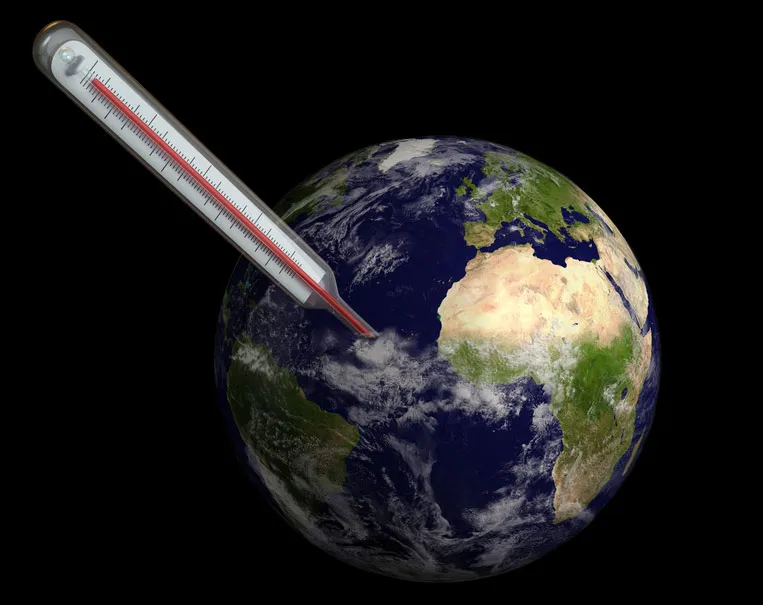
Cooling sea-surface temperatures in the tropical Pacific Ocean — a phase that is part of a natural warm and cold cycle — may explain why global average temperatures have stabilized in recent years, even as greenhouse gas emissions have been warming the planet, according to new research.
The findings suggest that the flattening in the rise of global temperatures recorded over the past 15 years are not signs of a "hiatus" in global warming, but are tied to cooling temperatures in the tropical or equatorial Pacific Ocean. When the tropical Pacific naturally switches back into a warm phase, the long-term trends in global warming, including more steeply rising global temperatures, will likely increase, said study co-author Shang-Ping Xie, a climate scientist at the University of California, San Diego.
"The engine driving atmospheric circulation on global scales resides in the tropical Pacific," Xie told LiveScience. "When the natural cycle shifts the next time to a warmer state, we're going to see more extreme warming on the global scale." [The Reality of Climate Change: 10 Myths Busted]
A climate paradox
In early May, a carbon dioxide monitor in Hawaii recorded the proportion of carbon dioxide in the atmosphere as being more than 400 parts per million (ppm) for the first time in human history, breaking a 3-million-year-old record. (Parts per million means that, in this example, for every million molecules of air, 400 of them are carbon dioxide.) But, over the past 15 years, global average temperatures have stabilized rather than sharply increased, as previous predictions suggested they should have, mystifying climate scientists and adding fuel to the fire for climate change skeptics.
"We had this puzzle — the concentration of carbon dioxide was over 400 ppm, last year we had record summer heat waves in the U.S., record retreat of Arctic sea ice. All of these things are consistent with the general warming of the climate," Xie said. "Yet, if you plot the global temperature, you see a flattening average over the last 15 years. On the one hand, scientists are saying carbon dioxide is causing the general rise of global temperatures, but on the other hand, in recent years there is no warming, so something very strange is going on."
Xie and his colleagues set out to solve this mystery using climate models to reproduce the long- and short-term trends based on global climate records from the past 130 years. The researchers found that sea-surface temperatures in the tropical Pacific Ocean, in spite of anthropogenic or manmade effects of global warming, were key ingredients in creating the flattening global temperatures seen in the past 15 years.
Get the world’s most fascinating discoveries delivered straight to your inbox.
"In our model, we were able to show two forces: anthropogenic forces to raise global average temperature, and equatorial Pacific cooling, which tries to pull the temperature curve down, almost like in equilibrium," Xie said.
The effect is similar to the El Niño and La Niña cycles, which are parts of a natural oscillation in the ocean-atmosphere system that occur every three to four years, and can impact global weather and climate conditions, Xie explained. El Niño is characterized by warmer-than-average temperatures in the waters of the equatorial Pacific Ocean, while La Niña typically features colder-than-average waters.
The warm and cool phases in the Pacific Ocean studied by Xie and his colleagues appear to last much longer than the El Niño and La Niña cycles. Previously, the Earth experienced cooling in the tropical Pacific from the 1940s to the 1970s, before oscillating into a warm state from the 1970s to the 1990s.
Current scientific models are unable to predict when the current cooling period will end, Xie said, but when the ocean swings back into a warm phase, parts of the planet may experience warmer temperatures.
"The equatorial Pacific Ocean is associated with distinct regional patterns, like the Pacific coast of North America," Xie said. "Because of equatorial cooling, this area has not been warming as rapidly as before, but when the equatorial Pacific shifts into a warm state, those regions might expect rapid warming, on the order of 2 degrees Celsius [3.6 degrees Fahrenheit] over 15 years."
Implications for a warming planet
Scientists have known that the eastern equatorial Pacific Ocean takes in a significant amount of heat from the atmosphere, but this new study suggests this small portion of the world's oceans could have a big influence on global climate, said James Moum, a professor of physical oceanography at Oregon State University in Corvallis, Ore., who was not involved with the new study.
While the models used in the study rely on some assumptions (for instance, the researchers set the sea-surface temperature to what is observed, rather than computing the temperatures, as would be done in a numerical model), Moum called the research "a brave experiment."
"It provides a physical basis for the current global mean temperature leveling off, while at the same time, points to this equatorial cold tongue as being the major driver for that," Moum told LiveScience.
There are still many unknowns about how this warming and cooling in the Pacific Ocean interacts with man-made greenhouse gas emissions to change the Earth's climate.
"We had El Niñolong before we had anthropogenic forcing — they occur independently of man-made forcing, certainly," Moum said. "Whether they're amplified by it is another question. The flip side of the story is that if this part of the ocean has an outside influence when it cools, it's going to have an outside influence when it warms. It's definitely suggested in the paper that this is a cause for concern."
The detailed findings of the study were published online today (Aug. 28) in the journal Nature.
Follow Denise Chow on Twitter @denisechow. Follow LiveScience @livescience, Facebook & Google+. Original article on LiveScience.

Denise Chow was the assistant managing editor at Live Science before moving to NBC News as a science reporter, where she focuses on general science and climate change. Before joining the Live Science team in 2013, she spent two years as a staff writer for Space.com, writing about rocket launches and covering NASA's final three space shuttle missions. A Canadian transplant, Denise has a bachelor's degree from the University of Toronto, and a master's degree in journalism from New York University.