













Stem Cell Discoveries Snag Nobel Prize in Medicine
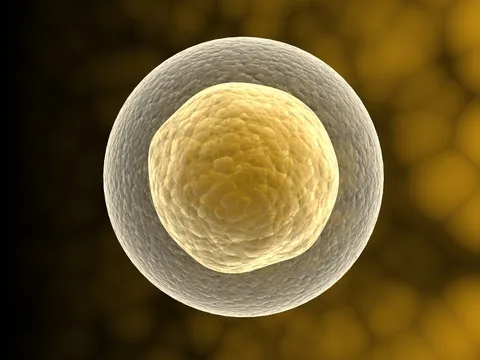
Two scientists who discovered the developmental clock could be turned back in mature cells, transforming them into immature cells with the ability to become any tissue in the body — pluripotent stem cells — are being honored with the Nobel Prize in Physiology or Medicine.
The Nobel Prize honoring Sir John B. Gurdon and Shinya Yamanaka was announced today (Oct. 8) by the Royal Swedish Academy of Sciences.
Th duo's work revealed what scientists had thought impossible. Just after conception, an embryo contains immature cells that can give rise to any cell type — such as nerve, muscle and liver cells — in the adult organism; these are called pluripotent stem cells, and scientists believed once these stem cells become specialized to carry out a specific body task there was no turning back.
Gurdon, now at the Gurdon Institute in Cambridge, England, found this wasn't the case when in 1962 he replaced the nucleus of a frog's egg cell with the nucleus taken from a mature intestinal cell from a tadpole. And voila, the altered frog egg developed into a tadpole, suggesting the mature nucleus held the instructions needed to become all cells in the frog, as if it were a young unspecialized cell. In fact, later experiments using nuclear transfer have produced cloned mammals. [5 Amazing Stem Cell Discoveries]
Then in 2006, Yamanaka, who was born in 1962 when Gurdon reported his discovery and is now at Kyoto University, genetically reprogrammed mature skin cells in mice to become immature cells able to become any cell in the adult mice, which he named induced pluripotent stem cells (iPS). Scientists can now derive such induced pluripotent stem cells from adult nerve, heart and liver cells, allowing new ways to study diseases.
When Yamanaka received the call from Stockholm about his award, he was doing housework, according to an interview with the Nobel Prize website. "It is a tremendous honor to me," Yamanaka said during that interview.
As for his hopes for mankind with regard to stem cells, he said, "My goal, all my life, is to bring this technology, stem cell technology, to the bedside, to patients, to clinics." He added that the first clinical trials of iPS cells will begin next year.
Get the world’s most fascinating discoveries delivered straight to your inbox.
Follow LiveScience on Twitter @livescience. We're also on Facebook & Google+.
Jeanna Bryner is managing editor of Scientific American. Previously she was editor in chief of Live Science and, prior to that, an editor at Scholastic's Science World magazine. Bryner has an English degree from Salisbury University, a master's degree in biogeochemistry and environmental sciences from the University of Maryland and a graduate science journalism degree from New York University. She has worked as a biologist in Florida, where she monitored wetlands and did field surveys for endangered species, including the gorgeous Florida Scrub Jay. She also received an ocean sciences journalism fellowship from the Woods Hole Oceanographic Institution. She is a firm believer that science is for everyone and that just about everything can be viewed through the lens of science.